Clove Bud Oil Distillation Plant
Part of the Kadali Africa Ventures catalogue. Send your raw material, target product and capacity for a technical proposal. Request a quote →
Product Categories
- Herbal, Botanical & Nutraceutical Extraction(9)
- Essential Oils, Spices & Oleoresins(6)
- Fruit & Vegetable Processing(8)
- Starch, Flour, Edible Oil & Food Processing(7)
- Drying & Dehydration Systems(5)
- Evaporation, Concentration & Solvent Recovery(4)
- Pharmaceutical & Industrial Process Equipment(4)
- Cocoa, Shea, Palm Oil & Oilseed Processing(6)
- Cereals, Tubers & Sugar Processing(6)
- Specialty African Botanical & Natural Ingredients(11)
- Specialty Food, Beverage & By-Product Processing(7)
Talk to Kadali Africa Ventures
Send your raw material, product and capacity for a technical proposal.
Contact Kadali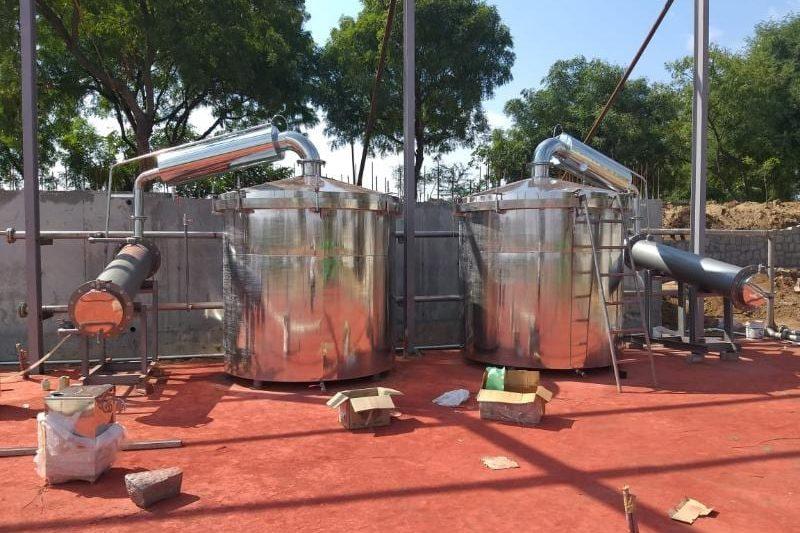
Clove Bud Oil Distillation Plant
This page is for processors who want to distil essential oil from dried clove buds (Syzygium aromaticum). Clove is grown on Indian Ocean islands, with Madagascar among the largest producers, and buds reach a processor dried by the grower. Bud oil is rich in eugenol, measured at 82.65 to 88.80% across four distillation methods. Before a plant can be sized, a buyer needs to settle the feed (whole or ground buds, and their moisture), the oil specification and end market, the distillation mode (steam, hydro, vacuum or pressure), how much steam and cooling water are on site, and whether the hydrosol will be sold or treated. The line described here runs steam distillation of buds; bud, leaf and stem oils differ in composition and are specified separately. For related plant types, see [aromatic oil distillation plants](/products/aromatic-oil-distillation-plant) and the [essential oils, spices and oleoresins](/products/category/essential-oils-spices-oleoresins) category.
The plant is configured for dried flower buds rather than the leaf feedstock handled on a separate clove leaf line. A stainless-steel SS 316L still, a multi-tube condenser on chilled water and a Florentine flask for oil-water separation form the core, with polish filtration and a drying step to finish the oil. Clove oil is denser than water (about 1.0648 g/cm³) and steam distillation can form a hard-to-break emulsion in the distillate, so the separator and the handling of distillate water are set up with that in mind. The still can be run in the distillation mode that suits the target oil, and PLC-based control keeps batch records. Spent buds are a solid waste stream and the hydrosol a water stream, so both need somewhere to go on site.
Key Specification Inputs
VLE data, purity specification, reflux, pressure and condenser duty.
Technical Specifications
| Plant type | Clove bud oil distillation line |
|---|---|
| Species | Syzygium aromaticum |
| Feed | Dried clove buds |
| Part used | Flower buds |
| Category | Spice oil distillation |
| Distillation mode | Steam, hydro, vacuum or pressure, picked to suit how volatile and heat-sensitive the target oil is |
| Wetted materials | SS 316L |
| Condensation | Multi-tube condenser on circulating chilled water |
| Oil-water separation | Stainless-steel Florentine flask |
| Finishing | Polish filtration, then drying over anhydrous sodium sulphate or under vacuum |
| Control level | PLC-based |
| Scale | Set by bud supply |
| Finished forms | Clove bud essential oil, with aromatic hydrosol as a co-product |
Plant Capacities
| Plant Scale | Raw Material Throughput | Typical Use |
|---|---|---|
| Pilot | Matched to your buds and trial plan | Testing distillation settings and oil quality |
| Semi-Commercial | Sized between pilot and commercial scale | Scale-up runs and toll distillation |
| Commercial | Sized to bud supply and committed buyer volume | Routine production |
Throughput follows the buds that can be bought steadily, the volume a buyer has committed to and the investment timeline. A pilot plant is advised so that settings are proven before scaling.
Typical Process Route
Cleaning and preparing buds
Dried buds are cleaned of stalks, dust and foreign matter and, where needed, ground lightly before charging. Feed moisture is checked at receiving, and preparation and charge density are confirmed in process development.
Charging the still
The prepared charge is loaded into the SS 316L still and distilled in the mode chosen for the target oil: steam, hydro, vacuum or pressure.
Condensing the vapour
Oil and water vapour pass through a multi-tube condenser fed with chilled water and return to liquid form.
Separating oil from water
In the Florentine flask the oil is drawn off from the distillate water; the aromatic hydrosol is taken out separately and can be kept as a co-product.
Filtering and drying the oil
Crude oil is polish-filtered, then dried over anhydrous sodium sulphate or by vacuum to remove traces of water.
Batch testing
Each batch is checked by GC-MS and by physical measures (specific gravity, refractive index and optical rotation) before release.
Major Plant Equipment
- Bud cleaning and sorting unit
- Grinder or mill, where size reduction is wanted
- SS 316L distillation still
- Multi-tube condenser on chilled water
- Stainless-steel Florentine flask for oil-water separation
- Polish filtration unit
- Drying unit (anhydrous sodium sulphate or vacuum)
- Clean-in-place (CIP) skid
- PLC-based controls and instruments
Plant Output
Applications
- Pharmaceutical and dental-care preparations
- Food ingredients and preservation
- Perfumery and cosmetic uses
- Agricultural uses, where the market allows
- Oral-care products and flavour manufacturing
Key Features
Corrosion-resistant SS 316L
Product-contact surfaces are SS 316L for corrosion resistance and product purity, and can be cleaned in place between batches.
Chilled-water condensation
A large-surface multi-tube condenser on chilled water brings volatile oil and water vapour back to liquid.
Still matched to the feed
The still, the core of the plant, is arranged for the distillation mode that suits the feed and protects heat-sensitive aroma compounds.
Hydrosol as a co-product
The separation stage allows aromatic hydrosol to be collected rather than discarded.
Expandable capacity
Plants start at the scale the bud supply supports, with room to add stills later.
Country Pages for Clove Bud Oil Distillation Plant
This product is listed on the pages of the countries below, each with its own enquiry route. Where Kadali has no office in a country, enquiries are handled from the Accra office.
Frequently Asked Questions
What should be settled first when planning a clove bud oil plant?
How should a buyer specify the oil?
Why is clove oil separated differently from many other essential oils?
How should buds be dried and stored in tropical conditions?
Which distillation mode should be used?
What drives steam and cooling-water demand?
What can the hydrosol be used for?
Do clove buds need grinding before distillation?
What should be prepared before requesting a technical proposal?
Ready to discuss your project?
Call or email Kadali Africa Ventures with your raw material, target product and capacity.