Ylang Ylang Oil Distillation Plant
Part of the Kadali Africa Ventures catalogue. Send your raw material, target product and capacity for a technical proposal. Request a quote →
Product Categories
- Herbal, Botanical & Nutraceutical Extraction(9)
- Essential Oils, Spices & Oleoresins(6)
- Fruit & Vegetable Processing(8)
- Starch, Flour, Edible Oil & Food Processing(7)
- Drying & Dehydration Systems(5)
- Evaporation, Concentration & Solvent Recovery(4)
- Pharmaceutical & Industrial Process Equipment(4)
- Cocoa, Shea, Palm Oil & Oilseed Processing(6)
- Cereals, Tubers & Sugar Processing(6)
- Specialty African Botanical & Natural Ingredients(11)
- Specialty Food, Beverage & By-Product Processing(7)
Talk to Kadali Africa Ventures
Send your raw material, product and capacity for a technical proposal.
Contact Kadali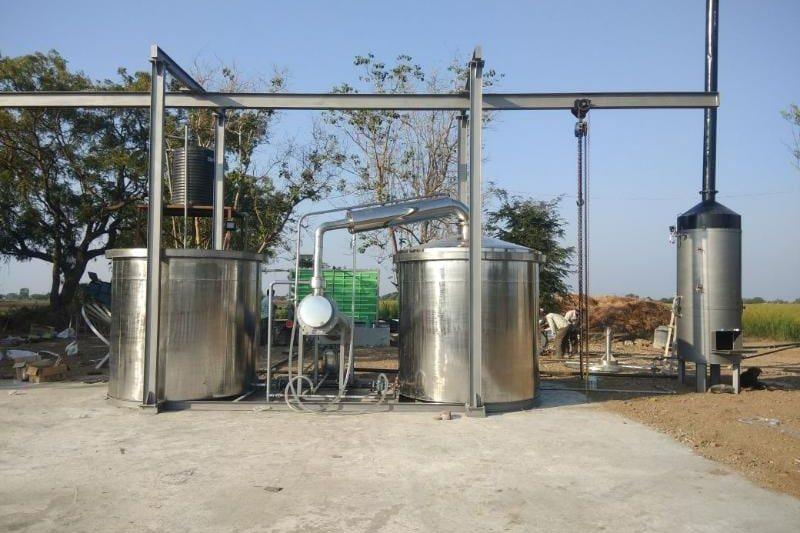
Ylang Ylang Oil Distillation Plant
Purity Levels
Flower oil (Cananga odorata), rich in esters and sesquiterpenes, cut into Extra, First, Second and Third fractions
This page is for producers who distil fresh ylang ylang flowers (Cananga odorata) and want to sell graded oil to perfumery, cosmetic and fragrance buyers. The tree is found on islands of the Indian Ocean, mainly the Comoros, Nosy Be and Madagascar, and in other tropical areas, and the feed is fresh flowers. The distinctive point is that a single long distillation is divided into timed fractions, Extra, First, Second and Third, each with a different chemical composition, or blended back into a complete oil. Density is the key parameter for the grades, so the cuts are checked against density and composition. Before a plant can be sized, a buyer needs to decide which grades will be sold, how many flowers can be delivered each day within the picking season and how close the still is to the plantation, what steam and cooling water are available, and what the fragrance customer will test for. The line then runs flower handling, fractional steam distillation with staged collection, condensation and oil-water separation. Related reading: [aromatic oil distillation plants](/products/aromatic-oil-distillation-plant) and the [specialty African botanical ingredients](/products/category/specialty-african-botanical-natural-ingredients) category.
Commercial ylang ylang oil is sold in grades, commonly Extra, First, Second and Third, with different chemical compositions that determine quality and use; five grades are defined in all, including an Extra superior grade, with density as the key parameter. Composition varies with distillation time (Grande Comore flowers distilled for three different times gave different yields and compound profiles), so cutting the condensate at set times splits one long distillation into oils of distinct character rather than one uniform oil. The Extra grade is the one recommended for high-grade perfumes; how the later fractions are used is agreed with the fragrance buyer. The still and collection train are therefore fitted with staged cut valves and separate separators, rather than a single collection. Wetted parts are SS 316L, with condensers, PLC-based control and batch records.
Key Specification Inputs
Steam rate, oil yield assay, condenser duty, oil-water separation.
Technical Specifications
| Plant type | Ylang ylang flower oil distillation line |
|---|---|
| Species | Cananga odorata |
| Feed | Fresh ylang ylang flowers |
| Part used | Flower |
| Reference marker | Germacrene D, the marker compound for this oil |
| Products | Essential oil, either cut into Extra, First, Second and Third fractions or as a complete oil; hydrosol as a co-product |
| Oil composition | Esters and sesquiterpenes; geranyl acetate, linalool and germacrene D are well-documented constituents |
| Distillation route | Steam distillation with timed fraction collection |
| Wetted materials | SS 316L, suited to clean-in-place cleaning |
| Grading approach | Fractional cuts (Extra, First, Second, Third) or blended to a complete oil |
| Condensing and separating | Multi-tube condenser on chilled water; several Florentine flasks or a valved separator train to keep fractions apart |
| Control level | Manual, semi-automatic or fully automatic PLC-SCADA, with timing control for fraction cuts |
| Scale | Set by daily flower supply, from pilot to commercial scale |
| Utilities to confirm | Steam, chilled and cooling water, compressed air, soft water and power; all project-specific |
| Finished forms | Graded or complete essential oil, and recoverable hydrosol |
Plant Capacities
| Plant Scale | Flower Throughput | Typical Use |
|---|---|---|
| Pilot | Matched to your flowers and trial plan | Proving cut timings and grade yields |
| Semi-Commercial | Sized between pilot and commercial scale | Toll distillation and sample runs across grades for perfumery buyers |
| Commercial | Sized to flower supply and committed buyer volume | Routine graded-oil production |
Throughput follows the flowers that can be delivered fresh each day and the volume a buyer has committed to. Grade yields depend on precisely timed cuts, so a pilot run is advised to fix cut timings for your flower lot and target grade mix before scaling.
Typical Process Route
Receiving and handling flowers
Fresh flowers are charged into the still with minimal delay after picking, and the permitted waiting time is set in the intake plan. Loose, ventilated containers are preferred to tightly packed sacks, which can heat the flowers.
Charging and fractional distillation
The charge is steam-distilled in the SS 316L still over an extended run. At defined times the condensate is diverted to separate collection lines, so the batch splits into Extra, First, Second and Third fractions instead of one uniform oil.
Condensing the vapour
Vapour goes through a multi-tube condenser on chilled water ahead of each cut point, bringing oil and hydrosol back to liquid for that stage of the run.
Separating each fraction
Each cut is separated in its own Florentine flask or valved separator train so the grades stay distinct. Oil is collected and the hydrosol is drawn off.
Filtering and drying
Each fraction, or the blended complete oil if a buyer wants one uniform product, is polish-filtered and dried over anhydrous sodium sulphate or under vacuum to take out residual water.
Testing and grade confirmation
Every fraction is profiled by GC-MS for its ester and sesquiterpene balance and checked for specific gravity (density), refractive index and optical rotation, which confirms which grade it matches before release.
Major Plant Equipment
- Flower reception and handling area
- SS 316L distillation still
- Steam generator or boiler connection
- Multi-tube condenser on chilled water, staged for each cut
- Valved fraction collection manifold
- Stainless-steel Florentine separators, one per grade
- Polish filtration and drying unit
- Hydrosol collection tanks
- Graded-oil storage and drum-filling station
- Clean-in-place (CIP) skid
- PLC-SCADA with fraction-cut timing control, motor control centre and instruments
Plant Output
Applications
- Fine fragrance and perfumery (the Extra grade is recommended for high-grade perfumes)
- Cosmetic and personal-care formulations
- Aromatherapy and wellness products
- Soap and cost-sensitive fragrance compounding
- Floral notes in flavour compounding
- Supply to fragrance buyers against their own grade and density limits
Key Features
Staged fraction collection
A valved, multi-line condensate train supports Extra, First, Second and Third cuts, which a single-collection still is not set up to give.
Cleanable SS 316L
Wetted surfaces are SS 316L for corrosion resistance and product purity, and can be cleaned in place between batches.
Condensing matched to each cut
Large-area multi-tube condensers on chilled water are sized for each stage of the run, so that oil and hydrosol are condensed fully at every cut.
Quick flower-to-still handling
The layout favours short travel from reception to still, because fresh flowers are the feed and should not wait in storage.
Hydrosol recovery
Separation lets the aromatic hydrosol be collected as a co-product.
Expandable capacity
Plants start at the scale the flower supply supports, with room to add stills later.
Country Pages for Ylang Ylang Oil Distillation Plant
This product is listed on the pages of the countries below, each with its own enquiry route. Where Kadali has no office in a country, enquiries are handled from the Accra office.
Related Products
Frequently Asked Questions
What should be settled first when planning a ylang ylang distillation plant?
What do Extra, First, Second and Third grade mean?
How do I choose between graded oils and a complete oil?
How quickly must flowers reach the still after picking?
How are cut points set?
What drives steam and cooling-water demand?
What can be done with the hydrosol?
How is each fraction checked before it is sold?
What should be prepared before requesting a technical proposal?
Ready to discuss your project?
Call or email Kadali Africa Ventures with your raw material, target product and capacity.