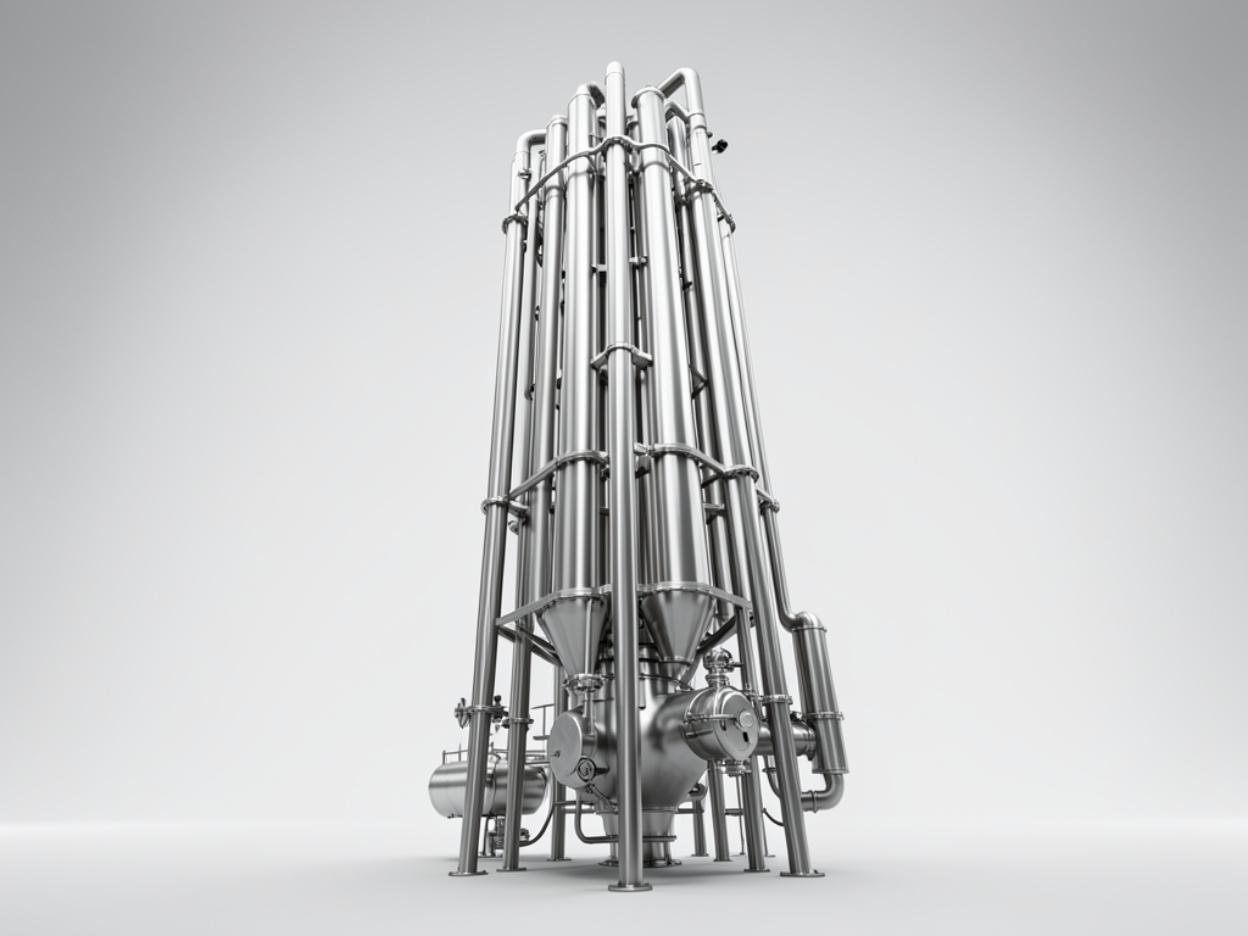
Evaporation and distillation appear in many plants for a simple reason: a liquid is too dilute, or a solvent is too valuable or too hazardous to discard. A juice line needs to remove water, an extract plant needs to strip and reuse its solvent, and a syrup or dairy operation needs to reach a target solids content without damaging the product. The equipment looks similar across these industries, but the duty is decided by the liquid, not the sector.
This page is written for plant engineers, process managers and maintenance teams who already know the liquid they want to treat. It describes how evaporator and solvent recovery duties are usually defined, how the choice between equipment types is made, and which Kadali Africa Ventures catalogue products apply. A technical proposal sets out the configuration and scope for a given duty.
What This Service Delivers
- Concentration and solvent recovery treated as separate duties with their own questions
- Evaporator type chosen against product heat sensitivity and energy supply
- Solvent safety, fouling and vacuum utilities raised before design
- Applies across food, botanical, pharmaceutical and chemical liquids
- Core catalogue covers recovery, multi-effect, vacuum and distillation duties
- Configuration and scope set out in a technical proposal
1Two Duties, Different Questions
- Concentrating a liquid: The product stays and water, or some other volatile component, is removed. The questions are feed solids, target solids, heat sensitivity and how much energy you can afford.
- Recovering a solvent: The solvent leaves the process stream, is condensed and reused. The questions are solvent identity, purity needed on return, flammability and how the residue will be handled.
- Doing both in sequence: Extract plants often concentrate an extract and then recover the solvent evolved, so one train serves both duties.
2Choosing the Equipment Type
The selection normally turns on how the liquid behaves when heated and how much steam or power is available.
- Multi-effect evaporators: Reuse the vapour from one stage to heat the next, reducing steam use per unit of water removed; FAO describes this arrangement as widely used for concentrated tomato paste. They suit large, steady duties and fluids that tolerate moderate temperatures.
- Vacuum evaporators: Lower the boiling point so heat-sensitive products, such as plant extracts or fruit liquids, are concentrated at gentler temperatures. Dairy evaporators are generally run under vacuum for the same reason.
- Solvent recovery plants: Combine feed conditioning, evaporation or distillation, condensers, vacuum and controls to return solvent to the process.
- Solvent distillation systems: Used when a solvent mixture must be separated to a stated purity, bringing reflux and condenser duty into the design.
3Catalogue Equipment
The four product pages below cover the core duties. Related product pages show where evaporation sits inside complete lines.
- Solvent Recovery Plants: The route covers feed segregation, filtration, staged evaporation or distillation, condensation, recovered-solvent storage and residue handling.
- Multi-Effect Evaporators: Feed filtration, preheating, evaporation under specified pressure, vapour condensation and product cooling.
- Vacuum Evaporation & Concentration Plants: Concentration where product sensitivity and energy use shape the design.
- Solvent Distillation Systems: Staged distillation for separating solvents, with purity, reflux and pressure as central inputs.
- Fruit Juice Concentration Plants and Sugarcane Syrup Concentration Plants: Examples of evaporation built into a product line.
4Safety, Fouling and Utilities
These are the matters that most often cause problems after start-up, and they are better raised before design.
- Flammable solvents: Recovery plants handling flammable solvents need the surrounding area, electrics and venting to be assessed for the solvent concerned. In the UK, the Health and Safety Executive lists solvents among the dangerous substances covered by its explosive-atmospheres regulations; your own country's rules apply to your site.
- Fouling: Liquids containing protein, such as milk, can foul the heating surface, which raises viscosity and cuts heat transfer and energy efficiency. Other liquids foul differently, so describe sugars, proteins and salts in the feed; this sets cleaning intervals and tube or plate selection.
- Heat damage: Prolonged heat darkens colour and gives a cooked character; FAO lists these among the common heat-induced changes during concentration, so temperature and residence time are design inputs.
- Vacuum and condenser water: A vacuum system and condenser need dependable cooling water and power.
- Residue and bottoms: Plan how thick concentrate, still bottoms or spent solvent will be discharged, stored or treated.
5Data That Defines a Duty
- Feed description: Composition, solids content, viscosity behaviour and any suspended solids or salts.
- Target: Final solids or recovered-solvent purity, and acceptable losses.
- Flow and operation: Feed rate, batch or continuous running, and hours per day.
- Heat source: Steam, thermal oil, electric or other, with available pressure.
- Materials: Compatibility of wetted parts with acids, solvents or food contact.
Frequently Asked Questions
When is a multi-effect evaporator preferable to a single-effect unit?+
Why use vacuum evaporation for plant extracts?+
Can a solvent recovery plant handle more than one solvent?+
How do I know whether my solvent area needs special classification?+
What causes an evaporator to lose capacity over time?+
Can an existing evaporator be modified instead of replaced?+
Country Pages That Discuss Evaporation & Solvent Recovery Solutions
Related Product Categories
Related Products
Enquire About Evaporation & Solvent Recovery Solutions
Tell Kadali Africa Ventures about your raw material, target product and capacity, and the technical proposal will set out the scope for your project.