Date Processing Plant: Extracts & Concentration
Part of the Kadali Africa Ventures catalogue. Send your raw material, target product and capacity for a technical proposal. Request a quote →
Product Categories
- Herbal, Botanical & Nutraceutical Extraction(9)
- Essential Oils, Spices & Oleoresins(6)
- Fruit & Vegetable Processing(8)
- Starch, Flour, Edible Oil & Food Processing(7)
- Drying & Dehydration Systems(5)
- Evaporation, Concentration & Solvent Recovery(4)
- Pharmaceutical & Industrial Process Equipment(4)
- Cocoa, Shea, Palm Oil & Oilseed Processing(6)
- Cereals, Tubers & Sugar Processing(6)
- Specialty African Botanical & Natural Ingredients(11)
- Specialty Food, Beverage & By-Product Processing(7)
Talk to Kadali Africa Ventures
Send your raw material, product and capacity for a technical proposal.
Contact Kadali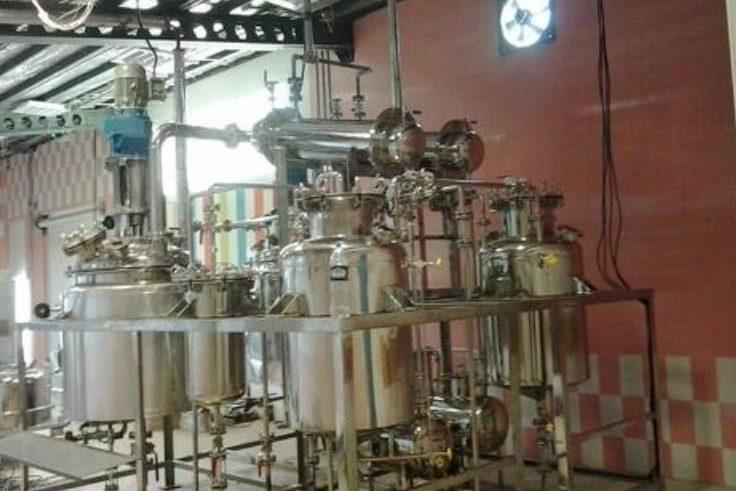
Date Processing Plant: Extracts & Concentration
Date palms are grown across the dry belts of North Africa, the Sahel and the Horn of Africa, and a good share of any crop never becomes premium table fruit. Soft, broken or off-grade dates can be turned into syrup or a date concentrate, and the pulp and stones can feed extract businesses. This page is for packers, cooperatives and ingredient processors deciding which of those routes fits. The first decisions are the date variety and condition, whether pitting happens before or after sugar extraction, the target sugar concentration and the shelf life the buyer expects. A complete date line, from sorting and washing to pitting, syrup making and packing, is scoped project by project after engineering review.
Two families of equipment apply. The first is extraction of by-products: enzyme-assisted recovery of soluble fibre from the pulp, and phenolic-acid and oil extraction from the seeds, where low-temperature CO2 extraction is one option. Date seeds carry fatty acids, tocopherols and phenolic acids, and their content falls when the seeds are processed hot. The second is concentration: a sugar-rich date liquid is thickened under vacuum in a falling-film or multiple-effect evaporator, and can be dried to powder in a spray or vacuum dryer if a dry product is wanted. How much of the sugar is recovered from the fruit, how clear the liquid is and how dark it turns on heating all depend on the date and the process, so each route is confirmed by pilot work on your fruit.
Indicative Capacity Range
- 0.5–10 tonnes dates/day
Key Specification Inputs
Pit removal, extraction ratio, Brix, filtration and microbial stability.
Technical Specifications
| Scope | Concentration equipment and date by-product extraction plants; the exact scope is agreed at enquiry stage |
|---|---|
| Extraction plants available | Soluble-fibre extraction from date pulp; phenolic-acid and oil extraction from date seeds |
| Concentration equipment available | Falling-film, multiple-effect (MEE) and vacuum evaporators |
| Outside the standard range | Whole date lines covering sorting, washing, pitting, paste or syrup making and packing |
| Wetted material | SS 316L, electropolished and suited to CIP cleaning on the plants named above |
| Controls | PLC-SCADA, set up to the requirement |
| Capacity basis | Set to the requirement |
| Inputs to settle first | Date variety and condition, pitted or unpitted feed, target sugar concentration, microbial stability and fill format |
Typical Process Route
Receive and Prepare the Fruit
Dates are inspected, washed and, for a syrup, pitted. Pulp or stones are then reduced in size according to which extract is being made.
Extract the Soluble Fraction
Pulp fibre is recovered by the extraction route agreed in process development, enzyme-assisted where the project specifies it. Seed routes use microwave- or ultrasound-assisted extraction for phenolic compounds and CO2 extraction at low temperature for seed oil and extracts. Sugar for syrup is taken into water, usually from pitted, ground fruit.
Separate Solids from Liquid
Fruit solids, seed fragments and haze are removed from the extract by filtration or centrifugation, which also protects the evaporator from fouling.
Concentrate
The clear liquid is preheated and thickened under vacuum, so evaporation happens at lower temperature and less sugar is darkened: lowering the concentration temperature from 100 to 70 °C can cut hydroxymethylfurfural, a heat-damage marker, about tenfold in date syrup. Membrane concentration can be added ahead of the evaporator where the project calls for it.
Standardise and Stabilise
The concentrate is adjusted to the specification agreed with the buyer, then cooled and prepared for storage, with microbial stability planned as part of that specification.
Dry and Pack
Where a powder is specified, the concentrate goes to a dryer. Liquid and powder products are then filled to the pack format the customer needs.
Major Plant Equipment
- Cleaning and size-reduction equipment for pulp or seed
- Jacketed enzyme vessel with pH and temperature control
- Supercritical CO2 extraction vessels for seed oil
- Filtration and centrifuge package
- Falling-film or multiple-effect evaporator
- Membrane concentration module, if the project needs it
- Dryer for powder products, if specified
- CIP skid
- Holding and product tanks
- PLC-SCADA panel and instruments
Plant Output
Applications
- Syrup or liquid sweetener made from soft and off-grade dates
- Soluble fibre extract from date pulp
- Phenolic-acid extract and oil from date seeds
- Concentrated date liquid for food and beverage makers
- Date powder where a dry sweetener ingredient is specified
- Adding value to date by-products that currently go to waste
Key Features
Two Routes, Matched to the Fruit
Syrup and concentrate use the sugar fraction, while fibre, phenolic and oil extracts use pulp and stones. Choosing which to pursue depends on your fruit and your buyers.
Gentle Vacuum Concentration
Falling-film and multiple-effect evaporators can be run under vacuum, which keeps the boiling temperature down for a heat-sensitive sugar liquid. Fit is confirmed on your own liquid.
Pilot Work Before Sizing
Sugar recovery, clarity and colour are established on your own dates in process development, not taken from a general figure.
Honest Scope Boundaries
A proposal says plainly which stages are equipment the range covers and which, such as sorting or pitting, must be sourced separately.
Country Pages for Date Processing Plant: Extracts & Concentration
This product is listed on the pages of the countries below, each with its own enquiry route. Where Kadali has no office in a country, enquiries are handled from the Accra office.
Related Products
Frequently Asked Questions
Which should I choose: date syrup, a by-product extract, or both?
What has to be settled before a date syrup or concentrate plant is sized?
Can a falling-film or multiple-effect evaporator concentrate date liquid?
Why does filtration matter so much ahead of evaporation?
How do heat and moisture affect the product?
What information should I send with a date project enquiry?
Can the concentrate be turned into powder?
Do I need a pilot trial, and what does it cover?
What decides the shelf life of date syrup or concentrate?
Ready to discuss your project?
Call or email Kadali Africa Ventures with your raw material, target product and capacity.