Coffee Extraction & Concentration Plants
A soluble coffee extraction and concentration plant takes roasted and ground coffee, extracts the soluble solids with hot water, concentrates the extract and, where powder is wanted, dries it.
Product Categories
- Herbal, Botanical & Nutraceutical Extraction(9)
- Essential Oils, Spices & Oleoresins(6)
- Fruit & Vegetable Processing(8)
- Starch, Flour, Edible Oil & Food Processing(7)
- Drying & Dehydration Systems(5)
- Evaporation, Concentration & Solvent Recovery(4)
- Pharmaceutical & Industrial Process Equipment(4)
- Cocoa, Shea, Palm Oil & Oilseed Processing(6)
- Cereals, Tubers & Sugar Processing(6)
- Specialty African Botanical & Natural Ingredients(11)
- Specialty Food, Beverage & By-Product Processing(7)
Talk to Kadali Africa Ventures
Send your raw material, product and capacity for a technical proposal.
Contact Kadali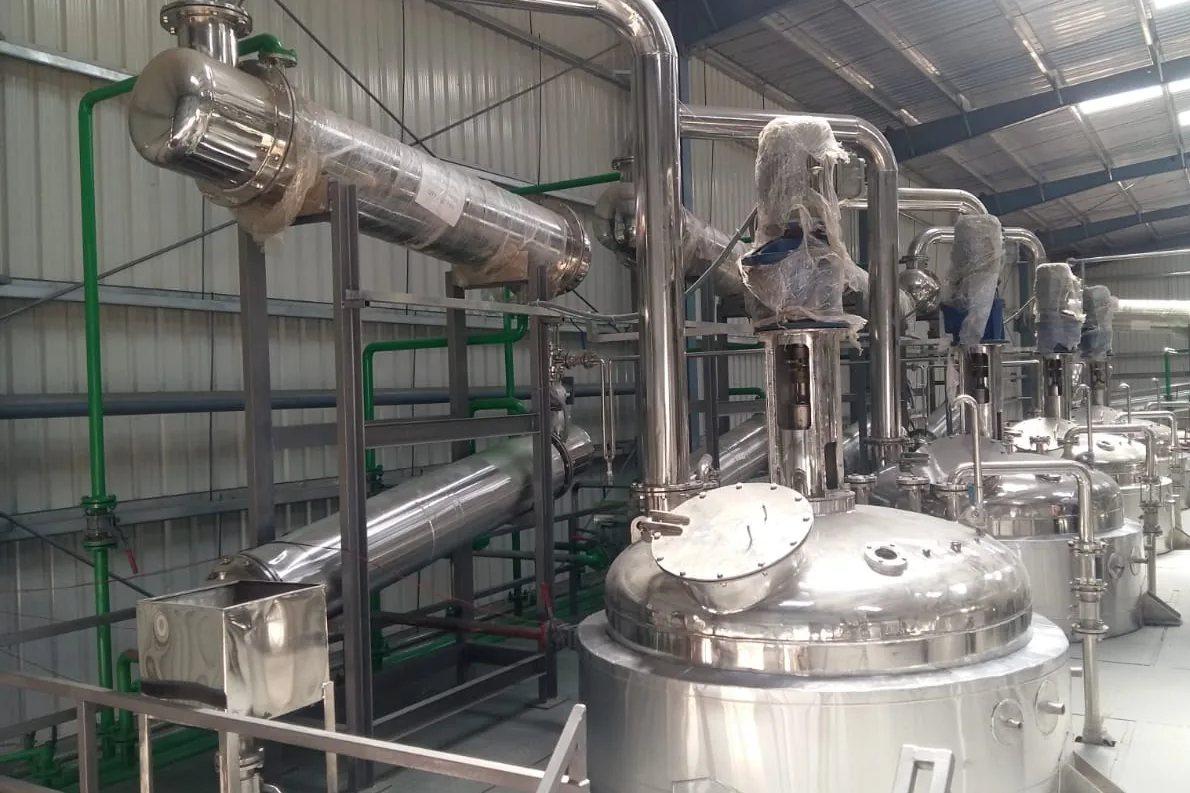
Coffee Extraction & Concentration Plants
The feed is roasted coffee, so green-bean cleaning, hulling and roasting sit upstream in a separate scope. The product is a liquid extract, a concentrate, or after drying an instant powder or granule. A buyer should settle first whether the end product is concentrate or powder, which roast and blend the line will run, and whether the flavour of the finished product justifies an aroma recovery circuit. Those choices decide the number of extraction stages, the evaporator type, the dryer and the steam demand. Spent grounds leave the line in large volume, wet and rich in oil, so a route for them belongs in the site plan from the start, often as boiler fuel.
Roasted beans are ground to a size that exposes the soluble material without choking the extraction column. The grounds then pass through several stages of hot-water extraction, usually in columns connected in series so that fresh water meets the most exhausted grounds and the strongest extract leaves the freshest. Grind size, water temperature and the number of stages are process choices, and a darker roast gives a different extract from a lighter one, so the roast is fixed before extraction targets are written. The extract is clarified and then concentrated by evaporation, which drives off water but also carries volatile aroma away with it. Where flavour matters, the aroma is stripped from the extract with steam first, held aside and added back to the concentrate before drying. Drying is the largest choice: spray drying gives high throughput and lower running cost but loses more volatile flavour, while freeze drying keeps more aroma at higher capital and energy cost. Instant granules are normally agglomerated after drying. Steam is the main utility, and the spent grounds can fire the boiler that makes it.
Indicative Capacity Range
- 100–5,000 kg feed/day
Key Specification Inputs
Extraction solvent/water, extraction stages, batch time, filtration and recovery.
Technical Specifications
| Technology | Hot-water extraction of roasted and ground coffee, evaporative concentration and optional drying |
|---|---|
| Feed | Roasted and ground coffee; roast degree and grind are fixed before the extraction is designed |
| Extraction Arrangement | Columns in series or batch vessels, with the number of stages set by the target solids and the coffee type |
| Aroma Handling | Optional steam-stripping circuit, with the recovered aroma added back to the concentrate before drying |
| Concentration | Falling-film evaporation, single or multiple effect, chosen by steam cost and flavour target |
| Drying Options | Spray drying for throughput, freeze drying for aroma retention, or concentrate only with no dryer |
| Heat Source | Steam from a boiler that can burn spent grounds or another local fuel |
| Contact Material | Food-grade stainless steel on all product-contact parts, with cleaning circuits for the extraction and evaporation sections |
| Automation | PLC control of extraction temperature, flow, evaporator and dryer, with batch records |
| Utilities | Steam, cooling water, clean process water, electric power and compressed air |
| Final Output | Liquid extract, concentrate, or instant powder or granules, with wet spent grounds as a by-product |
Typical Process Route
Fixing roast and grind
The roast level and grind of the incoming coffee are set before anything else, because they change the solids, flavour and filtering behaviour of the extract. Blends that vary from week to week make steady extraction harder.
Staged hot-water extraction
Ground coffee is extracted in several stages, usually in columns in series with water moving against the flow of grounds. Control the temperature and the water-to-coffee ratio, because both set the solids drawn out and how harsh the extract tastes.
Separating spent grounds
Grounds are drained and pressed to recover extract that would otherwise leave with them. Fines carried into the extract are removed in this step so that they do not foul the evaporator later.
Clarifying the extract
Remaining fines and sediment are taken out by a centrifuge or fine filter, leaving a clear liquid. Poor clarification shows up later as scale on heating surfaces and cloudiness in the product.
Aroma recovery
Steam strips the volatile aroma from the extract or from the first evaporation stage and condenses it separately. The aroma is kept cool and sealed until it is added back, since it is lost quickly to heat and air.
Concentration by evaporation
Water is evaporated under vacuum, often in a multiple-effect falling-film unit, to a high-solids concentrate. Short heat exposure protects flavour, and the number of effects trades capital cost against steam use.
Aroma add-back and drying
Recovered aroma rejoins the concentrate, which is then spray dried or freeze dried. Spray drying favours throughput and cost, freeze drying favours retained aroma, and the choice should follow the product and its price.
Agglomeration, cooling and packing
Powder from a spray dryer is often agglomerated into granules that dissolve better, then cooled and packed in moisture-proof packaging. Instant coffee takes up moisture quickly, so the packing room must be dry.
Process & Equipment Modules
- Grinder for roasted coffee, where grinding is in scope
- Extraction column battery with hot-water heater
- Grounds press and conveyor
- Extract centrifuge and polishing filter
- Aroma stripping and recovery unit
- Multiple-effect falling-film evaporator
- Concentrate holding and blending tanks
- Spray dryer or freeze dryer
- Agglomerator and cooling section
- Steam boiler suited to spent-grounds firing
- Packing station with moisture-proof liners
- PLC and HMI control panel
Plant Output
Applications
- Instant coffee powder for jars and sachets
- Freeze-dried coffee granules for premium instant products
- Liquid coffee concentrate for beverage makers
- Extract bases for ready-to-drink and cold-brew coffee
- Soluble coffee for 3-in-1 sachet mixes and vending drinks
- Coffee extract as a flavour in dairy, ice cream and bakery products
- Spent coffee grounds as boiler fuel or as a source of coffee oil
Key Features
Countercurrent Extraction Columns
Fresh water meets the most exhausted grounds, which draws out more soluble solids per kilogram of coffee than a single batch soak and gives a stronger extract.
Aroma Recovery Circuit
Steam stripping and add-back keep volatile aroma that evaporation would otherwise lose. Where the point of add-back sits is a design choice worth asking about.
Low-Temperature Evaporation
Vacuum evaporation, with several effects where steam is costly, concentrates the extract while limiting the heat the flavour is exposed to.
Dryer Matched to the Product
Spray drying suits high throughput at a lower cost, freeze drying suits a premium product where aroma retention pays for the extra energy.
Spent-Grounds Handling
Pressing and conveying the wet grounds to a boiler or a drying area is part of the line, not a separate afterthought.
Country Pages for Coffee Extraction & Concentration Plants
This product is listed on the pages of the countries below, each with its own enquiry route. Where Kadali has no office in a country, enquiries are handled from the Accra office.
- Coffee Extraction & Concentration Plants: Uganda
- Coffee Extraction & Concentration Plants: Ethiopia
- Coffee Extraction & Concentration Plants: Rwanda
- Coffee Extraction & Concentration Plants: Burundi
- Coffee Extraction & Concentration Plants: Democratic Republic of Congo
- Coffee Extraction & Concentration Plants: Angola
- Coffee Extraction & Concentration Plants: Central African Republic
Related Products
Frequently Asked Questions
What information is needed to size Coffee Extraction & Concentration Plants?
What capacity range does Coffee Extraction & Concentration Plants cover?
Is freeze drying better than spray drying for instant coffee?
Is an aroma recovery circuit worth adding?
How many extraction stages and what grind should a proposal assume?
How does roast level change the extraction plant?
What happens to the spent coffee grounds?
How is this different from a coffee processing plant?
How do I request a proposal for Coffee Extraction & Concentration Plants?
Enquire about Coffee Extraction & Concentration Plants
Send your raw material, target product and capacity to Kadali Africa Ventures for a technical proposal.