Herbal Extraction Plants
Part of the Kadali Africa Ventures catalogue. Send your raw material, target product and capacity for a technical proposal. Request a quote →
Product Categories
- Herbal, Botanical & Nutraceutical Extraction(9)
- Essential Oils, Spices & Oleoresins(6)
- Fruit & Vegetable Processing(8)
- Starch, Flour, Edible Oil & Food Processing(7)
- Drying & Dehydration Systems(5)
- Evaporation, Concentration & Solvent Recovery(4)
- Pharmaceutical & Industrial Process Equipment(4)
- Cocoa, Shea, Palm Oil & Oilseed Processing(6)
- Cereals, Tubers & Sugar Processing(6)
- Specialty African Botanical & Natural Ingredients(11)
- Specialty Food, Beverage & By-Product Processing(7)
Talk to Kadali Africa Ventures
Send your raw material, product and capacity for a technical proposal.
Contact Kadali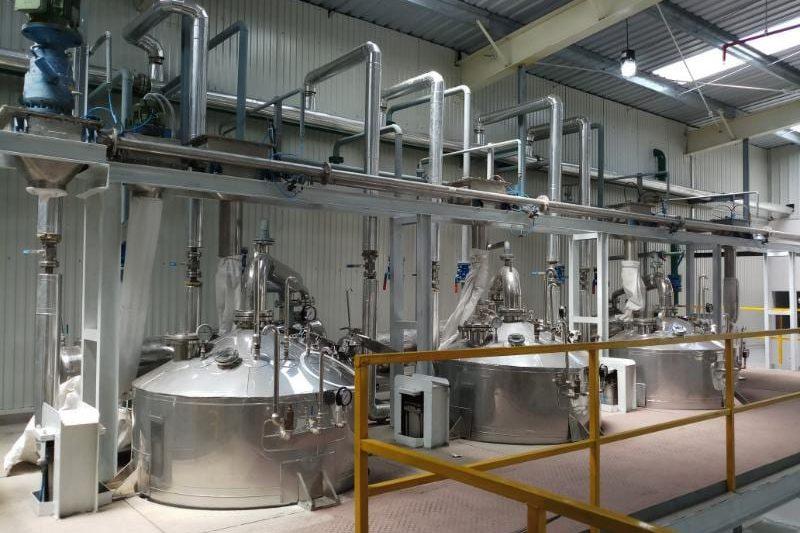
Herbal Extraction Plants
A herbal extraction plant turns dried medicinal or aromatic plant material into a concentrated extract or a free-flowing powder. For a processor in Africa, the first questions are about the feedstock and the extract rather than the vessels: which plant part is bought (leaf, calyx, root, bark or fruit), how dry and how consistent it is across the seasons, and what the customer expects the extract to contain. The plants are listed as complete trains in SS 316L, sized once those answers are written down; who engineers, supplies and installs each item is confirmed in the technical proposal. Typical users are botanical ingredient makers, extract producers, nutraceutical businesses and contract processors. The planning capacity range is shown elsewhere on this page.
Every herbal plant follows the same backbone: feed preparation, extraction, separation of liquid from spent herb, concentration with solvent recovery, standardisation and drying. What differs from one herb to the next is the solvent system, the number of extraction stages, the time and temperature of each batch and the way the concentrate is dried. Product-contact parts are SS 316L and the controls are automated. Capacity and utilities are confirmed project by project.
Indicative Capacity Range
- 100–5,000 kg feed/day
Key Specification Inputs
Extraction solvent/water, extraction stages, batch time, filtration and recovery.
Typical Process Route
Receiving and checking the herb
Each lot is identified against the botanical name and plant part ordered, its moisture is measured and foreign matter is removed. A lot that fails these checks should not reach the extractor, because everything downstream depends on it.
Milling to a uniform size
The herb is reduced to an even particle size. Particle size affects how well the solvent takes up the actives, so the grind is set by trial on each herb, with the later filtration kept in mind.
Extraction
The milled herb is contacted with water, alcohol or a hydroalcoholic mix inside a closed, jacketed SS 316L extractor. Temperature is held under control, and the herb is often extracted in more than one cycle to recover the target actives more fully.
Separating liquid from spent herb
The extract (miscella) is clarified through a plate-and-frame filter press, then passed through cartridge filters for polishing. The spent herb leaves the plant as solid residue.
Concentration and solvent recovery
A falling-film or vacuum evaporator removes most of the solvent. Vapour is condensed and returned through the condenser system, so alcohol can be reused instead of discarded.
Standardisation
The concentrate is assayed against the specification agreed for that herb and adjusted until it meets the declared target. This step is done before drying, while the material is still liquid.
Drying and release testing
The standardised extract is dried by spray or vacuum drying. Before release it is tested against the specification agreed with the buyer, which typically covers assay, residual solvent, heavy metals, microbial load and moisture.
Major Plant Equipment
- Cleaning and sieving line for the dried herb
- Mill or pulveriser
- Jacketed SS 316L extractor
- Solvent storage tanks and transfer pumps
- Plate-and-frame filter press and cartridge polish filters
- Falling-film / vacuum evaporator
- Condensers and solvent recovery unit
- Standardisation and blending vessel
- Spray dryer or vacuum dryer
- Clean-in-place (CIP) skid
- Automation panel and instruments
Plant Output
Applications
- Traditional and Ayurvedic herbal medicine makers needing consistent extracts
- Standardised botanical ingredients for pharmaceutical and herbal-medicine manufacturers
- Extracts for capsule, tablet and supplement producers
- Flavour, food and beverage ingredient supply
- Cosmetic and personal-care botanical actives
Key Features
Hygienic stainless-steel build
Wetted surfaces are electropolished SS 316L, and the plant is designed for clean-in-place washing between batches.
Solvent returned to the process
Condensed solvent is collected for reuse after each batch, which limits solvent purchase and the waste to be handled.
Set up around the herb
Solvent, temperature and cycle time are chosen for the chemistry of the herb and the specification the buyer has to meet.
Matched drying
A spray or vacuum dryer sized to the concentrate delivers a low-moisture powder suitable for blending or filling capsules.
Spent herb to plan for
The spent herb leaves the extractor as a damp solid residue, so the site needs a handling route for it, such as compost or boiler fuel where the herb allows.
Country Pages for Herbal Extraction Plants
This product is listed on the pages of the countries below, each with its own enquiry route. Where Kadali has no office in a country, enquiries are handled from the Accra office.
- Herbal Extraction Plants: Ghana
- Herbal Extraction Plants: Nigeria
- Herbal Extraction Plants: Tanzania
- Herbal Extraction Plants: Kenya
- Herbal Extraction Plants: Uganda
- Herbal Extraction Plants: Côte d’Ivoire
- Herbal Extraction Plants: Democratic Republic of Congo
- Herbal Extraction Plants: South Africa
- Herbal Extraction Plants: Ethiopia
- Herbal Extraction Plants: Cameroon
- Herbal Extraction Plants: Egypt
- Herbal Extraction Plants: Morocco
Frequently Asked Questions
What should I settle before asking for a herbal extraction plant?
Which herbs can a herbal extraction plant handle?
Should I extract with water, alcohol or a mix of both?
How should the herb be prepared in warm, humid conditions?
How is this different from a nutraceutical extraction plant?
What drives solvent and energy use in an extraction plant?
What should I prepare for a technical proposal?
What does a herbal extraction plant cost?
Ready to discuss your project?
Call or email Kadali Africa Ventures with your raw material, target product and capacity.