Pharmaceutical Extraction Plants
A pharmaceutical extraction plant turns qualified botanical raw material into a consistent extract or active ingredient in a closed, cleanable line built for documented, repeatable batches.
Product Categories
- Herbal, Botanical & Nutraceutical Extraction(9)
- Essential Oils, Spices & Oleoresins(6)
- Fruit & Vegetable Processing(8)
- Starch, Flour, Edible Oil & Food Processing(7)
- Drying & Dehydration Systems(5)
- Evaporation, Concentration & Solvent Recovery(4)
- Pharmaceutical & Industrial Process Equipment(4)
- Cocoa, Shea, Palm Oil & Oilseed Processing(6)
- Cereals, Tubers & Sugar Processing(6)
- Specialty African Botanical & Natural Ingredients(11)
- Specialty Food, Beverage & By-Product Processing(7)
Talk to Kadali Africa Ventures
Send your raw material, product and capacity for a technical proposal.
Contact Kadali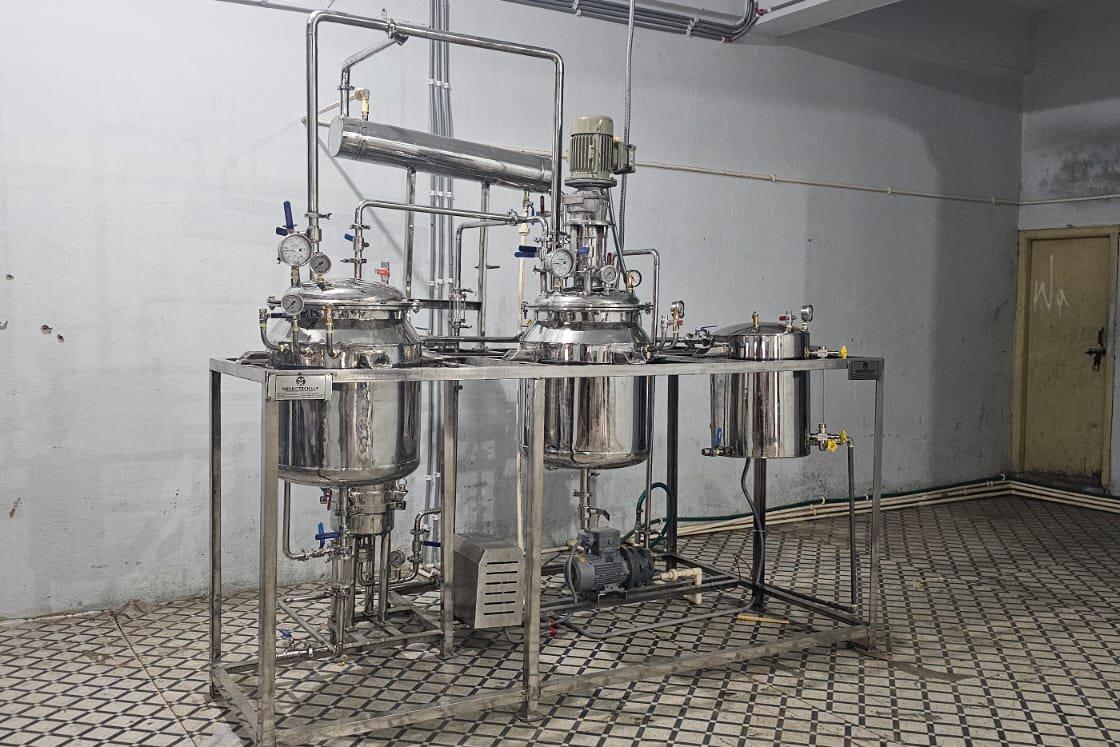
Pharmaceutical Extraction Plants
It suits producers of herbal actives and regulated botanical ingredients, and pharmaceutical process facilities adding a plant-extraction step. What a buyer must settle first is the product's regulatory status and market, because that decides how much hygienic design, documentation and process validation the plant needs. Then comes the extract itself: the botanical and plant part, the marker compound or ratio the customer will test, the residual solvent the customer will accept, and the dryness and form of the finished extract. Hygienic design, contact materials and the amount of validation support decide the design and the price far more than raw capacity does. Throughput is modest, since batches are small and every batch must be traceable to its raw material and its equipment. If the product will not be sold into a regulated market, a standard botanical plant is cheaper and simpler.
The process route is the usual one, extraction, separation, concentration and drying, but each part is built for cleanability and repeatability. Vessels are closed, with polished product-contact surfaces, sanitary connections, no dead legs and full drainage, so residues cannot hide between batches. Metal, gaskets, hoses and filter media are checked against the actual solvent and extract, because surfaces that touch the product must not react with it, add to it or absorb from it. The solvent is chosen with its removal in mind: concentration and drying must be able to bring residual solvent down to what the final specification allows, and less toxic solvents are preferred where the botanical allows. Consistency comes from procedure as much as hardware. Solvent charge, temperature, contact time and drying conditions are fixed in a written procedure, and calibrated instruments with recipe control repeat it from lot to lot. Composition still moves with solvent, temperature, time and drying route, so these set points are recorded. Herb input and extract output are weighed so the plant-to-extract ratio can be stated for each lot, and an equipment log ties each lot to the vessels, filters and dryers it passed through. Enclosed filtration and vacuum drying protect heat-sensitive actives, and the extent of validation support is agreed before the order.
Indicative Capacity Range
- 50–2,000 kg dry feed/day
Key Specification Inputs
Process validation, materials, hygienic design, regulatory requirements.
Technical Specifications
| Technology | Closed batch solvent extraction train for botanical actives and standardised extracts |
|---|---|
| Surface Finish | Polished, crevice-free product-contact surfaces with sanitary connections and drainable low points |
| Contact Material | Stainless steel, with gaskets, hoses and filter media checked against the solvent and extract in use |
| Extraction Solvent | Water, ethanol or an ethanol-water mix, chosen with later removal in mind |
| Filtration | Enclosed filters ending in a cartridge polish stage, with media chosen for low shedding |
| Concentration | Vacuum evaporator with condenser and a sealed vapour circuit where the solvent is flammable |
| Drying | Vacuum tray, vacuum paddle or spray dryer, chosen by heat sensitivity and the residual-solvent target |
| Cleaning | Spray-ball clean-in-place or manual wash-down, with a cleaning routine written for each product |
| Weighing | Scales or load cells on the herb charge and the extract output, so the plant-to-extract ratio can be stated per lot |
| Automation | PLC with recipe control, calibrated instruments, and batch and alarm logging |
| Documentation | Drawings, material records and test records from testing before shipment, with the scope agreed before the order |
Typical Process Route
Raw material receipt and identity check
Each lot is held until botanical identity, plant part, moisture and foreign matter are checked against a written specification, and it is given a lot number that follows it into the extract batch. Buyers who sell into regulated markets settle these controls before they ask what the equipment must do.
Cleaning and size reduction
The herb is cleaned and milled in an enclosed, dust-controlled area to a size set by the extraction method. Mill, sieve and hopper surfaces are chosen so that metal fragments and carry-over from earlier lots stay under control.
Closed extraction
The weighed herb and solvent are charged to a closed jacketed vessel and held at the temperature and contact time in the written procedure. Solvent charge, temperature and time are the settings that fix the composition of the extract, so they are controlled and logged.
Clarification
The extract is separated from spent herb and fine particles in enclosed filters, usually ending in a cartridge polish stage. Filter media are checked so that they do not shed fibres or release material into the extract.
Concentration and solvent recovery
The solution is evaporated under vacuum at a low temperature to a thick liquor, with the solvent condensed in a sealed circuit. Recovered solvent is reused only where its quality has been checked, and its removal from the extract sets how long this step runs.
Purification (if needed)
If the specification calls for a narrower profile or the removal of unwanted compounds, the concentrate passes through column, partition or crystallisation steps. This adds equipment, solvent and cleaning, so it is included only for products that need it.
Drying and milling
The concentrate is dried to a powder in a vacuum dryer or similar, then sieved or milled to the agreed particle size. Drying must bring residual solvent to the specification without heat damage to the actives.
Weighing, packing and batch record
Extract output is weighed against herb input to state the plant-to-extract ratio, then packed in sealed liners. The batch record and equipment log are completed so the lot can be traced back to its raw material and to every vessel it touched.
Process & Equipment Modules
- Herb intake and weighing station
- Sieve and enclosed mill with dust extraction
- Jacketed stainless-steel extraction vessel with agitator
- Solvent storage and dosing set
- Enclosed filter and cartridge polish filter
- Vacuum evaporator with condenser
- Solvent receiver and recovery unit
- Vacuum dryer
- Sifter and blender for the dried extract
- Spray-ball clean-in-place skid
- Load cells and calibrated instruments
- PLC panel with data logger
Plant Output
Applications
- Herbal active ingredients for pharmaceutical dosage forms
- Standardised extracts for makers of registered herbal medicines
- Starting extract for isolating single plant compounds
- Extracts for contract manufacturers of finished doses
- Liquid and soft extracts for syrups, tinctures and oral preparations
- Trial and pilot batches for new botanical products
Key Features
Closed, Cleanable Train
Closed vessels, polished contact surfaces, sanitary connections and full drainage leave fewer places where residue from a previous batch can remain.
Materials Matched to the Solvent
Metal, gaskets, hoses and filter media are checked against the actual solvent and extract, so nothing reacts with, adds to or absorbs from the product.
Solvent Chosen for Removal
Concentration and drying are sized so that the solvent can be taken down to the residual level the specification allows.
Procedure Held by Controls
Recipe control, calibrated instruments, and alarm and batch logging repeat the written procedure from lot to lot.
Weighing and Batch Records
Weighing herb in and extract out gives the plant-to-extract ratio for each lot, and an equipment log ties each lot to its vessels, filters and dryers.
Related Products
Frequently Asked Questions
What information is needed to size Pharmaceutical Extraction Plants?
What capacity range does Pharmaceutical Extraction Plants cover?
What makes this different from an ordinary botanical extraction plant?
Is the extract ratio enough to describe a botanical extract?
How does solvent choice affect residual solvent in the extract?
Does process validation apply to a botanical extract, or only to finished medicines?
Can one pharmaceutical extraction line run several botanicals?
How do I request a proposal for Pharmaceutical Extraction Plants?
Enquire about Pharmaceutical Extraction Plants
Send your raw material, target product and capacity to Kadali Africa Ventures for a technical proposal.