Citrus Juice Processing Plants
A citrus juice plant is built around the extractor: it has to squeeze out juice without pressing bitter peel oil and pith into it, and it normally takes the peel oil off as a separate product.
Product Categories
- Herbal, Botanical & Nutraceutical Extraction(9)
- Essential Oils, Spices & Oleoresins(6)
- Fruit & Vegetable Processing(8)
- Starch, Flour, Edible Oil & Food Processing(7)
- Drying & Dehydration Systems(5)
- Evaporation, Concentration & Solvent Recovery(4)
- Pharmaceutical & Industrial Process Equipment(4)
- Cocoa, Shea, Palm Oil & Oilseed Processing(6)
- Cereals, Tubers & Sugar Processing(6)
- Specialty African Botanical & Natural Ingredients(11)
- Specialty Food, Beverage & By-Product Processing(7)
Talk to Kadali Africa Ventures
Send your raw material, product and capacity for a technical proposal.
Contact Kadali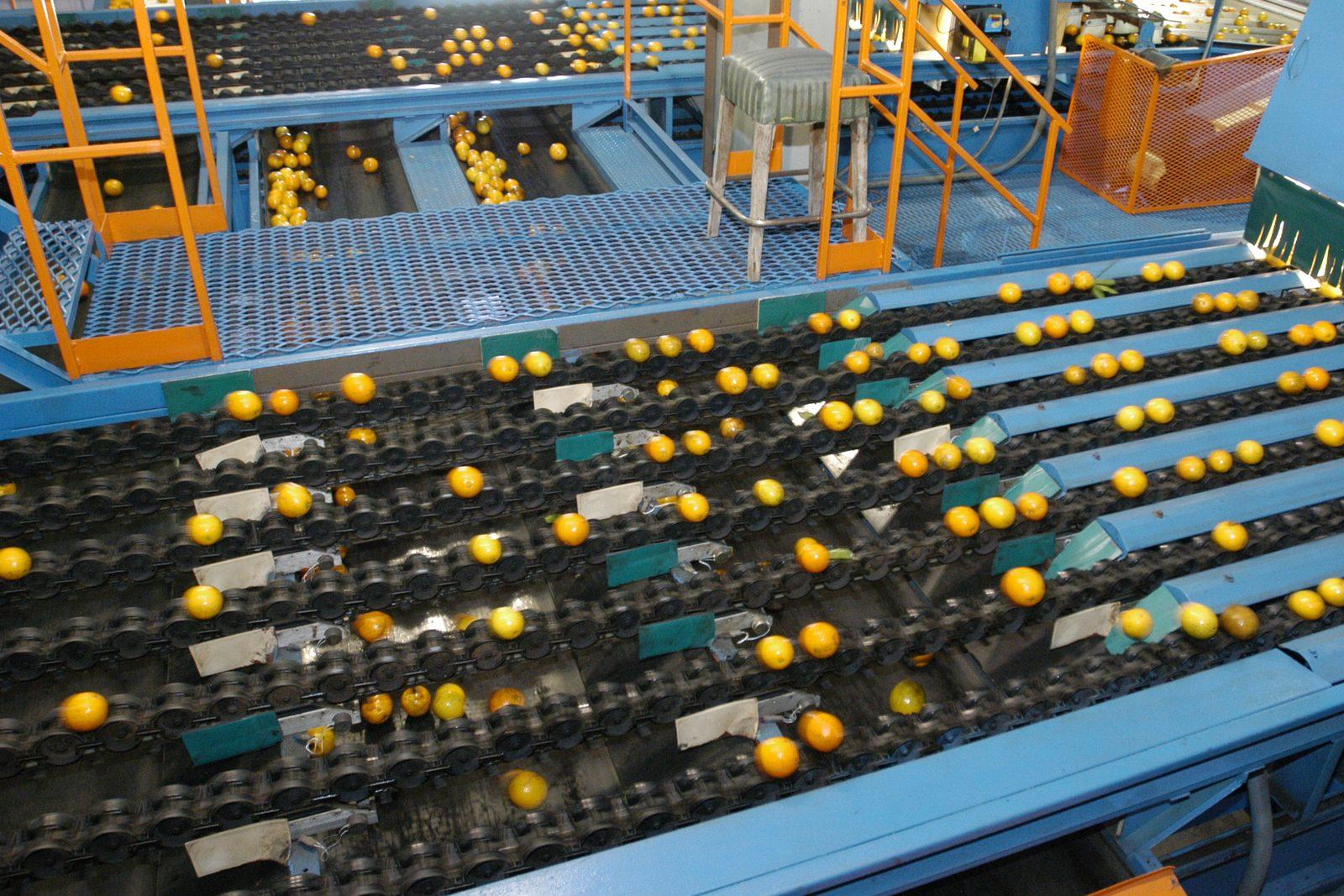
Citrus Juice Processing Plants
The fruit may be oranges, grapefruit, mandarins, lemons or limes, and the type, size and maturity of what the growers deliver decide which extractor suits and how much juice each tonne gives. Fruit is graded by size before extraction, the juice passes through a finisher that holds back seed and skin, and a heat treatment follows. A buyer has to settle the product (chilled or aseptic not-from-concentrate juice, or concentrate), whether peel oil is recovered, the fruit supply across the season and the pack type. Peel is the largest part of what is left after squeezing, so a drying, feed or disposal route is part of the plant. Fruit of a tropical orange often stays green-skinned when ripe, so the colour of the peel is a poor guide to ripeness at sorting.
Citrus juice sits inside a fruit whose peel holds oil, and whose seeds and skin carry bitter compounds, so the extractor is the central choice. In-line cup extractors squeeze the whole fruit between two cups and separate juice, peel and core in one stroke; they handle large volumes but need fruit graded to a narrow size band. Rotary reamers work on halved fruit and suit lemons, limes and smaller lines. Presses cope with irregular fruit at lower throughput. Peel oil sits in small sacs in the skin; it is released by rasping the whole fruit or by the extractor itself, washed off with water, and recovered from the emulsion by centrifuge. Oil left in the juice gives a harsh, bitter taste, so oil recovery and juice quality are linked. The finisher removes seed, pith and pulp pieces, which is where much of the bitterness sits. Heat treatment then protects the juice and stops the cloud from settling out. Not-from-concentrate juice is held in chilled or aseptic tanks, while a concentrate goes to an evaporator with aroma recovery. Peel and pulp leave the line as a wet residue, and a press, dryer or drain-off is sized to its volume.
Indicative Capacity Range
- 500–10,000 kg fruit/hour
Key Specification Inputs
Peel oil handling, bitterness control, juice yield, pasteurisation.
Technical Specifications
| Technology | Citrus juice extraction line with peel oil recovery, finishing and heat treatment |
|---|---|
| Extraction Principle | Cup extractor, rotary reamer or press, chosen by fruit type, size range and volume |
| Fruit Preparation | Washing, sorting and size grading ahead of extraction |
| Peel Oil Recovery | Oil wash-off, centrifuge separation and polishing, where oil is a product |
| Finishing | Finisher with changeable screens for seed, pith and pulp removal |
| Debittering | Optional step for bitter varieties; not needed for all fruit |
| Heat Treatment | Plate or tubular pasteuriser; steam or hot water, chosen by local fuel cost |
| Juice Storage | Chilled or aseptic tanks for not-from-concentrate juice |
| Contact Material | Food-grade stainless steel and acid-resistant seals on juice-contact parts |
| Automation | Manual or PLC control, with temperature records at pasteurisation |
| Residue Handling | Peel press, dryer or conveyor for the solid stream |
Typical Process Route
Receiving, Washing and Size Grading
Fruit is washed and graded by size, because a cup extractor needs a narrow size band to squeeze properly and fruit of mixed sizes loses juice or crushes peel into it.
Sorting and Maturity Check
Damaged and mouldy fruit is removed. Fruit is also checked for sugar-to-acid balance, since lots picked at different times can taste very different.
Juice Extraction
Fruit passes through cup extractors, reamers or presses, which split juice from peel and core without pressing the pith.
Peel Oil Recovery
Oil released from the skin is washed off and separated from the water in a centrifuge. It is sold on or discarded, but not left to drift into the juice.
Finishing
A finisher removes seed, pith and skin fragments from the pulpy juice. Check seed and skin carry-over here, because bitterness comes with them.
Debittering or Deoiling, Where Needed
Juice from bitter varieties may need a debittering step, and juice with high oil is deoiled under vacuum before heating.
Pasteurisation
A short heat treatment preserves the juice and holds the cloud. Over-heating spoils the fresh flavour, so time and temperature are controlled.
Concentration or Chilled Storage
Juice for concentrate goes to an evaporator, ideally with aroma recovery. Not-from-concentrate juice is held chilled or under aseptic conditions.
Filling and Peel Residue Handling
Juice is filled hot or aseptically. Peel and pulp are pressed, dried or carted away before they sour.
Process & Equipment Modules
- Fruit washer and size grader
- Sorting table
- Cup extractor or rotary reamer
- Peel oil recovery unit with centrifuge
- Finisher with changeable screens
- Deoiler or debittering unit, where needed
- Pasteuriser
- Chilled or aseptic storage tanks
- Evaporator with aroma recovery, optional
- Filling line
- Peel press and dryer
- PLC panel
Plant Output
Applications
- Not-from-concentrate orange juice in cartons and bottles
- Orange, grapefruit and mandarin concentrate for bulk sale or reconstitution
- Lemon and lime juice for cooking, drinks and food manufacture
- Cold-pressed peel oil for flavour and fragrance buyers
- Citrus pulp cells for juice drinks with visible pulp
- Dried citrus peel and pulp for animal feed
- Citrus molasses from pressed peel liquor
Key Features
Extractor Matched to the Fruit
Cup extractors, reamers and presses each suit different fruit and volumes, so the choice follows the crop and not a catalogue default.
Size Grading Before Extraction
A grader ahead of the extractor keeps yield up and keeps oil and pith out of the juice.
Peel Oil Recovery Loop
Oil is washed off, centrifuged and polished as a saleable product, and it is kept out of the juice.
Finisher That Holds Back Seed and Skin
A finisher with changeable screens limits the seed and skin carry-over that brings bitterness.
Peel Handling at Plant Scale
A press, dryer or hauling route sized to the peel stream, which is the largest solid output of the line.
Country Pages for Citrus Juice Processing Plants
This product is listed on the pages of the countries below, each with its own enquiry route. Where Kadali has no office in a country, enquiries are handled from the Accra office.
Related Products
Frequently Asked Questions
What information is needed to size Citrus Juice Processing Plants?
What capacity range does Citrus Juice Processing Plants cover?
Which extractor suits my fruit?
Why does citrus juice turn bitter?
Is it worth recovering the peel oil?
What is done with the peel and pulp?
Why do two lots of the same orange taste different?
Should I make juice or concentrate?
How do I request a proposal for Citrus Juice Processing Plants?
Enquire about Citrus Juice Processing Plants
Send your raw material, target product and capacity to Kadali Africa Ventures for a technical proposal.