Mango Juice & Pulp Processing Plants
A mango juice and pulp plant turns ripe, fibrous, stone-bearing fruit into pulp, puree or juice, and the variety, ripeness and fibre of the fruit decide the pulper, the screens and the heat treatment.
Product Categories
- Herbal, Botanical & Nutraceutical Extraction(9)
- Essential Oils, Spices & Oleoresins(6)
- Fruit & Vegetable Processing(8)
- Starch, Flour, Edible Oil & Food Processing(7)
- Drying & Dehydration Systems(5)
- Evaporation, Concentration & Solvent Recovery(4)
- Pharmaceutical & Industrial Process Equipment(4)
- Cocoa, Shea, Palm Oil & Oilseed Processing(6)
- Cereals, Tubers & Sugar Processing(6)
- Specialty African Botanical & Natural Ingredients(11)
- Specialty Food, Beverage & By-Product Processing(7)
Talk to Kadali Africa Ventures
Send your raw material, product and capacity for a technical proposal.
Contact Kadali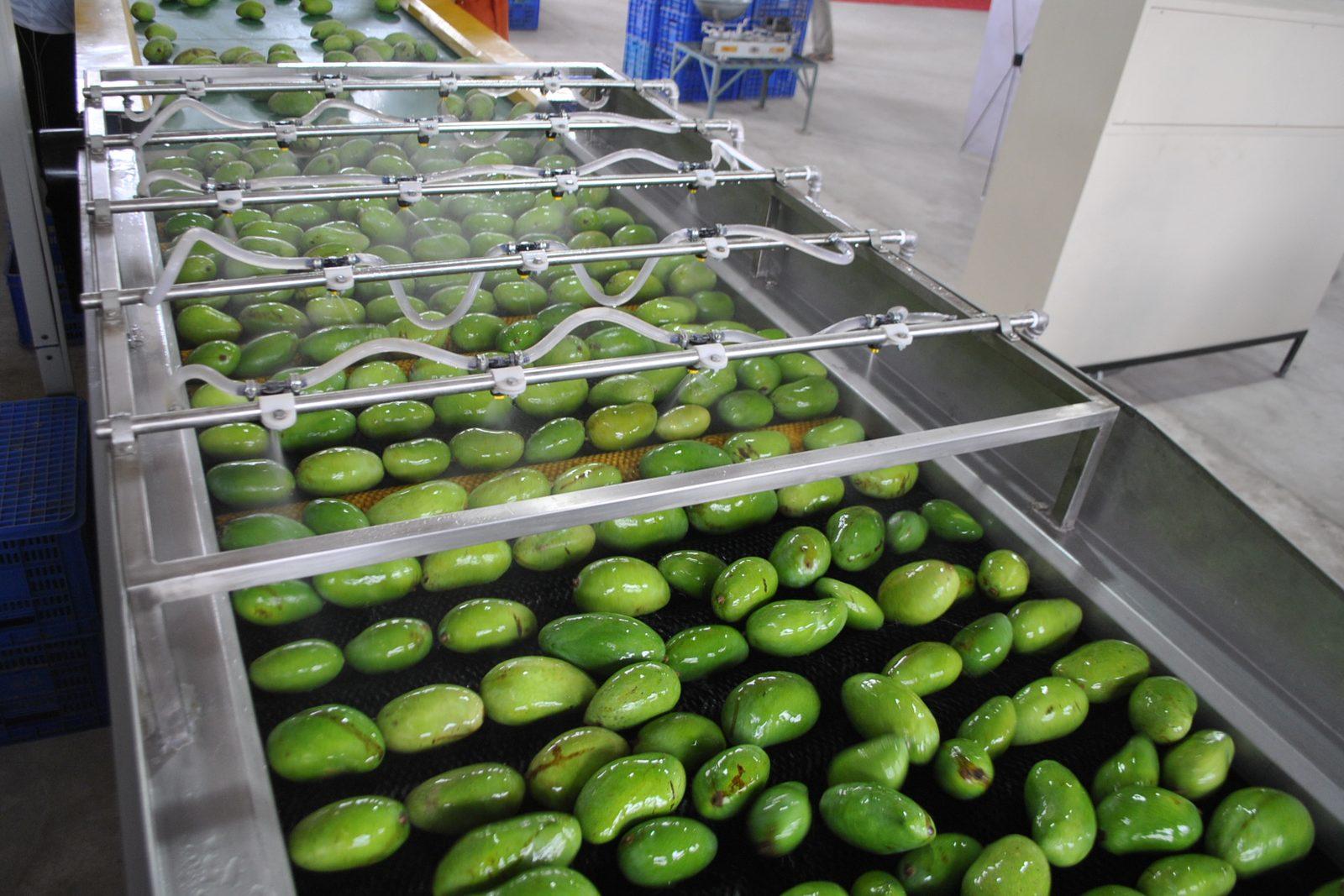
Mango Juice & Pulp Processing Plants
Most of the value sits in a thick, viscous pulp, so pumps and heat exchangers are chosen for body rather than for flow. A buyer has to settle three things first: whether the product is single-strength pulp, a thinner juice or nectar base, or a concentrate; whether it is packed aseptically into bulk bags, filled hot or held cold in tanks; and how many weeks of fruit the local season can really supply. Mango trees bear unevenly from year to year and the fruit keeps for only a short time, so supply is lumpy and a line sized for the peak week can stand idle for months. Peel, stones and fibre make up a large residue that needs a daily outlet, and that outlet belongs in the plant layout.
Mango arrives at mixed ripeness, so the first job is sorting to a uniform stage: under-ripe fruit is starchy and sharp, while over-ripe fruit is soft and ferments quickly. After washing, the fruit is either peeled and destoned before pulping, or crushed whole and passed through a screen that holds back skin and stone. Which route is used depends on the variety, because some skins carry an off-flavour. A pulper-finisher with a choice of screen sizes separates smooth flesh from fibre and skin fragments; finer screens give a smoother puree but leave more flesh behind on stringy varieties. Cut mango darkens through enzyme action, so a heating step before or at crushing stops browning, although the choice of treatment also moves colour and carotene retention. Deaeration removes air that would oxidise the pulp and cause foaming at the filler. The pulp is then heat-treated in a tubular or scraped-surface exchanger made for thick product, and is either filled hot, packed aseptically into bags in drums, or concentrated for a higher-solids product. Because the crop is seasonal, bulk pulp is often held cold and remade into juice or nectar outside the harvest, which makes cold storage and aseptic packing design items rather than extras.
Indicative Capacity Range
- 500–10,000 kg fruit/hour
Key Specification Inputs
Fruit grading, pulp yield, Brix, pasteurisation, packaging.
Technical Specifications
| Technology | Mango pulping and finishing line with heat treatment and, where wanted, concentration |
|---|---|
| Fruit Preparation | Washing and sorting by ripeness, then peeling and destoning or whole-fruit pulping, set by the variety |
| Pulping Principle | Rotary pulper-finisher with changeable screens to remove skin, fibre and stone fragments |
| Enzyme Control | Heating before or at crushing, chosen against the colour and vitamin targets of the product |
| Heat Treatment | Tubular or scraped-surface exchanger for thick pulp; steam or hot water, chosen by local fuel cost |
| Concentration | Optional evaporator that tolerates fibre and viscosity, where a concentrate is the product |
| Packing Options | Aseptic bulk bags in drums, hot-fill cans or jars, or chilled bulk tanks |
| Contact Material | Food-grade stainless steel on all product-contact parts |
| Automation | Manual or PLC control, with temperature records kept at the heat-treatment step |
| Utilities | Washing water, steam or hot water, cooling water, power, compressed air and chilled storage |
| Residue Handling | Conveying of stone, peel and fibre to a feed or compost outlet |
Typical Process Route
Receiving and Washing
Fruit is weighed in, washed free of soil and sap, and kept in shade or a cool bay. Mango bruises and ripens quickly, so the time between harvest and the line is a control point.
Sorting by Ripeness
Rotten, damaged and under-ripe fruit is taken out and the rest is graded by ripeness. A mixed lot gives uneven colour and sweetness in the pulp.
Peeling or Whole-Fruit Pulping
Depending on the variety, fruit is peeled and destoned, or crushed whole and screened. Skin off-flavour on some varieties is the reason to peel, so decide this by trial on local fruit.
Enzyme Control
Heating the fruit before or as it is crushed stops browning. The harder the enzyme is stopped, the more care is needed to keep colour and carotene, so the setting follows the target product.
Pulping and Refining
A pulper-finisher separates flesh from fibre, skin pieces and stone fragments. Screen size sets texture, and stringy varieties need more cleaning than smooth ones.
Deaeration and Heat Treatment
Air is drawn off under vacuum and the pulp is heated in an exchanger built for thick product, which fouls faster than clear juice.
Concentration, Where Wanted
Pulp meant for concentrate goes to an evaporator that tolerates fibre and high viscosity; forced-circulation or scraped-surface types suit it better than a plain falling film.
Cooling, Filling and Cold Holding
Pulp is cooled and filled aseptically into bulk bags, hot-filled into cans or jars, or held in chilled tanks for remaking in the off-season.
Clearing the Residue
Peel, stone and fibre are removed continuously and sent to a feed or compost outlet before they ferment in the warm weather.
Process & Equipment Modules
- Fruit receiving and washing unit
- Sorting and ripeness-grading table
- Peeler and destoner, where the variety needs peeling
- Crusher with enzyme-inactivation heater
- Pulper-finisher with changeable screens
- Deaerator
- Tubular or scraped-surface heat exchanger
- Evaporator for fibrous pulp, optional
- Aseptic filler or hot-fill line
- Chilled holding tanks
- Residue conveyor
- PLC panel and temperature recorder
Plant Output
Applications
- Single-strength mango pulp in bulk bags for off-season remanufacture
- Mango puree sold to dairy, bakery and confectionery makers as an ingredient
- Ready-to-drink mango juice and nectar for bottling or cartons
- Mango concentrate as a beverage base
- Fruit blends in which mango pulp is combined with pineapple or citrus juice
- Pulp as the base for jams, fruit bars and fruit leather
Key Features
Screens to Suit the Variety
A finisher with changeable screen sizes lets one line work smooth and stringy varieties and give each product the texture it needs.
Heat Exchangers Built for Body
Thick pulp needs tubular or scraped-surface exchangers and positive-displacement pumps; ordinary juice plate units block quickly.
Enzyme Control Up Front
Browning starts the moment fruit is cut, so the heating step sits at or before crushing, not after the pulp has sat.
Cold Holding for Bulk Pulp
Chilled tanks or aseptic bags carry pulp across the off-season, and pulp held warm loses vitamins and antioxidants faster.
Residue Removed Without Stopping
Stones, peel and fibre are a large stream; conveyors or pumps that take them away continuously keep the line running through the peak week.
Country Pages for Mango Juice & Pulp Processing Plants
This product is listed on the pages of the countries below, each with its own enquiry route. Where Kadali has no office in a country, enquiries are handled from the Accra office.
- Mango Juice & Pulp Processing Plants: Ghana
- Mango Juice & Pulp Processing Plants: Nigeria
- Mango Juice & Pulp Processing Plants: Côte d’Ivoire
- Mango Juice & Pulp Processing Plants: Senegal
- Mango Juice & Pulp Processing Plants: Burkina Faso
- Mango Juice & Pulp Processing Plants: Mali
- Mango Juice & Pulp Processing Plants: Guinea
- Mango Juice & Pulp Processing Plants: Tanzania
Related Products
Frequently Asked Questions
What information is needed to size Mango Juice & Pulp Processing Plants?
What capacity range does Mango Juice & Pulp Processing Plants cover?
Do mangoes have to be peeled before pulping?
How is browning of mango pulp stopped?
What happens to the peel, stones and fibre?
How should a plant cope with a short, uneven mango season?
Is it better to sell pulp or concentrate?
How do I request a proposal for Mango Juice & Pulp Processing Plants?
Enquire about Mango Juice & Pulp Processing Plants
Send your raw material, target product and capacity to Kadali Africa Ventures for a technical proposal.