Aloe Vera Processing and Extraction Plant
Part of the Kadali Africa Ventures catalogue. Send your raw material, target product and capacity for a technical proposal. Request a quote →
Product Categories
- Herbal, Botanical & Nutraceutical Extraction(9)
- Essential Oils, Spices & Oleoresins(6)
- Fruit & Vegetable Processing(8)
- Starch, Flour, Edible Oil & Food Processing(7)
- Drying & Dehydration Systems(5)
- Evaporation, Concentration & Solvent Recovery(4)
- Pharmaceutical & Industrial Process Equipment(4)
- Cocoa, Shea, Palm Oil & Oilseed Processing(6)
- Cereals, Tubers & Sugar Processing(6)
- Specialty African Botanical & Natural Ingredients(11)
- Specialty Food, Beverage & By-Product Processing(7)
Talk to Kadali Africa Ventures
Send your raw material, product and capacity for a technical proposal.
Contact Kadali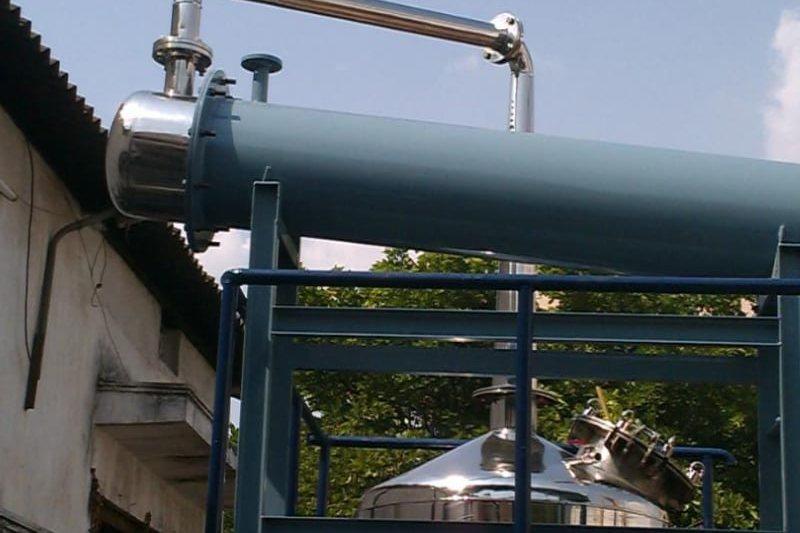
Aloe Vera Processing and Extraction Plant
Purity Levels
Gel and juice to the buyer's specification; concentrated powder up to 200:1 (200X)
Extraction Technologies
An aloe vera plant turns fresh leaves (Aloe barbadensis Miller) into gel, juice, concentrate or dried powder, or isolates acemannan, the polysaccharide of interest, from the inner leaf. Cut leaves are normally taken to the extraction facility quickly, to limit contamination and enzymatic oxidation of the gel, so the plant is sized around how much clean leaf can reach the gate each day rather than around a nameplate figure. Four points need settling before sizing: the product form (gel, juice, concentrate, powder or an acemannan fraction), the grade and end market (food, cosmetic or pharmaceutical), the daily leaf supply and how it varies through the season, and the utilities available on site. The line is then described in three blocks: leaf handling and filleting, gel clarification with aloin removal, and concentration or drying. For the acemannan target the two routes are Subcritical Water Extraction (SWE) and Enzyme-Assisted Extraction (EAE), and the choice is confirmed during process development. For the wider range of botanical lines, see [herbal extraction plants](/products/herbal-extraction-plant) and the [specialty African botanical ingredients](/products/category/specialty-african-botanical-natural-ingredients) category.
Aloe gel is mostly water: a colourless gel containing under 2% solids, so the engineering task is to separate gel from rind quickly and take out the aloin-bearing latex before any heat is applied. Most of the aloin sits in the outer layer of the leaf, so mechanical filleting that removes the rind limits how much latex enters the gel stream, and food-grade adsorption (activated carbon is the usual medium, in a step known as decolourisation) removes aloin and colour to leave a clear, stable liquid. Product-contact parts are SS 304 / SS 316L and can be cleaned in place; control can be specified anywhere from manual to fully automatic PLC-SCADA. Capacity, product forms and automation are fixed after the buyer's leaf supply and target market are known.
Key Specification Inputs
Extraction solvent/water, extraction stages, batch time, filtration and recovery.
Technical Specifications
| Plant type | Aloe vera leaf processing and extraction line |
|---|---|
| Species | Aloe barbadensis Miller |
| Feed | Fresh leaves, with the inner leaf (gel fillet) separated from the rind |
| Target compound | Acemannan |
| Product forms | Gel, juice, concentrate, and spray- or freeze-dried powder |
| Concentration ratio | Powder up to 200:1 (200X); gel and juice set to the buyer's specification |
| Extraction routes (acemannan) | SWE and EAE |
| Gel recovery principle | Mechanical filleting and cold recovery, so oxidation is kept low |
| Aloin and colour removal | Food-grade adsorption of the yellow latex compound (aloin) |
| Wetted materials | SS 304 / SS 316L, suited to clean-in-place cleaning |
| Clarification | Staged filtration |
| Concentration | Low-temperature vacuum evaporator, supplied where a concentrate is wanted |
| Drying | Spray dryer or freeze dryer, supplied where a powder is wanted |
| Control level | Manual, semi-automatic or fully automatic PLC-SCADA with recipes, as specified |
| Scale | Set by leaf supply, from a pilot line to 20,000+ kg of fresh leaves per day |
| Utilities to confirm | Steam, chilled and cooling water, compressed air, soft and purified water, and power; all project-specific |
| Finished form | Liquid gel or juice, concentrate, or free-flowing powder |
Plant Capacities
| Plant Scale | Raw Material Throughput | Typical Use |
|---|---|---|
| Pilot | Matched to your leaf source and trial plan | Checking product quality and process settings on your own leaf |
| Semi-Commercial | Sized between pilot and commercial scale | Toll processing and scale-up runs |
| Commercial | 20,000+ kg fresh leaves/day | Routine production once buyer volume is confirmed |
Throughput follows the leaf that can be supplied and the volume a buyer has committed to. A pilot line is advised before scaling, so that process settings are proven on the actual leaf.
Typical Process Route
Each extraction method follows a different process — pick a method to see its steps.
Leaf preparation
Inner leaf is separated, washed and cut down so that the extraction medium can reach the acemannan. Cut size and moisture are fixed in process development.
Loading the pressure vessel
Prepared inner leaf and water are charged into an extraction vessel rated for the operating pressure.
Subcritical water stage
Water is held liquid under pressure at raised temperature and used to extract acemannan without any organic solvent. Temperature and hold time are fixed in process development and checked against the acemannan assay.
Solids removal
Spent leaf material is taken out by filtration or centrifuge, and the liquid is clarified ahead of concentration.
Water removal
The clear aqueous extract is concentrated by vacuum evaporation or membranes where needed. This route uses water only.
Recovery, adjustment and drying
The acemannan fraction is recovered from the concentrate by a method chosen in process development and checked against the target specification. Drying behaviour is tested on trial material before a dryer is fixed.
Leaf preparation
Inner leaf is separated, washed and size-reduced so the enzyme and water can reach the acemannan. Particle size and moisture are settled in process development.
Slurry and pH set-up
The prepared inner leaf is slurried in water, with pH and temperature brought to the window of the chosen enzyme.
Enzyme treatment
Candidate enzymes (for example a cellulase, pectinase or protease) are screened on the inner leaf matrix to see which releases acemannan most completely. Enzyme cost and selectivity are checked in pilot work.
Stopping the enzyme and separating solids
The enzyme is inactivated, and the spent solids are removed by filter or centrifuge.
Water removal
The clarified aqueous extract is concentrated by vacuum evaporation or membranes where needed. No organic solvent is involved in this route.
Recovery, adjustment and drying
The acemannan fraction is recovered from the concentrate by a method chosen in process development and measured against the target specification. Drying is verified on trial material before a dryer is fixed.
Major Plant Equipment
- Leaf washer (conveyor and bubble type)
- Sorting and trimming tables
- Filleting machine for gel and rind separation
- Gel recovery unit
- Stainless-steel holding and collection tanks
- Adsorption columns for aloin and colour removal
- Staged filtration train
- Plate heat exchanger and pasteuriser
- Low-temperature vacuum evaporator
- Spray dryer or freeze dryer
- Product storage tanks and aseptic filler
- Clean-in-place (CIP) skid
- PLC-SCADA controls, motor control centre and instruments
Plant Output
Applications
- Nutraceutical and supplement ingredients
- Beverages and functional drinks
- Cosmetic and personal-care actives
- Pharmaceutical formulations
- Food ingredients and processing
- Ingredient supply to export buyers, to their own specifications
Key Features
Filleting that keeps latex out
Automated or semi-automatic filleting parts the inner gel from the rind, which limits how much aloin (yellow latex) enters the gel stream.
Aloin and colour removal
A food-grade adsorption stage removes aloin and pigments to give a clear, stabilised aloe liquid.
Cleanable stainless-steel build
Wetted surfaces in SS 304 / SS 316L allow clean-in-place cleaning.
Recipe control and batch records
PLC-SCADA recipes record pasteurisation, batch identity and production reports, and the control level can run from manual to fully automatic.
Several product forms from one line
Matched concentration, spray drying and freeze drying let one plant make gel, juice, concentrate or powder up to 200:1 (200X).
Country Pages for Aloe Vera Processing and Extraction Plant
This product is listed on the pages of the countries below, each with its own enquiry route. Where Kadali has no office in a country, enquiries are handled from the Accra office.
Related Products
Frequently Asked Questions
Who is an aloe vera processing plant for, and what should be settled first?
Which products can the line make?
How do I choose between a gel line and an acemannan extraction route?
How should aloe leaves be handled in hot conditions before they reach the plant?
Why is aloin removed, and how?
Should powder be made by spray drying or freeze drying?
What drives steam, water and power demand?
What should be prepared before asking for a technical proposal?
Does a pharmaceutical or nutraceutical grade change the plant?
Is a pilot trial recommended?
Ready to discuss your project?
Call or email Kadali Africa Ventures with your raw material, target product and capacity.