MEE – Multiple Effect Evaporator
Part of the Kadali Africa Ventures catalogue. Send your raw material, target product and capacity for a technical proposal. Request a quote →
Product Categories
- Herbal, Botanical & Nutraceutical Extraction(9)
- Essential Oils, Spices & Oleoresins(6)
- Fruit & Vegetable Processing(8)
- Starch, Flour, Edible Oil & Food Processing(7)
- Drying & Dehydration Systems(5)
- Evaporation, Concentration & Solvent Recovery(4)
- Pharmaceutical & Industrial Process Equipment(4)
- Cocoa, Shea, Palm Oil & Oilseed Processing(6)
- Cereals, Tubers & Sugar Processing(6)
- Specialty African Botanical & Natural Ingredients(11)
- Specialty Food, Beverage & By-Product Processing(7)
Talk to Kadali Africa Ventures
Send your raw material, product and capacity for a technical proposal.
Contact Kadali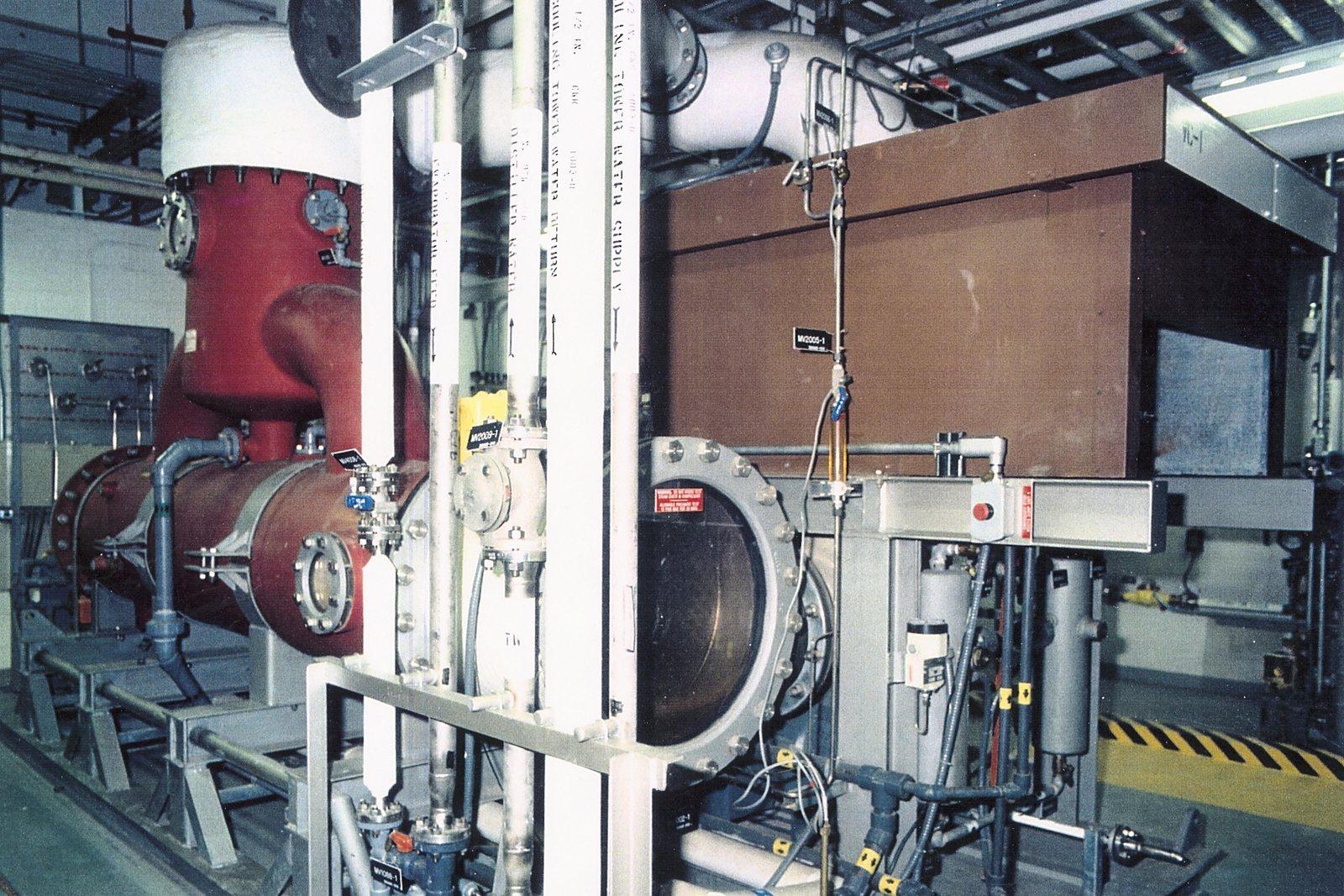
MEE – Multiple Effect Evaporator
A multiple effect evaporator suits a processor whose steam bill is the main cost of concentrating a liquid and whose daily volume is large and steady enough to justify several linked vessels. Typical African feeds include fruit-juice and sugar-cane liquors, herbal and botanical extracts, and process liquors from agro-processing; wastewater concentration in zero-liquid-discharge lines is a further use. Before such a train can be sized, the buyer should fix the feed solids or Brix and the target concentration, how much water must go per hour, how prone the liquid is to fouling or scaling, how much its boiling temperature rises as it thickens, the steam and cooling water on site, and whether the product tolerates the temperatures involved. In the train, fresh steam heats the first vessel; the vapour it makes heats the next vessel, which runs at lower pressure and temperature, and so on down the line, so the same heat does several jobs. The system is listed complete, with the number and type of effects set from those inputs.
An MEE is a series of evaporator bodies joined by vapour pipework, with a condenser at the end and a vacuum system when the process runs below atmospheric pressure. Vessels and product-contact parts are in SS 316L or another grade suited to the liquid, and the contact circuit can be cleaned in place. Each effect can be falling-film, rising-film, forced-circulation or a mix, picked from viscosity, heat sensitivity and fouling tendency. The order in which the liquid passes through the effects is also set in process design. The number of effects is an economic decision: more effects reuse the heat more times but add vessels, pipework and capital cost. Sugar-rich liquids boil at rising temperatures as they concentrate, so boiling behaviour, fouling and viscosity all go into the feed information used to set it. PLC-based control with integrated instruments is fitted at assembly. Effects, heat-transfer area, capacity and utilities are confirmed through process design and a pilot trial on the real feed.
Key Specification Inputs
Feed Brix, boiling point rise, fouling, steam economy, vacuum.
Technical Specifications
| Product | MEE – Multiple Effect Evaporator |
|---|---|
| Technology | Multiple-effect evaporation using evaporator vessels (effects) in series |
| Working Principle | Vapour from one effect heats the next; every following effect runs at a lower pressure and temperature |
| Number of Effects | Chosen from the duty and feed, and confirmed in process design |
| Effect Type | Falling-film, rising-film, forced-circulation or a mixed layout, picked from feed viscosity, heat sensitivity and fouling behaviour |
| Heating of First Effect | Fresh steam |
| Condensate | Collected from the train; whether it can serve as process or boiler feed water depends on the application and its quality |
| Contact Material | SS 316L, or another grade suited to the liquid |
| Cleaning | Product-contact circuit arranged for clean-in-place |
| Automation | PLC control with built-in instrumentation; SCADA can be added |
| Capacity | Sized to the requirement, from pilot to commercial duty, with room for modular expansion |
| Utilities | Steam, cooling water and electric power; vacuum and compressed air as the project needs |
| Output | Concentrated product and condensate |
Plant Capacities
| Scale | Typical Duty | Configuration |
|---|---|---|
| Pilot | Process validation and trial concentration duties | Small effect train sized to a trial duty |
| Production | Plant-scale continuous concentration | Multiple-effect train; effect type and number of effects configured to the feed |
| Large commercial | High evaporation loads | Larger effects and ancillaries, with modular expansion |
The number of effects, heat-transfer area, evaporation rate and utilities follow from the feed and the confirmed duty. A pilot trial on the real feed is advised before the plant is scaled.
Typical Process Route
Fix the Feed and Target Concentration
Feed solids, target concentration, hourly water to be removed, fouling tendency and heat limits are agreed first. They determine the effect type, the number of effects and the vacuum level.
Feed Entry
Feed is pumped into the train. The order in which it passes through the effects is set to suit the duty.
Boiling in the First Effect
Fresh steam heats the first effect, where the liquid boils and vapour is released.
Passing the Heat Along
That vapour becomes the heating medium of the next effect, which runs at lower pressure and temperature. The heat from one steam supply is thus used several times.
Separating Vapour from Liquid
Each effect divides vapour from the partly concentrated liquid before either moves on.
Reaching Final Concentration
The product reaches its target in the last effect and is pumped out for drying, blending or storage.
Condensing and Collecting Condensate
Vapour leaving the last effect is condensed, under vacuum where the process runs that way, and the condensate is gathered. Condensate from juice duties carries aroma, organic acids and sugars over with the water, so its reuse depends on its quality and the application.
Cleaning in Place
Between runs the product-contact circuit is cleaned in place; fouling rate determines how often.
Major Plant Equipment
- Evaporator bodies (effects) with vapour-liquid separators
- Vapour lines linking the effects
- Heat exchangers for heating and feed duties
- Condenser
- Vacuum system, where the process runs under vacuum
- Pumps for feed, circulation and concentrate
- Condensate receiver and pump
- CIP connections
- Temperature, pressure or vacuum, level and flow instruments
- PLC control panel
Plant Output
Applications
- Concentrating botanical and herbal extracts
- Process liquors in pharmaceutical and nutraceutical lines
- Juice, flavour and dairy-type concentrates
- Chemical process liquors
- Reducing the volume of effluent in zero-liquid-discharge (ZLD) schemes
Key Features
Heat Reused Across Stages
Vapour from each effect heats the next, so less fresh steam is used than if every stage were run on its own.
Effect Type Matched to the Liquid
Falling-film, rising-film, forced-circulation or mixed bodies can be combined, so thin heat-sensitive feeds and fouling feeds need not share one compromise design.
Continuous Operation
Feed enters and concentrate leaves without interruption, which fits larger and steadier daily volumes better than batch vessels.
Cleaning in Place
Clean-in-place connections allow regular cleaning between runs, which matters where the liquid scales or burns on the heating surfaces.
Room to Expand
Capacity can be expanded by modules, so a train can start at the volume available today.
Frequently Asked Questions
When does a multiple effect evaporator make sense?
How does the vapour reuse work?
How many effects should be chosen?
Why do boiling behaviour and fouling matter for sizing?
Which evaporator types can serve as the effects?
How does an MEE compare with an MVR evaporator?
Can the concentrate go straight to drying?
What should be prepared for a technical proposal?
What does an MEE need from the site?
Ready to discuss your project?
Call or email Kadali Africa Ventures with your raw material, target product and capacity.