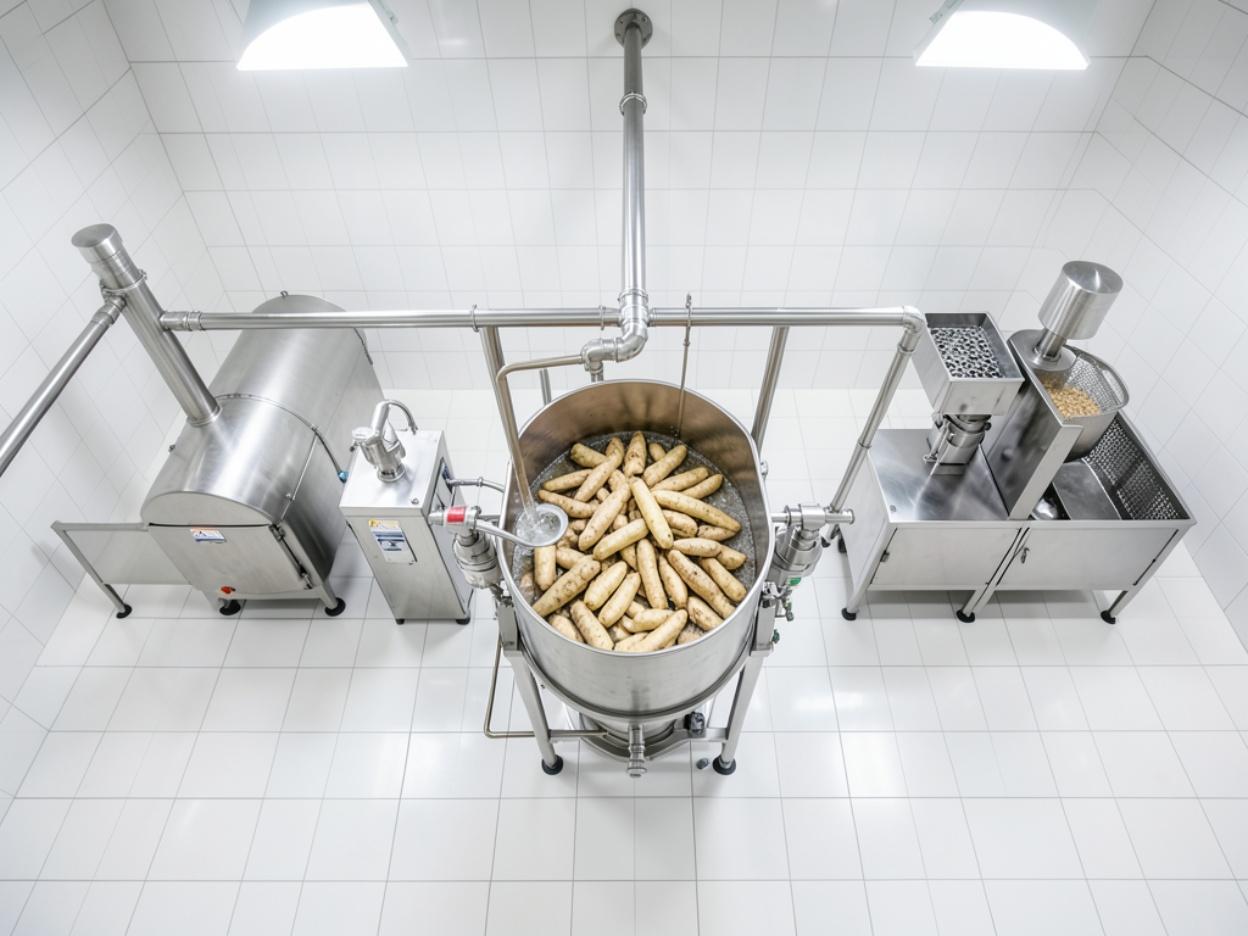
Agro-processing and food factories in Africa are usually built around one dominant crop or a small family of crops: fruit for juice and pulp, cassava or maize for starch and flour, oilseeds for edible oil, or grain and oilseed meal for animal feed. The buyer is typically a factory owner, a cooperative, an investor or a project developer who has secured a supply of raw material and must now decide which line to install, how large to make it and what to add later.
This page explains how those choices are normally framed for agro and food plants, and which Kadali Africa Ventures catalogue products relate to each route. It is a starting point for a discussion about your crop, your target product and your site rather than a fixed specification. The process route and equipment scope for a project are set out in a technical proposal.
What This Service Delivers
- Equipment discussed by crop and finished product, not by generic category
- Seasonal supply and raw-material variability taken into account at scoping
- Hygiene, moisture and effluent treated as design inputs from the start
- One enquiry can cover juice, starch, oil, drying or feed routes
- Layout can allow for a second product later
- Technical proposal sets out who engineers, supplies and installs each item
1What Agro and Food Factories Typically Process
Equipment follows the crop. These are the feedstock groups the catalogue addresses and the products they usually become.
- Fruit and tomatoes: Mango, pineapple, citrus, avocado, mixed fruit and tomato, made into juice, pulp, concentrate, paste or powder.
- Roots, tubers and cereals: Cassava, maize, banana and plantain, potato, sweet potato, sorghum, millet and rice, made into starch, flour or parboiled and dried grain.
- Oilseeds, nuts and kernels: Sunflower, groundnut, sesame, soybean and coconut, made into pressed or extracted oil, edible-oil fractions, peanut butter and coconut milk.
- Beans, cocoa and beverage crops: Cocoa, coffee and tea, handled through roasting, grinding, extraction or concentration depending on the product.
- Vegetables for drying: Onion, garlic and similar crops sliced and dehydrated into flakes or powders for ingredient buyers.
- Grain and meal for livestock: Cereals, oilseed meal and additives milled, mixed and optionally pelleted into compound feed.
2What Decides the Choice of Line
Two factories with the same crop can need quite different plants. These are the factors that normally separate them.
- Harvest seasonality: A fruit or cassava plant may run only for part of the year. FAO notes that processing of seasonal produce is concentrated at peak production and can fall to a halt as raw material runs out, so the capacity worth installing, and whether a second crop can share the line, need deciding early.
- Raw-material variability: Fruit ripeness, tuber age and seed moisture change yield and processing time, so the line needs allowance for the grades you will actually receive.
- Perishability and hygiene: Fresh cassava roots perish and mould quickly because of their high water content, and fruit also needs prompt handling, so receiving, washing and the first processing step must be close together and easy to clean.
- Water and effluent: Starch and fruit lines use and discharge significant process water. Plan treatment or disposal alongside the plant, not after it: starch processors have told FAO that pollution-control devices can take 20-50% of the total investment cost of a large-scale factory.
- Finished-product moisture: Flour, starch and dehydrated vegetables are sold on moisture, so the drying step often decides how stable and saleable the product is. Moulds grow on partly dried food, so an incomplete drying step is a storage risk.
- Fuel and power at site: Steam, thermal drying and grinding all draw on utilities that may be limited or costly at a rural location.
3Catalogue Products by Route
Each product has its own page with the indicative process route and equipment modules. These are the ones agro and food buyers most often start from.
- Fruit Juice Processing Plants: A multi-fruit line covering washing, pulping, filtration and pasteurisation, suited to buyers handling several fruits in season.
- Mango Juice & Pulp Processing Plants: For mango specifically, where pulp yield and the pulp-or-juice decision shape the line.
- Tomato Paste Processing Plants: Combines pulping with evaporator duty to reach a target concentration; FAO describes the multiple-effect vacuum evaporator as a widely used system for tomato paste.
- Cassava Starch Processing Plants: Washing, size reduction, separation or dewatering, drying, milling and grading, with water balance as a central design point.
- Cassava Flour Processing Plants: A press-and-dryer route for buyers who sell flour rather than starch: the IITA high-quality flour process uses a grater, a press for dewatering, a solar or flash dryer and a pin mill.
- Sunflower Oil Processing Plants: Pressing or extraction, clarification and filtration, with optional refining. Sunflower is a typical pre-press seed, so solvent extraction of the press cake may follow.
- Animal Feed Processing Plants: Grinding, batching, mixing and optional pelleting for compound feed.
- Fruit & Vegetable Dehydration Plants: Slicing and drying for processors adding a shelf-stable product to a fresh-produce business.
4Settle These Before Asking for a Proposal
A technical proposal can be firmer when these points are already clear.
- Product, not just crop: Decide whether you will sell juice or concentrate, starch or flour, crude or refined oil, because each changes the plant.
- Throughput basis: State capacity as fresh input per hour or per day and how many months and shifts the plant will run.
- Supply plan: Know where the crop comes from, how it reaches the gate and what peak daily volume to expect.
- Packaging and market: Name the pack size and the buyer segment, since filling and hygiene needs depend on them.
- Site services: List grid power, steam or fuel, water source and effluent route at the plot.
- Expansion intent: Say if a second product, such as dried fruit or feed from by-products, is planned so the layout can leave room.
5Typical Project Situations
- Cooperative adding value: A group selling raw fruit or tubers considers a first processing line to capture more of the margin.
- Existing mill adding a product: A flour or oil plant explores starch, feed or a dried product to use by-products and idle months.
- New entrant with a crop contract: An investor holding an off-take or supply agreement needs a line sized to that crop.
- Project developer packaging a site: A developer assembling land, water and power seeks a defined processing line for investors.
Frequently Asked Questions
Can one agro-processing line handle more than one crop?+
Should I make cassava starch or cassava flour?+
How do I size a fruit juice plant for a short harvest?+
Is it possible to start small and expand an agro-processing plant?+
What effluent should a food processor plan for?+
Does an enquiry have to be for a complete factory?+
Country Pages That Discuss Agro & Food Processing Solutions
Related Product Categories
Related Products
Enquire About Agro & Food Processing Solutions
Tell Kadali Africa Ventures about your raw material, target product and capacity, and the technical proposal will set out the scope for your project.