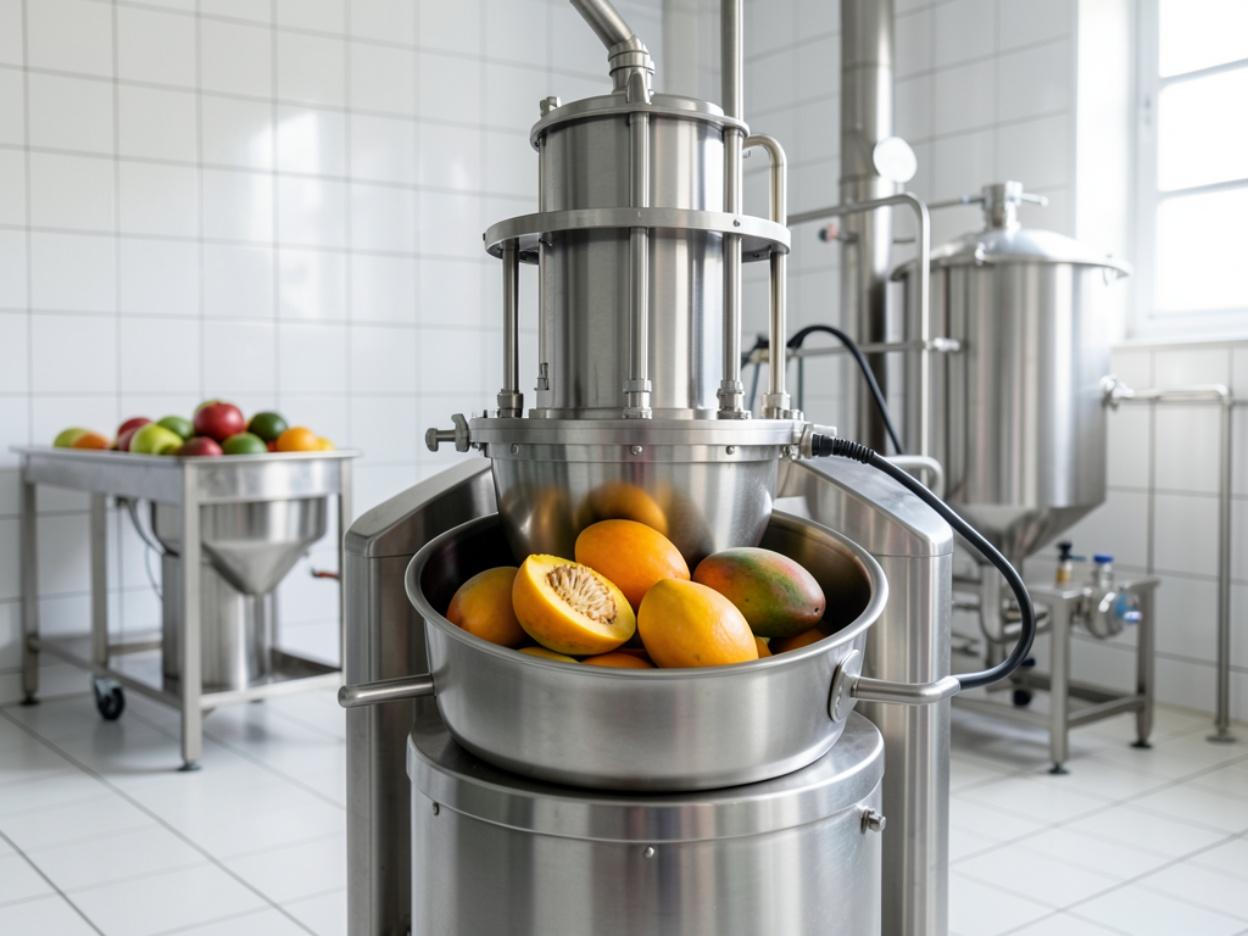
A turnkey project suits the buyer who is starting a new plant and would rather deal with one coordinated scope than with a separate supplier for every machine, utility and service. Typical readers are investors, project developers, agribusiness owners and ingredient companies planning a first extraction, distillation, drying, evaporation or food-processing line in Ghana, Nigeria or elsewhere in Africa.
The decision in front of you is how much of the project to place under one agreement. A fully turnkey arrangement puts the interfaces between process equipment, utilities and services under a single scope; a part-turnkey or equipment-package arrangement leaves some of them with you or with local contractors. Kadali Africa Ventures Limited, a Ghana-based platform, helps you compare those routes. Which route applies to a given plant is agreed in the technical proposal, and this page does not promise turnkey supply for any product.
What This Service Delivers
- One coordinated scope instead of a separate supplier for each machine and service
- Feasibility work done before equipment or investment is recommended
- A clear written split of responsibilities at the plant boundary
- Equipment chosen for the feedstock, output specification and site utilities
- A route from handover into operator training and after-sales support
1Three Ways to Divide a Plant Project
The same plant can be bought in different shapes. Settling the shape early avoids gaps between contractors later.
- Full turnkey: Process equipment, interconnections, controls and start-up are brought together under one agreed scope, so the owner takes over a plant that has already produced its first product. This matches the usual meaning of turnkey in FIDIC's EPC/Turnkey conditions: one entity takes responsibility for design and execution and provides a facility ready for operation.
- Equipment package with owner-led works: The process equipment is supplied and the owner arranges buildings, foundations, utilities and effluent handling through local contractors.
- Phased build: A first line is built to prove the product and the market, with space and utility capacity left for later lines.
2Stages of a Plant Project
- Project identification: Confirming that the raw material supply, the product and the market justify a plant.
- Feasibility: A preliminary techno-commercial assessment of capacity, technology route and investment, done before any machine is recommended.
- Equipment and technology sourcing: Matching catalogue equipment and process routes to the feedstock, the output specification and the site utilities.
- Implementation: Planning of delivery, installation sequence, commissioning (water trials, then final product trials) and responsibilities between the parties involved.
- Post-commissioning support: Technical help once the plant is running, as set out for the project.
3Plant Types Commonly Scoped as Projects
These catalogue products are examples of whole-plant requirements. Each product page describes its own process route and equipment modules.
- Turnkey Multi-Herbal Extraction Plants: For a processor who wants a single extraction line able to handle several botanicals.
- Mango Juice & Pulp Processing Plants: For fruit-processing projects where the pulp or concentrate line is the whole business.
- Cassava Starch Processing Plants: For starch projects built around a root-crop supply area.
- Sunflower Oil Processing Plants: For oilseed projects that must run from seed handling to finished oil.
- Solvent Distillation Systems: For extraction projects that need solvent recovery built in from the start.
4What a Turnkey Scope Has to Define
In turnkey contracting the contractor designs to the employer's requirements, so a written scope matters. It should state, for each item below, whether it sits with the supplier, with you or with a third party: battery limits where the plant meets your site; power, steam, water and compressed-air connections; buildings and foundations; effluent and waste handling; permits and local approvals; spares to hold at start-up; and operator training. Who engineers, supplies and installs each part of a product is confirmed in the technical proposal.
5Situations Where Turnkey Is Usually Considered
- A first plant: The owner has the crop or raw material but no processing experience, and wants fewer interfaces to manage.
- A new site: Land is secured and the work is to turn it into a running facility on a planned sequence.
- Value addition at source: A producer group or investor wants to convert a locally grown crop into an ingredient or intermediate.
Frequently Asked Questions
What is the difference between a turnkey plant and an equipment package?+
Can a plant be built in phases instead of all at once?+
Who is responsible for buildings, power and effluent on a turnkey project?+
Do I need a feasibility study before asking for a turnkey proposal?+
Does turnkey cover ongoing support after the plant starts?+
Related Product Categories
- Herbal, Botanical & Nutraceutical Extraction
- Essential Oils, Spices & Oleoresins
- Fruit & Vegetable Processing
- Starch, Flour, Edible Oil & Food Processing
- Drying & Dehydration Systems
- Evaporation, Concentration & Solvent Recovery
- Pharmaceutical & Industrial Process Equipment
- Cocoa, Shea, Palm Oil & Oilseed Processing
- Cereals, Tubers & Sugar Processing
- Specialty African Botanical & Natural Ingredients
- Specialty Food, Beverage & By-Product Processing
Related Products
Enquire About Turnkey Extraction Plant Solutions
Tell Kadali Africa Ventures about your raw material, target product and capacity, and the technical proposal will set out the scope for your project.