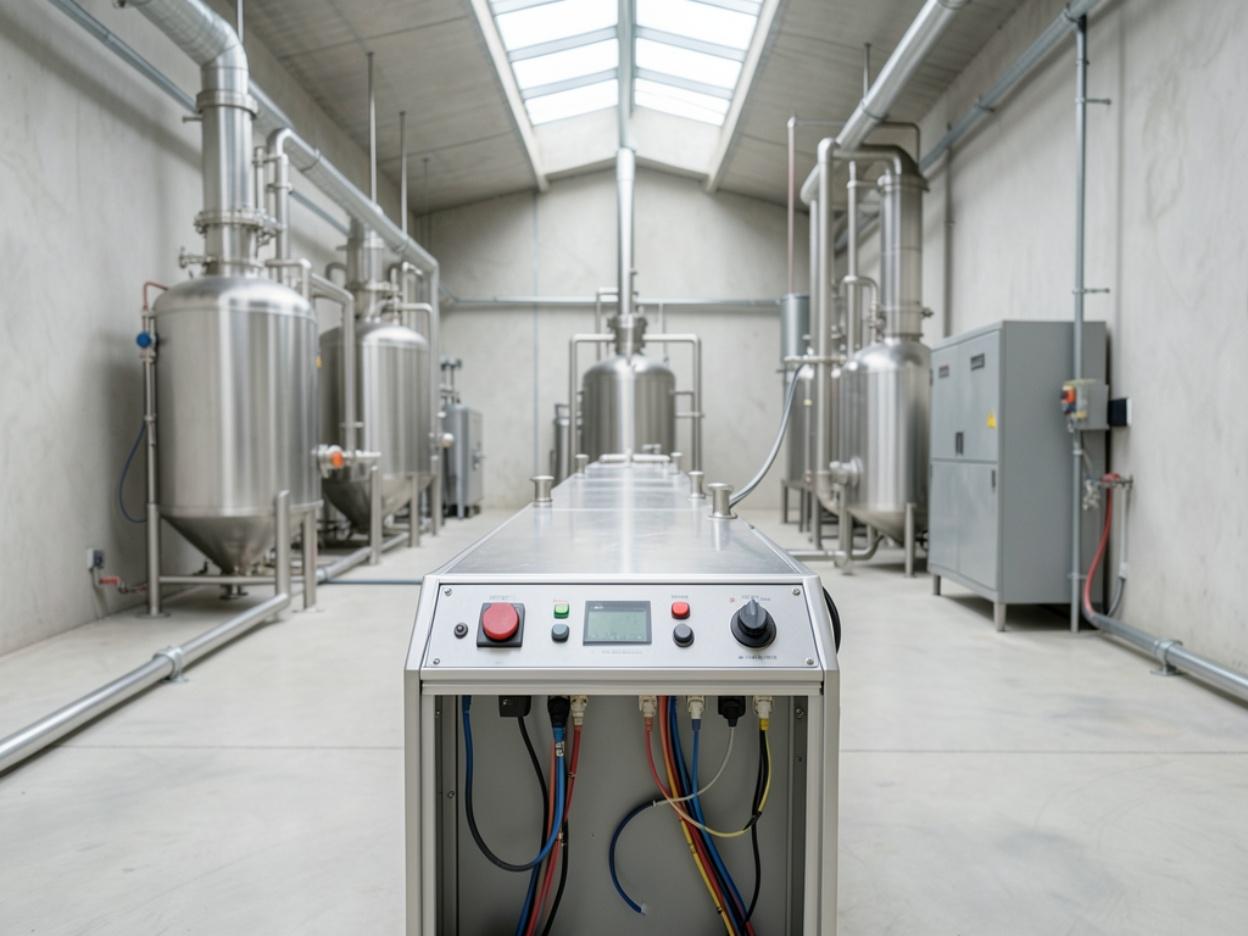
A herbal extract business turns leaves, flowers, fruit pulp, roots or seaweed into liquid concentrates, dry powders or standardised actives. Plants grown or gathered across Africa that suit this include moringa, hibiscus, baobab, aloe vera and tea, and many manufacturers want a line that can move between them as seasons, orders and harvests change. The central decision is whether to build a plant for one botanical or a flexible multi-herb line.
This page is for owners and technical managers of herbal and botanical extract businesses. It covers the materials and extract forms involved, the stages of a typical line, the choices that decide extraction performance and the catalogue products that relate to each plant type. Scope and engineering responsibilities for any line are confirmed in a technical proposal.
What This Service Delivers
- Plant types matched to leaves, flowers, fruit pulp, succulents, seaweed and resins
- Single-crop and flexible multi-herb lines both addressed
- Extraction, concentration, drying and solvent recovery planned together
- Filtration and cleaning between botanicals raised as design points
- Includes crop-specific lines for moringa, hibiscus, baobab and tea
- Scope confirmed in a technical proposal
1Botanicals and the Extracts They Become
- Leaves: Moringa, olive leaf and tea, extracted for liquid concentrates or powders.
- Flowers and calyces: Hibiscus (roselle), whose calyces are red, fleshy and acid, extracted for colour, acidity and beverage or ingredient use.
- Fruit pulp and seeds: Baobab, where the dry pulp is separated from the seeds before extraction or milling to powder. Test incoming pulp for mould and mycotoxin: a value-chain study found aflatoxin above the EU limit for dried fruit in some baobab samples.
- Succulents and seaweed: Aloe vera, whose leaf has a mucilaginous inner gel, and seaweed, processed into gels, concentrates or dried products.
- Natural colours: Pigment-bearing plants extracted for colouring ingredients.
- Resins and roots: Frankincense, myrrh and other woody or resinous material, which are covered on the essential oil and oleoresin page.
2The Stages of a Typical Herbal Line
Most plants follow the same chain, and the differences lie in the detail of each step.
- Reception and preparation: Inspection, cleaning and sizing of the raw material so extraction is even.
- Extraction: Contact between plant material and water or solvent in vessels, run for a set time and at a set ratio.
- Solid-liquid separation: Filtration or other separation of spent plant matter from the extract.
- Concentration: Removal of excess liquid to reach target solids, normally by evaporation, which removes water more economically than a dryer does.
- Purification where required: Additional steps to remove unwanted compounds or refine the extract.
- Drying and packing: Conversion into powder or another finished form, with solvent recovery where a solvent was used.
3Catalogue Products
- Herbal & Botanical Extraction Plants: The core extraction line, with extraction vessels, filtration, concentration and drying.
- Turnkey Multi-Herbal Extraction Plants: A flexible line intended for several botanicals, suited to contract processors and varied input.
- Hibiscus and Moringa Extraction Plants: Crop-specific lines for two widely used botanicals.
- Baobab Processing & Extraction Plants: For fruit pulp that must be separated and extracted.
- Tea Extraction & Concentration Plants: Extraction followed by concentration for tea-based ingredients.
- Advanced Botanical Extraction Systems: For more demanding extraction needs and more complex process steps.
- Spice & Herbal Drying Plants: Drying of raw herbs before extraction or of extracts afterwards.
4Choices That Decide Extraction Performance
- Water, alcohol or other solvent: Each solvent extracts different compounds and brings different recovery and safety needs.
- Particle size and ratio: Finer material gives the solvent more surface to contact, but very fine powder can agglomerate and hinder flow, and the ratio of liquid to plant affects yield and energy.
- Batch time and number of stages: Contact time and repeated extraction of the same material change both recovery and the volume of extract to be concentrated, so pilot tests should set them.
- Filtration of fine solids: Fine particles and mucilaginous material can slow filtration, so the filtration method needs attention.
- Single-product or multi-herb use: A multi-herb line needs easy cleaning between botanicals and flexible settings.
5Before Requesting a Proposal
- Botanicals list: Name each plant and the part you will use, in fresh or dry form.
- Extract form: Say whether you want liquid, paste or powder and any active content target.
- Volumes: Give feed per day and the months in which each botanical is available.
- Solvent plan: State whether water only is acceptable or a solvent is expected.
- Existing equipment: List any extraction, evaporation or drying equipment you already operate.
Frequently Asked Questions
Is a multi-herb line better than a single-crop plant?+
Can I use only water as the extraction medium?+
How should I dry a herbal extract?+
What makes herbal slurries difficult to filter?+
Can one extraction plant process both leaves and flowers?+
What details help you size a herbal extraction plant?+
Country Pages That Discuss Herbal & Botanical Extraction Solutions
Related Product Categories
Related Products
Enquire About Herbal & Botanical Extraction Solutions
Tell Kadali Africa Ventures about your raw material, target product and capacity, and the technical proposal will set out the scope for your project.