Vanilla Extraction Plant
Part of the Kadali Africa Ventures catalogue. Send your raw material, target product and capacity for a technical proposal. Request a quote →
Product Categories
- Herbal, Botanical & Nutraceutical Extraction(9)
- Essential Oils, Spices & Oleoresins(6)
- Fruit & Vegetable Processing(8)
- Starch, Flour, Edible Oil & Food Processing(7)
- Drying & Dehydration Systems(5)
- Evaporation, Concentration & Solvent Recovery(4)
- Pharmaceutical & Industrial Process Equipment(4)
- Cocoa, Shea, Palm Oil & Oilseed Processing(6)
- Cereals, Tubers & Sugar Processing(6)
- Specialty African Botanical & Natural Ingredients(11)
- Specialty Food, Beverage & By-Product Processing(7)
Talk to Kadali Africa Ventures
Send your raw material, product and capacity for a technical proposal.
Contact Kadali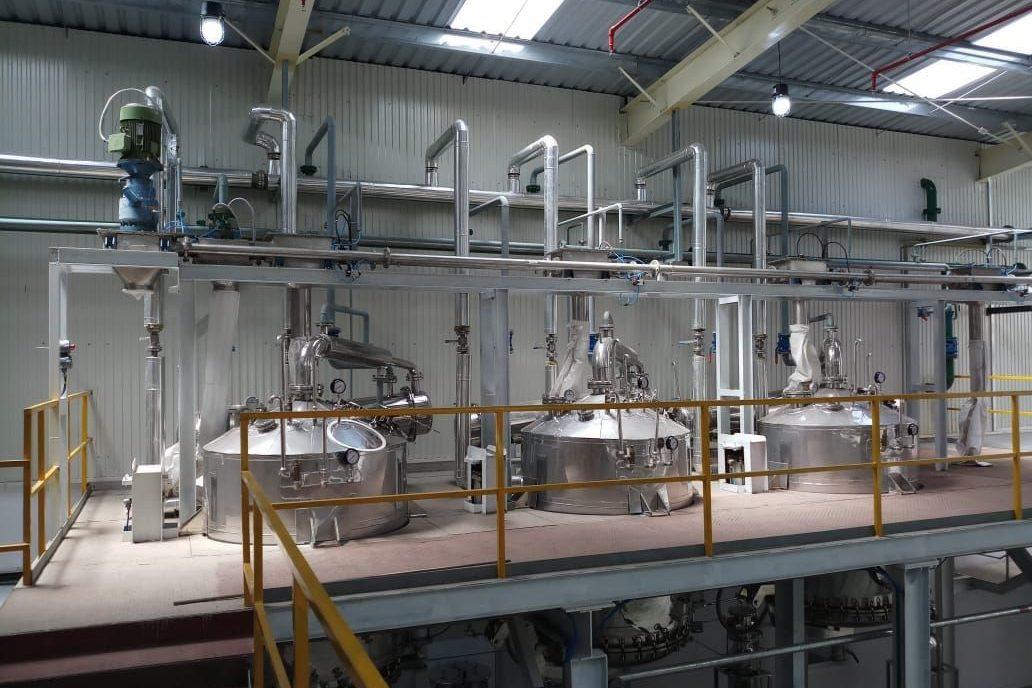
Vanilla Extraction Plant
This page is for processors who handle cured vanilla beans (Vanilla planifolia) and want to turn them into an alcoholic vanilla extract or a concentrated oleoresin. Vanilla is grown on Indian Ocean islands, with Madagascar among the largest exporters. For plant design it matters that the extraction line starts with beans that have already been cured: curing itself is a separate, upstream post-harvest activity. Before a plant can be sized, a buyer should decide whether the product is a liquid extract, an oleoresin or both, what vanillin content and flavour profile the customer expects, how many cured beans (and of which grade) can be bought steadily, and what ethanol or other solvent handling the site can support. Vanillin, the main flavour compound, is measured by HPLC and the product is graded to the buyer's own specification. The line then follows bean preparation, milling, percolation, filtration, vacuum concentration with solvent recovery and standardisation. Related reading: [spices oleoresin extraction plants](/products/spices-oleoresin-extraction-plant) and the [essential oils, spices and oleoresins](/products/category/essential-oils-spices-oleoresins) category.
The plant is built around what makes vanilla different from most botanicals. In fresh beans vanillin is present only in a bound form and the beans show no trace of vanilla flavour; curing, a long and traditional process of killing (blanching), sweating, sun-drying and conditioning, releases vanillin and develops over 200 other volatile compounds. Because the extractor receives cured pods, the design effort goes into gentle size reduction, steady solvent contact and keeping the volatile fraction intact during concentration. Cured, chopped pod is extracted by percolation or hydro-alcoholic solvent extraction to bring the full flavour complex into an alcohol-based extract, or into an oleoresin after concentration. Product-contact parts are electropolished SS 316L and cleanable in place, and the control system keeps recipes and batch records. Ethanol is flammable, so the extraction, filtration and solvent-recovery areas are laid out for flammable-solvent duty.
Key Specification Inputs
Extraction solvent/water, extraction stages, batch time, filtration and recovery.
Technical Specifications
| Plant type | Vanilla extract and oleoresin extraction line |
|---|---|
| Species | Vanilla planifolia |
| Feed | Cured vanilla beans (pods) |
| Part used | Cured fruit (pod) |
| Products | Alcoholic vanilla extract and vanilla oleoresin |
| Grading basis | Vanillin content by HPLC, adjusted to the buyer's specification |
| Step before extraction | Curing (fermentation, sweating and conditioning of green beans), completed upstream of the plant |
| Extraction route | Percolation or hydro-alcoholic extraction of chopped cured pod in closed, jacketed SS 316L extractors |
| Wetted materials | Electropolished SS 316L, suited to clean-in-place cleaning |
| Clarification | Plate-and-frame filter press followed by cartridge polishing |
| Concentration | Falling-film or vacuum evaporator with closed-loop solvent recovery, for oleoresin |
| Drying stage | None for liquid extract; vacuum concentration gives the oleoresin |
| Control level | PLC-SCADA with recipes, batch traceability and production reports |
| Scale | Set by cured-bean supply, from pilot to commercial scale |
| Utilities to confirm | Steam, chilled and cooling water, compressed air, soft water and power; all project-specific |
| Finished form | Liquid alcoholic extract or concentrated oleoresin |
Plant Capacities
| Plant Scale | Cured Bean Throughput | Typical Use |
|---|---|---|
| Pilot | Matched to your beans and trial plan | Checking extraction settings and flavour profile |
| Semi-Commercial | Sized between pilot and commercial scale | Toll extraction and scale-up runs |
| Commercial | Sized to bean supply and committed buyer volume | Routine production for ingredient customers |
Throughput follows the cured beans that can be bought steadily and the volume a buyer has committed to. Vanillin content and flavour vary with curing quality and bean origin, so a pilot run is advised before scaling.
Typical Process Route
Receiving and checking cured beans
Beans are inspected for moisture, suppleness, aroma and visible quality. The standard of curing sets how much flavour is available to extract. Beans for extraction need not be premium whole pods, because extraction does not preserve the pod's appearance, so cut or split cured beans can be considered where the buyer's specification allows.
Chopping and milling
Pods are cut or milled to an even particle size, which exposes more surface to the solvent before percolation.
Percolation or hydro-alcoholic extraction
Chopped beans are loaded into closed, jacketed SS 316L vessels and extracted with an alcohol-water solvent, either percolated through the bed or contacted in a controlled stage. Vanillin comes out together with the wider flavour and aroma complex.
Separation and polishing
The extract runs through a plate-and-frame press and then cartridge filters, which remove pod fibre and fine particles.
Concentration for oleoresin
When an oleoresin is the target, the filtered extract is concentrated in a falling-film or vacuum evaporator at reduced pressure and moderate temperature so the volatile flavour fraction is protected. Solvent is condensed and returned in a closed loop.
Assay and adjustment
Vanillin is measured by HPLC and the extract or oleoresin is adjusted and graded to the specification the buyer has declared.
Release testing and packing
Before release, batches are tested for vanillin by HPLC, residual solvent and moisture. Product is then packed in food-grade containers sized to the customer's order.
Major Plant Equipment
- Cured bean receiving and inspection bench
- Bean chopper or mill
- Jacketed SS 316L percolation and extraction vessels
- Solvent storage tanks
- Solvent transfer pumps
- Plate-and-frame filter press or pressure leaf filter
- Cartridge polishing filters
- Falling-film or vacuum evaporator for oleoresin
- Closed-loop solvent recovery unit
- Condensers and vacuum pumps
- Clean-in-place (CIP) skid
- Product storage tanks and filling station
- PLC-SCADA panel, motor control centre and instruments
Plant Output
Applications
- Flavouring for baked goods and confectionery
- Flavouring for drinks and dairy products such as ice cream and yoghurt
- Fragrance and perfumery bases
- Flavour masking in functional foods and nutraceuticals
- Vanilla extract and oleoresin supply to flavour houses and food makers
- Ingredient supply to export buyers, to their own specifications
Key Features
Hygienic electropolished SS 316L
Electropolished stainless surfaces on the product side, with clean-in-place cleaning between batches.
Designed for cured pods
The line assumes beans arrive with their flavour already developed by curing, a step that fresh or simply dried botanicals do not have.
Closed-loop solvent recovery
Condensed solvent is returned to the process for each oleoresin batch, which limits solvent purchases and losses.
HPLC-based grading
Vanillin assays in process and at release let the extract or oleoresin be graded to the declared specification, with a certificate of analysis.
Liquid extract or oleoresin
The same line can finish as a liquid alcoholic extract or a concentrated oleoresin, whichever the food, drink or fragrance customer asks for.
Expandable batch capacity
Plants start at the scale the bean supply justifies, with room to add vessels later.
Country Pages for Vanilla Extraction Plant
This product is listed on the pages of the countries below, each with its own enquiry route. Where Kadali has no office in a country, enquiries are handled from the Accra office.
Related Products
Frequently Asked Questions
What should be settled first when planning a vanilla extraction plant?
How is vanilla extract graded?
Why must vanilla be cured first, and does the plant do the curing?
What is the difference between extract and oleoresin?
How should cured beans be stored in humid, tropical conditions?
What drives solvent loss and energy use?
Can cut or split beans be used instead of premium whole pods?
What should be tested on incoming beans and on the finished extract?
What capacities are possible, and is a pilot run useful?
What should be prepared before requesting a technical proposal?
Ready to discuss your project?
Call or email Kadali Africa Ventures with your raw material, target product and capacity.