Turnkey Multi-Herbal Extraction Plants
A turnkey multi-herbal extraction plant is one complete line, from raw herb intake to packed extract, built to run several different botanicals in turn rather than a single herb.
Product Categories
- Herbal, Botanical & Nutraceutical Extraction(9)
- Essential Oils, Spices & Oleoresins(6)
- Fruit & Vegetable Processing(8)
- Starch, Flour, Edible Oil & Food Processing(7)
- Drying & Dehydration Systems(5)
- Evaporation, Concentration & Solvent Recovery(4)
- Pharmaceutical & Industrial Process Equipment(4)
- Cocoa, Shea, Palm Oil & Oilseed Processing(6)
- Cereals, Tubers & Sugar Processing(6)
- Specialty African Botanical & Natural Ingredients(11)
- Specialty Food, Beverage & By-Product Processing(7)
Talk to Kadali Africa Ventures
Send your raw material, product and capacity for a technical proposal.
Contact Kadali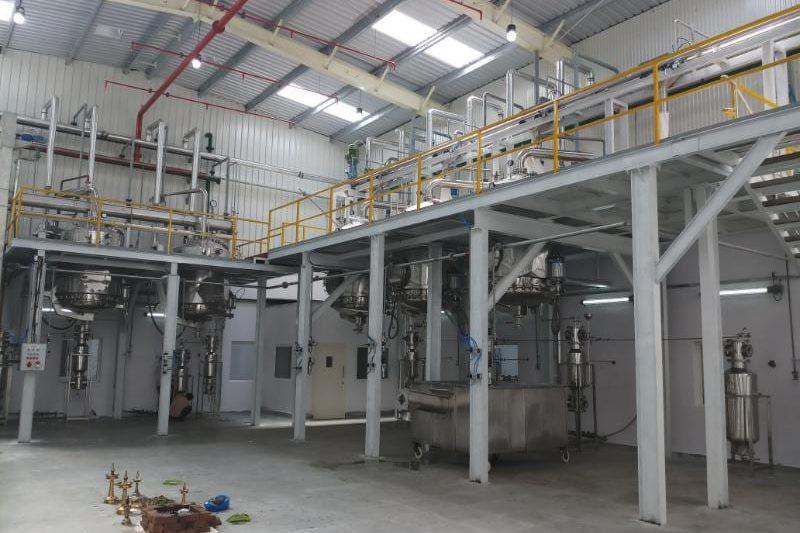
Turnkey Multi-Herbal Extraction Plants
It suits an extractor or contract processor whose herb list changes with the season and the order book: leaves, roots, bark, flowers and seeds, each with its own bulk density, moisture and sensitivity to heat. The herb list is the first thing to settle, because the line is sized on the most demanding herb, not the average one, and the extract form (liquid concentrate or dry powder) fixes the back end. Three things then decide the design and the price: how flexible the extraction vessels are, how easily vessels, filters and pipework can be cleaned between herbs, and how much sits in the scope beyond the process equipment, such as steam, cooling water, spent-herb handling and effluent. A processor with one herb and one fixed specification is usually better served by a dedicated plant.
A multi-herb line keeps the usual backbone of feed preparation, extraction, solid-liquid separation, concentration and drying, but every stage is chosen to cope with change. Extraction is normally batch, in jacketed vessels that can run as simple soaking (maceration) or as percolation, where fresh solvent keeps flowing through the herb so the concentration difference that drives extraction is maintained. Percolation suits valuable herbs and high-concentration preparations; soaking is simpler for robust herbs and short campaigns. Water, ethanol or a mix is chosen per herb. Because the extract made from one lot of a herb differs from the next, the evaporator, dryer and solvent handling are checked against a range of herbs rather than one average. A dry extract is made by evaporating the solvent, which leaves as vapour, so the condenser and solvent-recovery duty follow the solvent volume removed per batch. Heat comes from steam, thermal oil or electric heating, depending on local fuel. The trade-off specific to this plant is changeover: smooth, drainable vessels, accessible filters and a written cleaning routine take time between herbs, and highly active botanicals may justify dedicated vessels or filters instead of shared ones.
Indicative Capacity Range
- 100–5,000 kg feed/day
Key Specification Inputs
Extraction solvent/water, extraction stages, batch time, filtration and recovery.
Technical Specifications
| Technology | Batch solvent extraction in jacketed vessels, arranged to run several herbs in turn |
|---|---|
| Extraction Modes | Soaking (maceration) and percolation with renewed solvent, chosen per herb |
| Extraction Solvent | Water, ethanol or an ethanol-water mix, chosen per herb and per extract specification |
| Vessel Arrangement | One vessel or several in parallel or series, set by the herb list, batch time and daily feed |
| Separation | Press or drain, then filter press, bag or cartridge filters or a centrifuge, chosen by how fine the milled herb is |
| Concentration | Vacuum evaporator with condenser, sized on the most dilute extract and the largest solvent volume |
| Drying | Vacuum tray, vacuum belt or spray dryer, chosen by extract stickiness and heat sensitivity |
| Contact Material | Stainless steel for vessels and pipework, with gaskets and hoses matched to the solvent in use |
| Heat Source | Steam, thermal oil or electric heating, chosen by local fuel cost and availability |
| Automation | Manual to PLC control, with stored recipes per herb for solvent charge, temperature and time |
| Utilities and Waste | Steam or fuel, cooling water, power, compressed air and wash water, plus handling for spent herb and effluent |
Typical Process Route
Raw material inspection
Each herb lot is checked on arrival for identity, moisture, foreign matter and mould, and kept separate with its lot record. On a line that rotates through many herbs, a mix-up between look-alike leaves or roots is the first contamination risk.
Cleaning and sizing
Herb is sieved and cleaned, then cut or milled to a size suited to that herb. Fine leaf powder packs down and blocks percolation and filters, while coarse root pieces extract slowly, so mill and sieve settings are changed, and the equipment cleaned, between herbs.
Controlled extraction
Herb and solvent are charged to jacketed vessels and held at a set temperature and contact time, either soaking or percolating with fresh solvent. The solvent, the number of stages and the batch time are set per herb, and a poor choice shows up as a weak extract or a long cycle.
Solid-liquid separation
The extract is drained from the spent herb, which is pressed or spun to recover liquor, and the liquid is clarified in a filter or centrifuge. Mucilage-rich or finely milled herbs blind filters quickly, so filter media and area are checked against the worst herb on the list.
Concentration
Extract is evaporated under vacuum to a thick liquor, and the solvent vapour is condensed and collected. Evaporator size is set by the most dilute extract and the largest solvent volume the line will see, not by the average herb.
Purification (if needed)
Where a specification asks for it, the liquor is settled, passed through adsorbent or resin, or filtered again to strip colour, fats or waxes. Many herbal extracts skip this step, so it is usually an optional module on a multi-herb line.
Drying and packing
The concentrate is dried to a powder or flake in a vacuum or spray dryer, or packed as a liquid or soft extract. Sticky, hygroscopic extracts need a matched dryer, a carrier where the product allows it and sealed liners, and the dryer must clear fully between herbs.
Solvent recovery and changeover
Condensed solvent is returned to storage for reuse after its water content and quality are checked. Vessels, filters and pipework are then drained, washed and recorded as clean before the next herb starts, and changeover time counts against daily throughput.
Process & Equipment Modules
- Herb intake and sieving station
- Mill or pulveriser with dust extraction
- Jacketed extraction vessels with agitation
- Solvent storage and metering
- Percolation solvent distribution and flow control
- Filter press, bag filters or basket centrifuge
- Vacuum evaporator
- Condenser and solvent receiver
- Vacuum or spray dryer
- Spent-herb discharge and press
- Spray-ball wash set for changeover
- PLC panel with recipe control
Plant Output
Applications
- Dry herbal extract powders for capsule, tablet and supplement makers
- Liquid and soft extracts for tinctures, syrups and herbal medicine formulation
- Seasonal campaigns that run leaf, root, bark and flower herbs through one line
- Contract extraction of different customers' herbs on shared equipment
- Herbal tea and beverage concentrates
- Botanical extracts for cosmetic and personal-care formulations
- Extracts for food flavour and natural colour use
Key Features
Sized on the Hardest Herb
Vessel volume, filter area and evaporator duty are set against the most demanding herb on the list, so an easier herb never finds the line short.
Soaking and Percolation
The same vessels can run as soaking or percolation, so each herb gets the mode that suits it. This needs a solvent supply and flow arrangement built for both.
Built to Be Cleaned
Smooth, drainable vessels, accessible filters and pipework that can be flushed shorten changeover and cut carry-over between herbs.
Back End Checked Against a Range
Evaporation, condensing and drying capacity are checked against several herbs, because the extract made per lot varies even for the same herb.
Scope Beyond the Process Train
Steam, cooling water, spent-herb removal and wash-water handling are part of what makes a plant turnkey, so the proposal should state who provides each one.
Country Pages for Turnkey Multi-Herbal Extraction Plants
This product is listed on the pages of the countries below, each with its own enquiry route. Where Kadali has no office in a country, enquiries are handled from the Accra office.
Related Products
Frequently Asked Questions
What information is needed to size Turnkey Multi-Herbal Extraction Plants?
What capacity range does Turnkey Multi-Herbal Extraction Plants cover?
How is a multi-herb line different from a plant for a single herb?
Can one extraction line handle several herbs without cross-contamination?
When is percolation chosen instead of simple soaking of the herb?
What happens to the solvent when a dry herbal extract is made?
What should a turnkey scope cover besides the extraction equipment?
How do I request a proposal for Turnkey Multi-Herbal Extraction Plants?
Enquire about Turnkey Multi-Herbal Extraction Plants
Send your raw material, target product and capacity to Kadali Africa Ventures for a technical proposal.