Pineapple Juice Processing Plants
A pineapple juice plant starts with peeling and coring, because shell, core and crown are a large share of every fruit, and pressing, enzyme treatment and acid-resistant materials follow from that.
Product Categories
- Herbal, Botanical & Nutraceutical Extraction(9)
- Essential Oils, Spices & Oleoresins(6)
- Fruit & Vegetable Processing(8)
- Starch, Flour, Edible Oil & Food Processing(7)
- Drying & Dehydration Systems(5)
- Evaporation, Concentration & Solvent Recovery(4)
- Pharmaceutical & Industrial Process Equipment(4)
- Cocoa, Shea, Palm Oil & Oilseed Processing(6)
- Cereals, Tubers & Sugar Processing(6)
- Specialty African Botanical & Natural Ingredients(11)
- Specialty Food, Beverage & By-Product Processing(7)
Talk to Kadali Africa Ventures
Send your raw material, product and capacity for a technical proposal.
Contact Kadali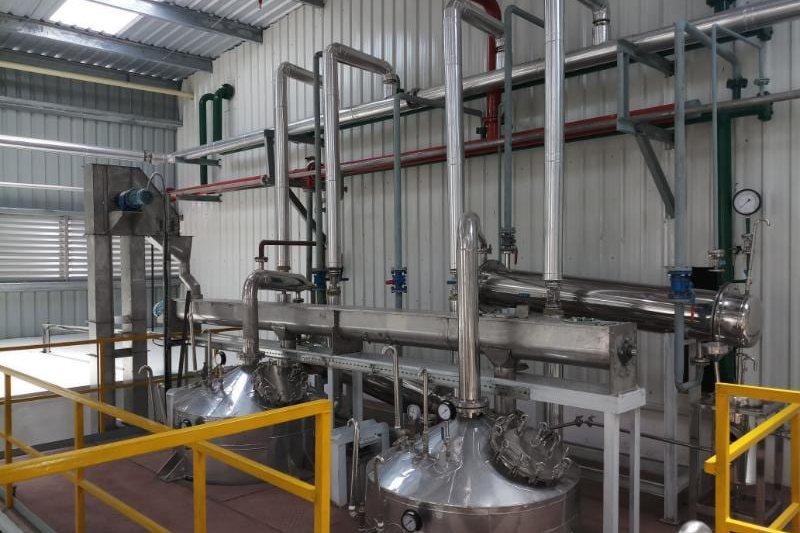
Pineapple Juice Processing Plants
Pineapple juice is often made from cannery trimmings, small fruit and cores alongside whole fruit, so the feed to the press can be a mix rather than clean flesh. The product may be cloudy juice, clear juice after enzyme treatment or a concentrate, and each adds steps. The fruit is acidic, which helps preservation but wears some metals and seals, and it does not ripen further after picking, so harvest timing and haul time act as process inputs. A buyer has to settle whether the feed is whole fruit or trimmings, which juice type is wanted, whether it is filled hot or aseptically, and who will collect the wet peel and core residue every day. Fruit size and uniformity decide how well the peeler-corer performs and how much of each fruit reaches the press.
Whole pineapple is graded by size, the crown is removed and the fruit is passed through a peeler-corer, which cuts away shell and core in one pass. Coring is the step that limits how much usable fruit comes from a tonne, so a size range that matches the machine matters more than most buyers expect. Trimmings, small fruit and cores are shredded or crushed and pressed with the rest, using a screw press, a belt press or a crusher and decanter. The raw juice is fibrous and foams readily, so a finisher and a deaerator follow the press. For clear juice, a pectin-splitting enzyme lowers viscosity and eases filtration or ultrafiltration; cloudy juice skips this step and keeps its fine pulp. Pineapple is high in acid, so a mild heat treatment preserves the juice, and the same acid attacks carbon steel, copper alloys and some gaskets, which is why stainless steel and suitable elastomers are specified for every wetted part. Flavour is delicate, so concentrate duties are worth pairing with aroma recovery. The finished juice is hot-filled or packed aseptically, and the wet residue, a large mass of peel, crown and core, is moved out every shift.
Indicative Capacity Range
- 500–10,000 kg fruit/hour
Key Specification Inputs
Peeling, pressing, clarification, Brix, aseptic or hot-fill.
Technical Specifications
| Technology | Pineapple peeling, pressing and juice-finishing line with heat treatment and optional concentration |
|---|---|
| Fruit Preparation | Washing, size grading, crown removal and peeler-corer, with trimmings routed to the press |
| Extraction | Screw press, belt press or crusher and decanter, chosen by feed type and juice clarity target |
| Juice Type | Cloudy juice, clear juice after enzyme treatment and filtration, or concentrate |
| Enzyme Treatment | Pectin-splitting enzyme dosing and holding tank, where clear juice is wanted |
| Heat Treatment | Plate or tubular pasteuriser; steam or hot water, chosen by local fuel cost |
| Contact Material | Food-grade stainless steel and acid-resistant gaskets on all wetted parts |
| Packing Options | Hot-fill bottles or cartons, aseptic filling or aseptic bulk bags |
| Automation | Manual or PLC control, with pasteurisation temperature records |
| Utilities | Washing water in volume, steam or hot water, cooling water, power and compressed air |
| Residue Handling | Conveyor or pump for peel, crown and core to a feed or soil outlet |
Typical Process Route
Receiving, Washing and Size Grading
Fruit is washed and graded by size so the peeler-corer gets a narrow range. Fruit left waiting loses flavour and begins to spoil, so haul time from field to line is tracked.
Crown Removal and Peeling-Coring
Crowns are cut off and each fruit passes through a peeler-corer that removes shell and core. Poor size grading here means more flesh stays on the shell.
Trimming and Inspection
Eyes, brown spots and bruised areas are trimmed or removed. Trimmings and small fruit go forward to the press as juice feed.
Crushing and Pressing
Flesh, trimmings and cores are crushed and pressed, by screw press or belt press. Press settings balance extraction against fibre and bitterness carried into the juice.
Finishing and Deaeration
A finisher screens out fibre, and a vacuum deaerator draws off the air that causes foaming and oxidation.
Enzyme Treatment and Clarification
For clear juice, an enzyme lowers viscosity and the juice is filtered or ultrafiltered. Cloudy juice skips this step.
Pasteurisation and Optional Concentration
A short heat treatment preserves the juice. If a concentrate is wanted, the juice goes to an evaporator, ideally with aroma recovery.
Filling and Residue Removal
Juice is hot-filled or filled aseptically. Peel, crown and core are carried away promptly because wet pineapple waste decays fast.
Process & Equipment Modules
- Fruit washer and size grader
- Crown cutter
- Peeler-corer
- Trimming and inspection table
- Crusher or shredder
- Screw press or belt press
- Finisher and deaerator
- Enzyme dosing and holding tank
- Filter or ultrafilter, for clear juice
- Pasteuriser and hot-fill or aseptic filler
- Evaporator with aroma recovery, optional
- Residue conveyor and collection bin
Plant Output
Applications
- Single-strength pineapple juice for bottles and cartons
- Clear pineapple juice as a blending component in soft drink bases
- Pineapple concentrate as a beverage base
- Juice made from the trimmings and cores of a canning or fresh-cut line
- Tropical blends in which pineapple is combined with mango or citrus juice
- Pineapple puree for yoghurt and dessert makers
Key Features
Peeler-Corer Matched to Fruit Size
Coring sets recovery, so look for a machine rated for the size range your growers deliver, with grading ahead of it.
Press and Finisher for Fibrous Juice
Pineapple is stringy; a press plus a finisher that clears fibre without stripping flavour keeps the juice clean.
Acid-Resistant Wetted Parts
Stainless steel and suitable seals on everything the juice touches resist the fruit's acidity.
Enzyme and Clarification Option
A pectin-splitting enzyme step and a filter or ultrafilter turn a cloudy line into a clear-juice line.
Quick Residue Removal
Wet peel and core are collected continuously, so the floor stays clear and the waste does not turn sour beside the line.
Gentle Heat for Flavour
Short, controlled heating protects the fresh pineapple character that buyers pay for.
Country Pages for Pineapple Juice Processing Plants
This product is listed on the pages of the countries below, each with its own enquiry route. Where Kadali has no office in a country, enquiries are handled from the Accra office.
Related Products
Frequently Asked Questions
What information is needed to size Pineapple Juice Processing Plants?
What capacity range does Pineapple Juice Processing Plants cover?
Is pineapple juice made from whole fruit or from trimmings?
Why does fruit size matter so much?
Does clear pineapple juice need enzymes?
How does the fruit's acidity affect the plant?
What is done with the peel, core and crown?
Should I make clear juice or concentrate?
How do I request a proposal for Pineapple Juice Processing Plants?
Enquire about Pineapple Juice Processing Plants
Send your raw material, target product and capacity to Kadali Africa Ventures for a technical proposal.