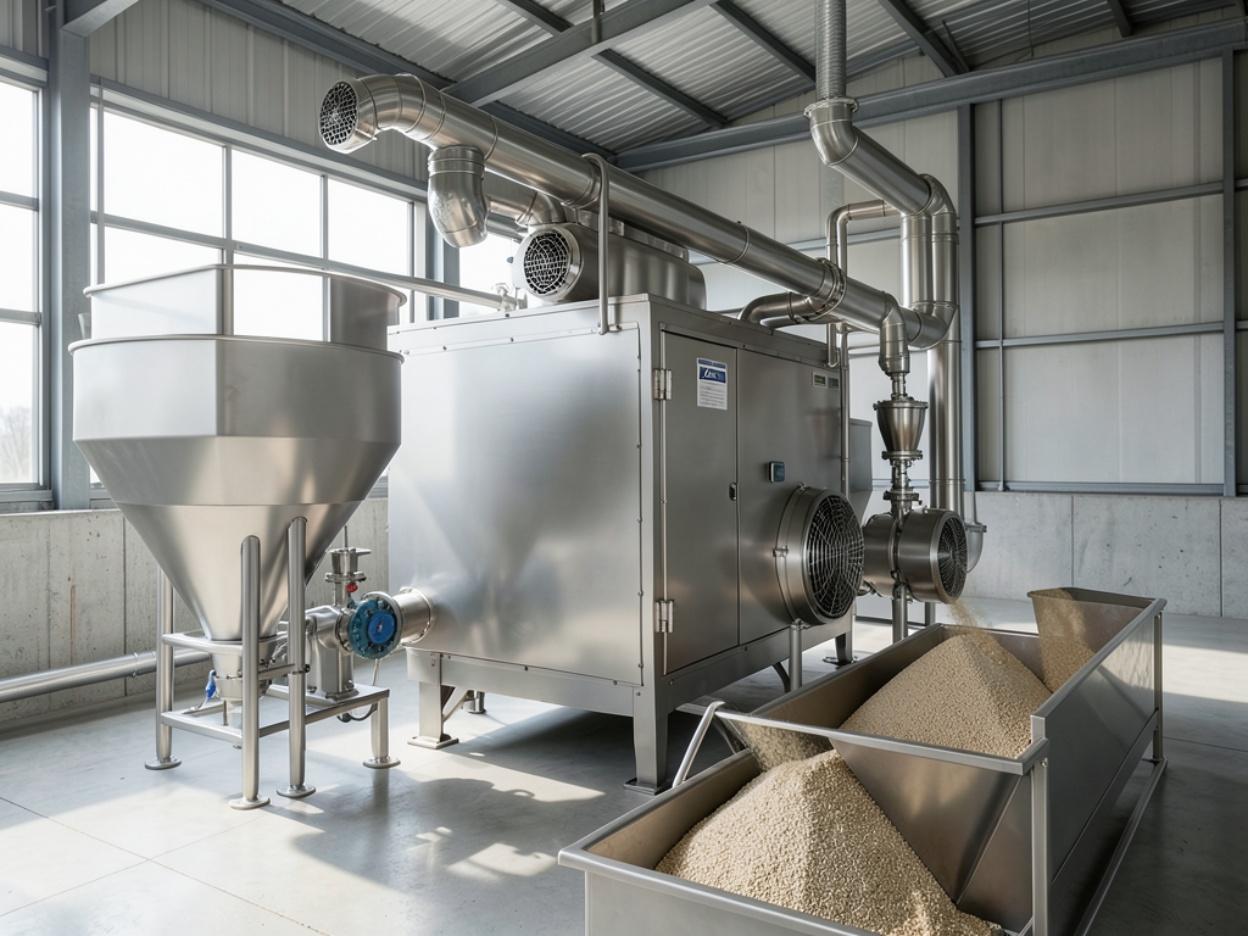
Plant modernisation is for the owner who already has a working factory and a problem that new building alone would not solve. Demand may have outgrown the line, one slow stage may hold everything back, quality may vary from batch to batch, or the equipment may be old, costly to run and hard to keep supplied with parts.
The decision is whether to upgrade a stage, add a parallel line, replace one machine or start again. It is usually taken after an assessment of what is installed: the equipment, how it is really used, the utilities and the product requirement. Added or replacement equipment from the product catalogue, and process automation systems, can be listed as options for the assessment to compare. Who carries out the work, and how it is phased around production, is set out in the technical proposal.
What This Service Delivers
- Existing equipment, capacity and utilities assessed before any purchase
- Upgrades aimed at the stage that actually limits the line
- Options compared on what they change and what they need from the site
- Phasing considered so production is disturbed as little as possible
- Automation and stainless contact parts available among the options
1Signs That a Line Needs Attention
- One stage sets the pace: A dryer, evaporator or filter that holds back everything before and after it.
- Quality varies: Moisture, concentration or colour that swings between batches or between shifts.
- Running cost has crept up: Fuel, power or water use per tonne has risen, often through age, manual control or fouling, which adds to energy input.
- Growth is blocked: Orders exist that the current line cannot supply.
2Upgrade Routes by Process Stage
Each catalogue product below is a possible route for a particular kind of upgrade, subject to assessment.
- Industrial Hot-Air Drying Systems: Where an ageing dryer limits throughput or gives uneven moisture.
- Fruit & Vegetable Dehydration Plant: Where drying of produce needs to be added or reorganised as a dedicated line.
- Vacuum Evaporator: Where concentration is the slow step, or heat-sensitive material needs gentler conditions: running under vacuum lowers the boiling point and so limits thermal damage.
- Stainless Steel Process Equipment: Where tanks, vessels or contact parts are corroding or hard to clean.
- Custom Process Equipment & Skids: Where a new section has to fit a limited space or tie into existing pipework.
- Industrial Process Automation Systems: Where manual control causes variation and instruments would give steadier operation.
3Upgrading a Plant That Must Keep Producing
A retrofit has constraints a new plant does not. Existing buildings limit equipment size, old utilities may not carry added load, and production stoppages cost money. A sound plan identifies what can be installed while the line runs, what needs a planned shutdown, and how new equipment connects to old. Phasing the work in stages is often possible, though not in every case. Work that would disturb production is easiest to coordinate before start-up or during shutdown periods.
4What the Assessment Looks At
The assessment reviews the equipment list and condition, the real throughput and operating hours, utility capacity, the layout, and the product requirement you want to reach. It ends with options compared on what each would change, what it needs from the site and what it would leave untouched. Drawings and photographs of the existing plant help a great deal where they exist.
Frequently Asked Questions
Can we keep most of our existing equipment?+
Is it better to upgrade one machine or add a second line?+
Can new equipment be fitted to old machines from other makers?+
How would automation change the way we operate?+
What if our plant has no drawings?+
Related Product Categories
Related Products
Enquire About Plant Modernisation
Tell Kadali Africa Ventures about your raw material, target product and capacity, and the technical proposal will set out the scope for your project.