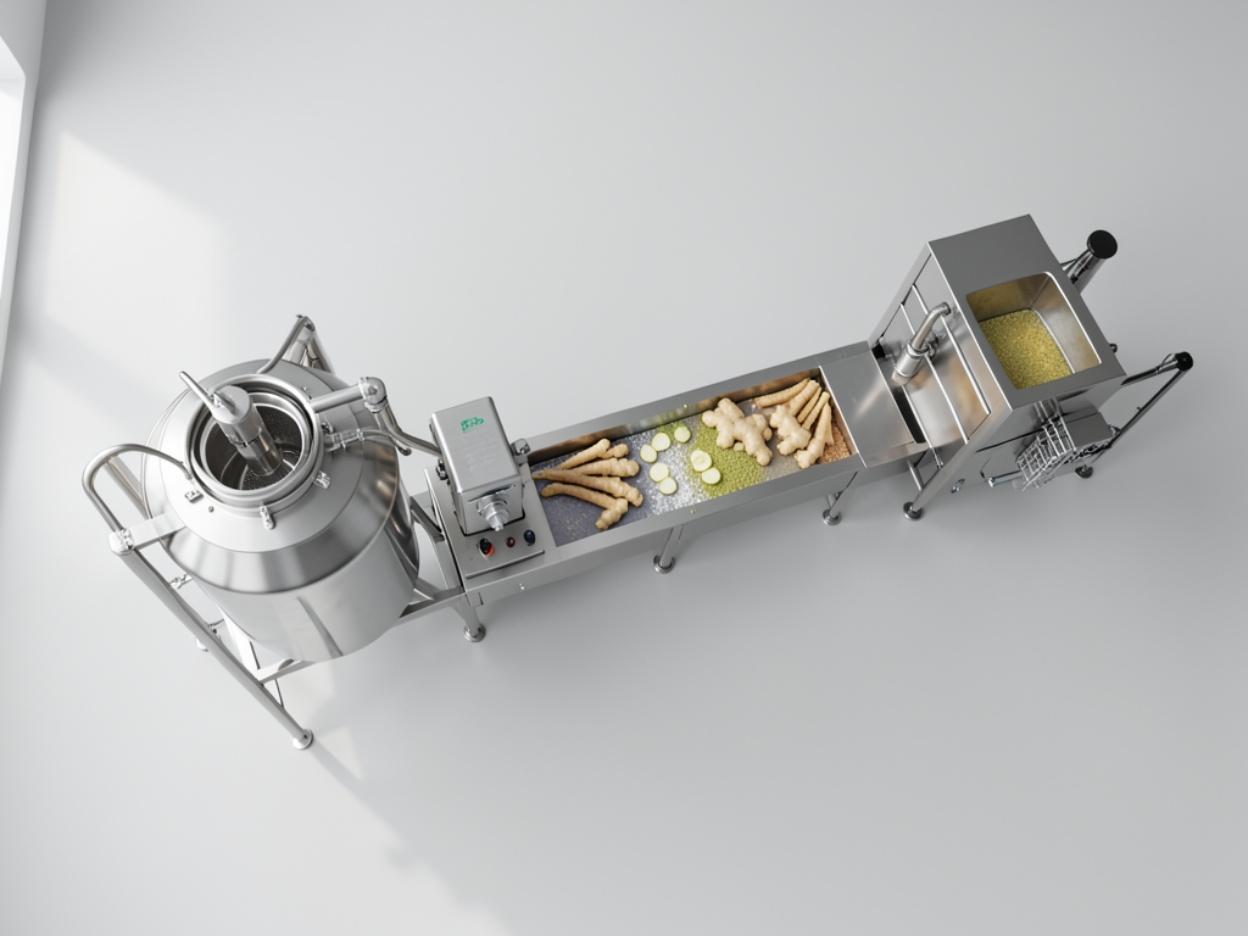
Aromatic plant materials and spices yield two broad families of products. Volatile fractions, the essential oils, are normally recovered by steam or hydro-distillation, while the heavier colour, pungency and flavour components are captured as oleoresins using solvent extraction. A producer of clove, ylang-ylang, ginger, turmeric or cinnamon products therefore has to decide which of the two routes, or which combination, suits the raw material and the buyers who will use it.
This page is for oil distillers, oleoresin producers and spice processors planning a new unit or a change to an existing one. It sets out the feedstocks and products involved, the points that influence yield and quality, and the Kadali Africa Ventures catalogue products that relate to each route. Equipment scope and specification are agreed in a technical proposal prepared for the project.
What This Service Delivers
- Distillation, solvent extraction and combined routes explained against your raw material
- Clove, ylang-ylang, ginger, turmeric, cinnamon, vanilla and resin projects covered
- Solvent recovery and aroma recovery considered with the main plant
- Drying ahead of extraction can be scoped in the same enquiry
- Condenser, separator and steam design points raised early
- Scope for each plant confirmed in a technical proposal
1Raw Materials and What They Become
The same crop can lead to more than one product depending on the route chosen.
- Flower, bud and leaf materials: Clove buds and ylang-ylang flowers are classic distillation feeds, giving volatile oils. Flowers in general should be distilled immediately, so the still should sit close to the supply.
- Rhizomes and bark: Ginger, turmeric and cinnamon can be taken to essential oil, oleoresin or both, with the dried material or the spent residue used elsewhere.
- Resins and gums: Frankincense and myrrh are handled as resins, with volatile and non-volatile fractions treated by distillation or extraction depending on the target.
- Vanilla pods: Processed by extraction into vanilla extracts, where flavour retention and solvent handling decide the layout.
- Spice blends and whole spices: Used as feed for oleoresin extraction, usually after drying, cleaning and grinding to a particle size the extractor can handle. Finer material gives the solvent more surface to contact, but very fine powder can agglomerate and hinder flow.
2Distillation or Solvent Extraction: Making the Choice
The route is decided by what you want from the material, not only by the material itself.
- Steam or hydro-distillation: Suits volatile oils that carry over with steam, which is how most essential oils are produced. The plant is a still, condensers and an oil-water separator, with a boiler or steam supply.
- Solvent extraction: Suits heavier components such as pigments, pungent principles and resins. It adds a solvent circuit, a concentration step and a recovery system.
- Combined routes: Some spices can yield both products, either by distilling for the oil and then extracting, or by running separate streams. The sequence affects the quality of each, so it should be tested for the spice concerned.
- Aroma recovery: Where aroma would otherwise be lost during evaporation or drying, ask whether a recovery step is worthwhile for your product and buyer.
3Catalogue Products and Their Role
Product pages give the indicative process and modules for each. Those most relevant to oil and oleoresin projects are below.
- Essential Oil Distillation Plants: The general distillation route: preparation, steam or hydro-distillation, condensation, oil-water separation and storage.
- Clove Oil Distillation Plants: Distillation configured for clove material and its oil.
- Ylang-Ylang Essential Oil Distillation Plants: A distillation route for ylang-ylang flowers, where steam rate and oil-water separation are key inputs.
- Spice Oleoresin Extraction Plants: Solvent extraction of spices with filtration, concentration and solvent management.
- Turmeric, Ginger and Cinnamon plants: Crop-specific processing and extraction routes for each of these spices.
- Integrated Spice Processing Plants: A combined line for buyers who want several spice products from shared preparation and utilities.
- Vanilla and Frankincense & Myrrh Extraction Plants: Extraction routes for pods and resins.
- Spice & Herbal Drying Plants: Drying ahead of extraction or distillation where raw-material moisture matters.
4Design Points That Affect Yield and Quality
- Condenser duty and cooling water: Condensation must be complete or oil is lost by evaporation, so the condenser and its cooling-water supply must cope with the still's peak vapour load.
- Oil-water separation: Most essential oils are lighter than water and float, but some have a density close to water's: FAO notes that German chamomile oil is difficult to separate and forms heavy emulsions. Separators need enough volume to limit turbulence, and distillate temperature affects separation.
- Batch loading and packing: Pack the still evenly and not too tightly: FAO warns that over-packing lets steam force channels through the charge and leaves parts of it unextracted.
- Solvent selection and residues: The solvent chosen for an oleoresin influences the recovery system, safety measures and the residue limits your buyers may set.
- Temperature exposure: Heat alters delicate aroma and colour components. FAO notes that chemical changes inevitably occur in steam distillation, and work on ginger oleoresin reports that solvent removal at high temperature can degrade bioactive compounds, which is why vacuum concentration is considered.
5What to Decide Before Requesting a Proposal
- Product and buyer: Name the oil or oleoresin and the buyer type, such as flavour houses, fragrance users or food manufacturers.
- Raw-material form: Say whether you start with fresh, partly dried or dried material and in what particle size. Flowers are generally distilled immediately, herbaceous material often benefits from a day or two of wilting and woody material may need grinding or soaking, so the form you hold decides the preparation steps.
- Yield expectations: Supply any laboratory or pilot yield figures you hold so the plant can be sized from evidence.
- Solvent preference: If an oleoresin is wanted, state any solvent your market accepts or avoids.
- Steam and cooling: Describe the boiler, fuel and water situation at the site.
- Co-products: Say what will be done with spent material and any hydrosol.
Frequently Asked Questions
What is the difference between an essential oil and an oleoresin?+
Can one plant produce both oil and oleoresin from the same spice?+
How do I choose a solvent for oleoresin extraction?+
What size of still suits a small distillery?+
Why is oil lost in my existing distillation unit?+
Can aromatic material be dried before distillation?+
Country Pages That Discuss Essential Oil & Oleoresin Solutions
Related Product Categories
Related Products
Enquire About Essential Oil & Oleoresin Solutions
Tell Kadali Africa Ventures about your raw material, target product and capacity, and the technical proposal will set out the scope for your project.