Ginger Extraction Plant
Part of the Kadali Africa Ventures catalogue. Send your raw material, target product and capacity for a technical proposal. Request a quote →
Product Categories
- Herbal, Botanical & Nutraceutical Extraction(9)
- Essential Oils, Spices & Oleoresins(6)
- Fruit & Vegetable Processing(8)
- Starch, Flour, Edible Oil & Food Processing(7)
- Drying & Dehydration Systems(5)
- Evaporation, Concentration & Solvent Recovery(4)
- Pharmaceutical & Industrial Process Equipment(4)
- Cocoa, Shea, Palm Oil & Oilseed Processing(6)
- Cereals, Tubers & Sugar Processing(6)
- Specialty African Botanical & Natural Ingredients(11)
- Specialty Food, Beverage & By-Product Processing(7)
Talk to Kadali Africa Ventures
Send your raw material, product and capacity for a technical proposal.
Contact Kadali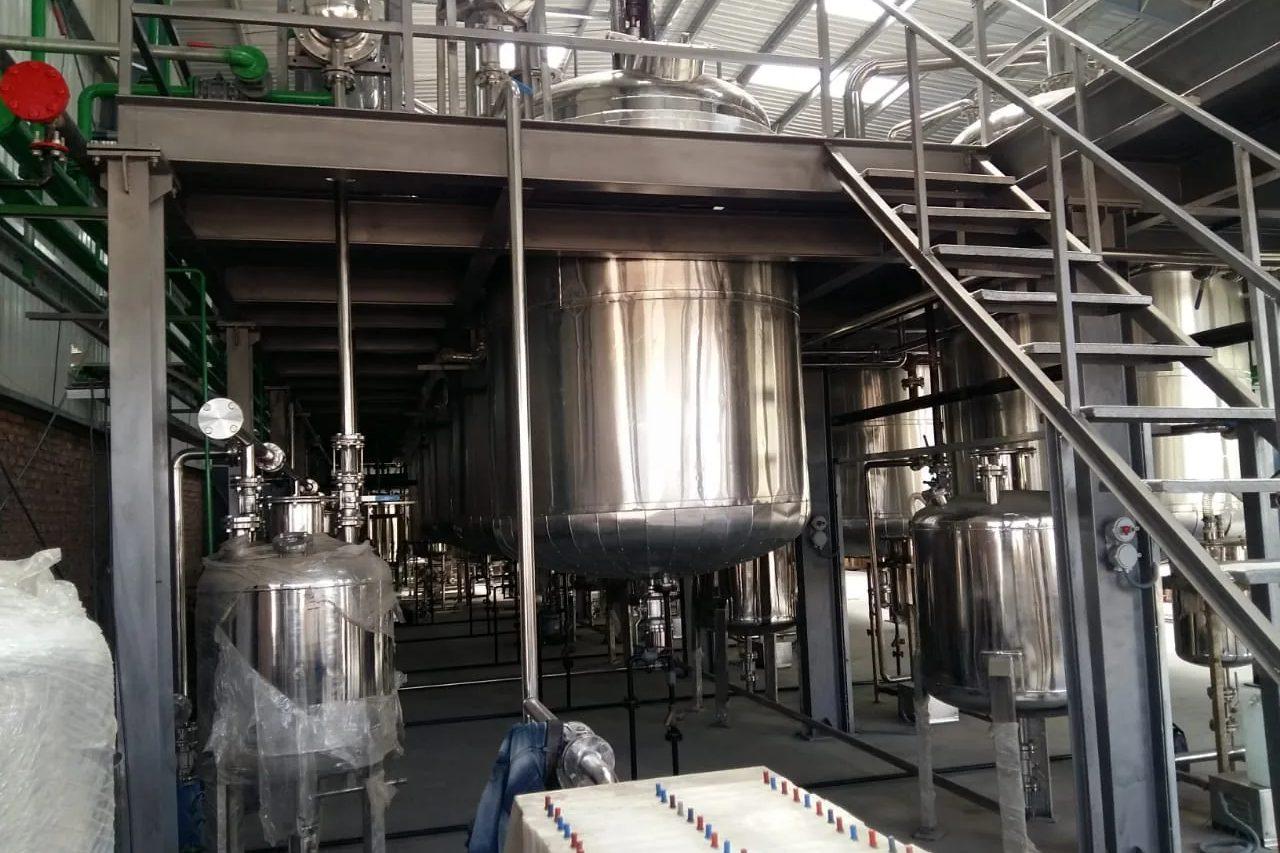
Ginger Extraction Plant
This page is for spice processors, nutraceutical makers and flavour manufacturers who handle ginger (Zingiber officinale) and want to move from selling dried slices or powder to selling an extract or oil. These plants are listed around dried rhizome, not fresh. Four products can come from it, each with its own plant: an oleoresin, a gingerol-standardised extract, a steam-distilled oil and a CO2 oil. Before anything is specified, settle which of the four you will sell, the form and moisture of the dried rhizome you can secure, the specification your buyer sets (gingerol, shogaol, volatile oil, viscosity) and whether a solvent, water or CO2 route suits your site.
All four routes begin with dried ginger rhizome that has been cleaned and reduced in size. The oleoresin line adds sealed jacketed SS 316L extractors, pressure leaf filtration, a multi-effect vacuum evaporator and a dedicated aroma-recovery unit. The gingerol-extract line uses alcohol or hydro-alcoholic extraction, a filter press, a falling-film / vacuum evaporator and a spray or vacuum dryer. For oil, the plant uses either an SS 316L still with multi-tube condenser and Florentine flask, or a high-pressure CO2 unit that recovers and recirculates its CO2. Configuration follows raw material, product target and capacity.
Indicative Capacity Range
- 100–5,000 kg feed/day
Key Specification Inputs
Extraction solvent/water, extraction stages, batch time, filtration and recovery.
Technical Specifications
| Plant type | Ginger plant built for one of four products: oleoresin, gingerol extract, steam-distilled oil or CO2 oil |
|---|---|
| Feedstock | Zingiber officinale as dried rhizome, with 8-10% moisture quoted on the oleoresin page |
| Oleoresin | Food-grade solvent extraction in sealed jacketed SS 316L extractors, a multi-effect vacuum evaporator and a separate aroma-recovery section; finished to the customer's limits for gingerol, shogaol, volatile oil and viscosity |
| Gingerol extract | Alcohol or hydro-alcoholic extraction, with a configurable range of 2.5% to 60% Total Gingerols by HPLC listed on the product page; delivered as powder or liquid concentrate (5 candidate technologies screened) |
| Distilled oil | Steam distillation of dried rhizome, with hydro, vacuum or pressure modes open to evaluation; the oil is rich in sesquiterpenes and is not the source of the pungent gingerols and shogaols |
| CO2 oil | Supercritical CO2 in high-pressure SS 316L vessels, with CO2 recompression and recirculation; an ethanol modifier can be assessed |
| Filtration | Pressure leaf filters with polishing filters, or a plate-and-frame press with cartridge polish filters, depending on the route |
| Drying | Spray or vacuum tray dryer on the gingerol-extract route only; oleoresin is a viscous concentrate and is not dried |
| Contact surfaces | SS 316L, electropolished and cleaned in place |
| Controls | PLC-SCADA with recipe-driven batch control, traceability and production reports on the extraction routes |
| Utilities | Steam, chilled or cooling water, compressed air, nitrogen and power, confirmed per project |
| Plant capacity | Set per project from rhizome supply, target product |
Typical Process Route
Intake, Cleaning and Milling
Dried rhizome is authenticated, checked for moisture, cleaned and ground to a particle size suited to extraction. Milling conditions are chosen to protect gingerols, shogaols and volatile oil.
Solvent Extraction
Ground ginger is extracted over several cycles in sealed jacketed SS 316L vessels at moderate, controlled temperature, using a food-grade solvent (ethanol or a hydro-alcoholic mix on the gingerol route).
Clarification
The miscella is cleared through pressure leaf filters or a plate-and-frame press, then polishing or cartridge filters remove fibre and spent marc.
Vacuum Concentration and Solvent Return
Evaporation under reduced pressure keeps heat damage low. Solvent is condensed, purified and returned to the process in a closed loop.
Aroma Capture (Oleoresin Route)
A separate aroma-recovery section collects the volatile compounds that give ginger its flavour and smell, and these go back into the finished oleoresin.
Standardisation
Oleoresin is finished to limits for gingerol, shogaol, volatile oil, viscosity, moisture and residual solvent. Gingerol extract is assayed by HPLC for total gingerols and adjusted to the declared figure.
Drying (Gingerol Extract Route)
Standardised gingerol extract is spray- or vacuum-dried to a free-flowing powder for encapsulation and blending, or it is supplied as a liquid concentrate.
Oil Routes: Distillation or CO2
For an oil rather than an oleoresin, the rhizome is either steam-distilled with a multi-tube condenser and a Florentine flask, or extracted with supercritical CO2 that is recovered and recirculated.
Testing and Release
Each batch is released on assay or GC-MS profile, plus residual-solvent, heavy-metal, microbial and moisture tests as the route requires.
Major Plant Equipment
- Cleaning and inspection line for dried rhizome
- Hammer mill or pulveriser
- Jacketed SS 316L extraction vessels
- Solvent storage tanks and transfer pumps
- Pressure leaf filters, plate-and-frame filter press and cartridge polish filters
- Multi-effect vacuum evaporator or falling-film / vacuum evaporator
- Aroma recovery section
- Solvent recovery unit with condensers
- Spray dryer or vacuum tray dryer
- Ribbon blender for standardising
- SS 316L distillation still with multi-tube condenser and Florentine flask (oil route)
- High-pressure supercritical CO2 vessel, separator and CO2 recovery loop (CO2 route)
- Clean-in-place (CIP) skid
- PLC-SCADA panel, electrical MCC and instruments
Plant Output
Applications
- Standardised ginger ingredient for pharmaceutical manufacturers
- Capsules, tablets and digestive or joint-health supplements for nutraceutical brands
- Flavour for food and drinks, including ginger ale, ginger beer and confectionery
- Fragrance and aromatherapy blends
- Active ingredient for cosmetic and personal care formulators
- Herbal and traditional-medicine preparations
Key Features
Four Routes, Kept Separate
Oleoresin, gingerol extract, distilled oil and CO2 oil need different plants, because gingerols and shogaols give the pungency while the volatile oil carries the aroma and the sesquiterpene fraction.
Aroma Recovery for Oleoresin
A dedicated unit on the oleoresin route captures the volatile flavour and fragrance fraction so it can be restored to the product.
Gentle Thermal Handling
Moderate extraction temperature and vacuum concentration limit the dehydration of gingerols into shogaols, helping to protect pungency and aroma.
Distillation Built for Heavy Oil
The oil line is listed with a multi-tube condenser and a Florentine flask suited to ginger's sesquiterpene-rich oil.
Closed Solvent Loop
A recovery unit returns solvent to the process. The recovery level is established during process development.
Country Pages for Ginger Extraction Plant
This product is listed on the pages of the countries below, each with its own enquiry route. Where Kadali has no office in a country, enquiries are handled from the Accra office.
Related Products
Frequently Asked Questions
Which ginger product should I build a plant for?
Why does distilled ginger oil carry aroma but little pungency?
How should ginger be prepared before it reaches the plant?
What gingerol range can the extract line be set up for?
What affects solvent and energy use on the oleoresin and extract routes?
What should I prepare before raw-material trials?
Can ginger be extracted with CO2 instead of solvent?
Can the gingerol extract be spray dried?
What should I send to request a ginger plant proposal?
Ready to discuss your project?
Call or email Kadali Africa Ventures with your raw material, target product and capacity.