Animal Feed Plant Enquiry (Poultry, Cattle & Aqua Feed)
Part of the Kadali Africa Ventures catalogue. Send your raw material, target product and capacity for a technical proposal. Request a quote →
Product Categories
- Herbal, Botanical & Nutraceutical Extraction(9)
- Essential Oils, Spices & Oleoresins(6)
- Fruit & Vegetable Processing(8)
- Starch, Flour, Edible Oil & Food Processing(7)
- Drying & Dehydration Systems(5)
- Evaporation, Concentration & Solvent Recovery(4)
- Pharmaceutical & Industrial Process Equipment(4)
- Cocoa, Shea, Palm Oil & Oilseed Processing(6)
- Cereals, Tubers & Sugar Processing(6)
- Specialty African Botanical & Natural Ingredients(11)
- Specialty Food, Beverage & By-Product Processing(7)
Talk to Kadali Africa Ventures
Send your raw material, product and capacity for a technical proposal.
Contact Kadali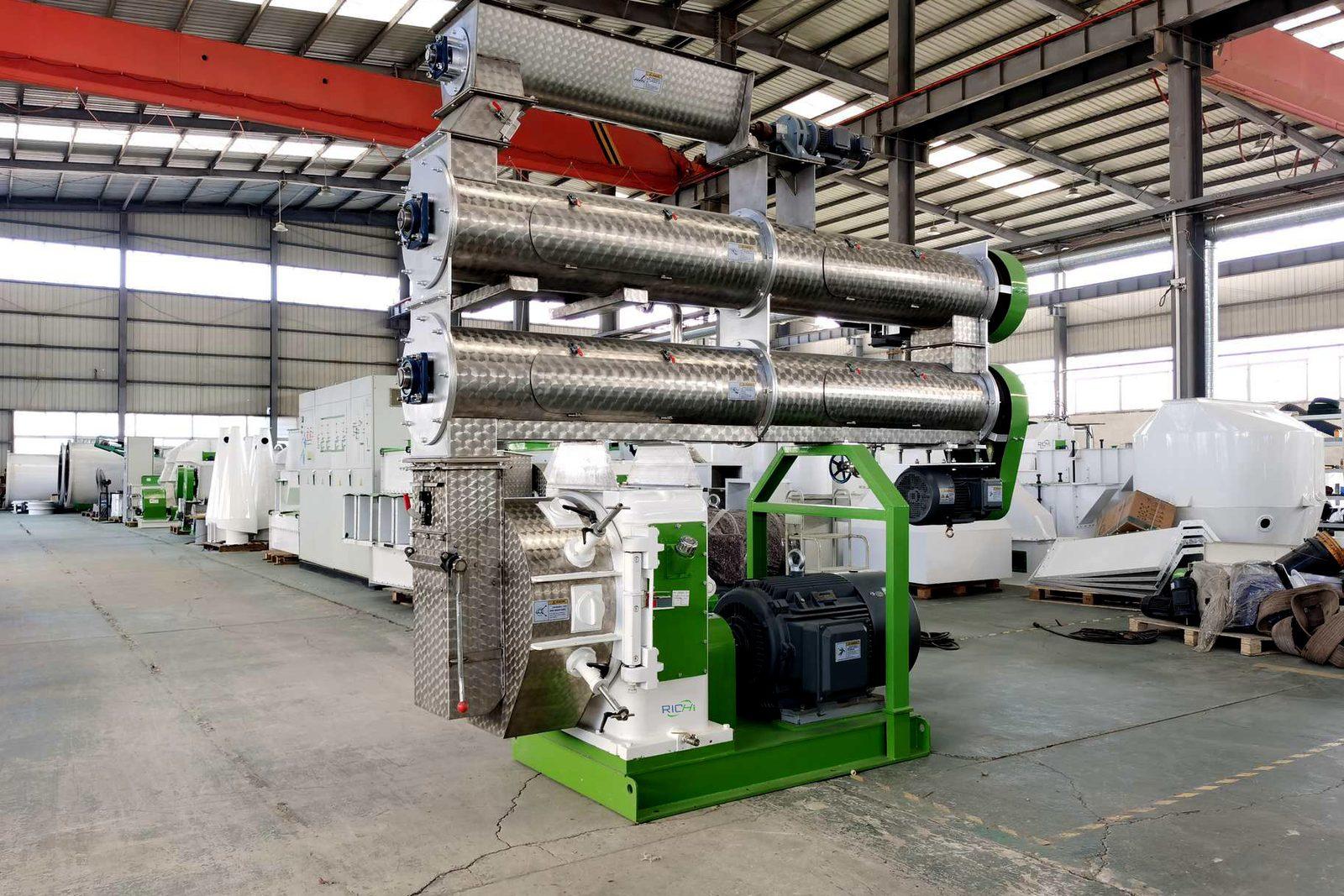
Animal Feed Plant Enquiry (Poultry, Cattle & Aqua Feed)
A feed project in Africa usually starts from a local supply of grain, oilseed cake, brans or fish meal and a livestock, poultry or fish customer base. Before a plant can be sized, the buyer has to decide the species and life stage, the product form (mash, pellet or extruded), the formulation, the throughput per hour and the hours the mill will run. A complete feed mill covering grinding, mixing, pelleting, extrusion, cooling and bagging is not a standard listed product here. Where a project includes a drying, evaporation or filtration duty for a feed ingredient, that stage can be assessed on its own.
A feed mill in broad terms receives and stores raw materials, grinds them, batches and mixes them to formulation, optionally conditions and pellets or extrudes the mix, then cools, screens and bags it. The quality of the result depends on formulation accuracy, grinding fineness, mixing uniformity, pellet durability and dust control. The process equipment in this range is extraction, evaporation and drying machinery, and a feed project touches it at specific points: concentrating a liquid ingredient in an evaporator, or drying a liquid or wet solid ingredient in a spray, fluidised-bed or vacuum dryer. Whether any of that applies depends on the ingredient and its moisture.
Indicative Capacity Range
- 0.5–10 tonnes finished feed/hour
Key Specification Inputs
Formulation, grinding, mixing, pellet quality and dust control.
Technical Specifications
| Project type | Poultry, cattle or aqua feed enquiry, handled as a scope-confirmation exercise |
|---|---|
| Range status | Complete feed-mill lines are not standard listed products |
| Equipment that may apply | Spray, fluidised-bed and vacuum dryers, evaporators and filtration equipment, where the ingredient calls for them |
| Details to provide | Species, product form (mash, pellet or extruded), formulation, raw materials, capacity and site utilities |
| Typical modules in a feed mill | Raw-material handling; milling; batching and mixing; optional pelleting; cooling and packing |
| Quality inputs to settle | Formulation, grinding, mixing, pellet quality and dust control |
| Capacity basis | Set to the requirement, where the project falls inside the process-equipment range |
Major Plant Equipment
- Spray dryer for turning a liquid feed into powder
- Fluidised-bed dryer for granules and powders
- Vacuum paddle dryer for wet solids and pastes
- Falling-film or multiple-effect evaporator for liquid concentration
- Filtration and centrifuge equipment
- Clean-in-place (CIP) skid
- PLC panel and instrumentation
Plant Output
Applications
- Planning a poultry feed project
- Planning a cattle feed project
- Planning an aqua feed project
- Drying or concentrating a liquid or wet feed ingredient, subject to review
- Early-stage feasibility discussion on a feed-ingredient process
Key Features
A Clear Answer on Scope
You learn early whether your project falls inside the process-equipment range or outside it, so effort is not spent where the range cannot help.
Process Equipment Where It Fits
If a feed ingredient needs drying, evaporation or filtration, those machines can be assessed in SS 316L with CIP-cleanable construction.
Raw-Material Moisture Sets the Duty
Grain, cake and brans pick up moisture in storage, and wet by-products spoil fast. How much drying or concentrating an ingredient needs follows from its moisture, volume and the fuel available.
Trial Work for Ingredient Processes
If an ingredient process is within scope, its parameters are established in process development and pilot validation, not assumed.
Country Pages for Animal Feed Plant Enquiry (Poultry, Cattle & Aqua Feed)
This product is listed on the pages of the countries below, each with its own enquiry route. Where Kadali has no office in a country, enquiries are handled from the Accra office.
- Animal Feed Plant Enquiry (Poultry, Cattle & Aqua Feed): Ghana
- Animal Feed Plant Enquiry (Poultry, Cattle & Aqua Feed): Nigeria
- Animal Feed Plant Enquiry (Poultry, Cattle & Aqua Feed): Kenya
- Animal Feed Plant Enquiry (Poultry, Cattle & Aqua Feed): Uganda
- Animal Feed Plant Enquiry (Poultry, Cattle & Aqua Feed): Zambia
Related Products
Frequently Asked Questions
Is a complete poultry, cattle or aqua feed mill offered?
What should I decide before planning any feed mill?
Which raw-material issues matter in a warm, humid climate?
Where could process equipment from this range help a feed project?
What decides dust, safety and cleanliness in a feed plant?
What should I send with a feed plant enquiry?
Can a process-equipment partner work alongside my feed-mill supplier?
Which feed ingredients might need drying or concentrating?
Ready to discuss your project?
Call or email Kadali Africa Ventures with your raw material, target product and capacity.