Turmeric Processing & Extraction Plants
A turmeric processing and extraction plant turns fresh or dried Curcuma longa rhizome into dried and milled turmeric, curcuminoid extract or oleoresin, and turmeric oil, depending on the products chosen.
Product Categories
- Herbal, Botanical & Nutraceutical Extraction(9)
- Essential Oils, Spices & Oleoresins(6)
- Fruit & Vegetable Processing(8)
- Starch, Flour, Edible Oil & Food Processing(7)
- Drying & Dehydration Systems(5)
- Evaporation, Concentration & Solvent Recovery(4)
- Pharmaceutical & Industrial Process Equipment(4)
- Cocoa, Shea, Palm Oil & Oilseed Processing(6)
- Cereals, Tubers & Sugar Processing(6)
- Specialty African Botanical & Natural Ingredients(11)
- Specialty Food, Beverage & By-Product Processing(7)
Talk to Kadali Africa Ventures
Send your raw material, product and capacity for a technical proposal.
Contact Kadali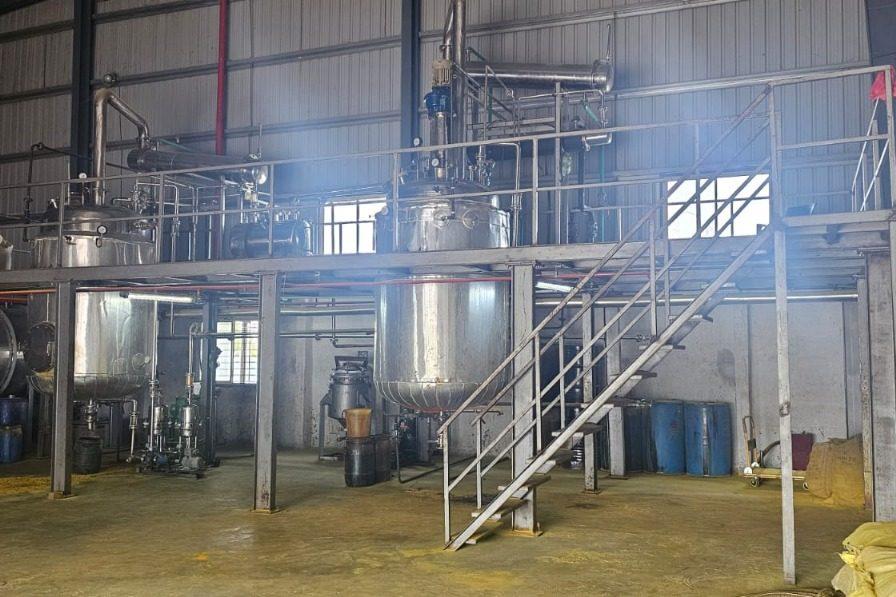
Turmeric Processing & Extraction Plants
It covers the whole turmeric chain, from rhizome handling to extract and oil, rather than the single crystallised-curcuminoid line of a dedicated curcumin plant. The first thing to settle is the feed: fresh rhizome needs washing, cooking, slicing and drying before anything else, while dried or polished fingers go straight to cleaning and milling. The second is which products the project will make, because one shared front end can feed a spice-powder line, a solvent-extraction line for pigment and oleoresin, and an oil-recovery unit, each with its own downstream equipment and safety needs. The harvest season, drying capacity at the peak, the choice of dryer, the extraction solvent and whether the oil is taken before the pigment decide the design and the price. Turmeric stains equipment and makes fine dust when milled, which affects materials, layout and dust control throughout.
Turmeric processing starts with the rhizome. Fresh rhizome is washed, usually cooked in water, sliced and dried. Cooking time changes the curcuminoid content and colour of the dried product, so it is set by trial on the rhizome actually bought. Dryer choice matters as much: sun drying loses the most colour and curcumin, while infrared and microwave drying save time and energy and keep quality well, although microwave heating of fresh slices is a different use and was the least favourable treatment for active compounds. Dried material is polished, cleaned and milled with dust control, which already gives a saleable spice powder. For extraction, curcumin has limited water solubility, so ethanol or acetone is the usual solvent, and the solvent composition strongly affects extraction. The conventional route also uses a non-polar solvent such as hexane to remove off-flavours created by cooking and drying, which brings solvent recovery and residue questions into the design from the start. Oil can be taken first by steam distillation or supercritical carbon dioxide, and the pigment is then extracted from the unflavoured powder, giving separate oil and pigment streams from one feed. The extract is filtered, concentrated and dried to an oleoresin or powder, with the solvent condensed and returned.
Indicative Capacity Range
- 100–5,000 kg feed/day
Key Specification Inputs
Extraction solvent/water, extraction stages, batch time, filtration and recovery.
Technical Specifications
| Technology | Rhizome processing line (wash, cook, slice, dry, mill) with optional solvent extraction and oil recovery |
|---|---|
| Feed | Fresh rhizome or dried polished fingers; the front end differs between the two |
| Cooking | Cooking vessel where fresh rhizome is cured, with the time set by trial |
| Drying | Hot-air tray or belt dryer, solar-assisted or infrared, chosen by colour target and fuel cost |
| Milling | Hammer or pulveriser mill with dust collection; sieves set the particle size |
| Extraction Solvent | Ethanol or acetone for curcuminoid pigment, with a non-polar de-flavouring step in the conventional route |
| Oil Route | Steam distillation or supercritical carbon dioxide where oil is a product |
| Concentration | Vacuum evaporator with condenser and solvent recovery; thick extract sold as oleoresin or dried |
| Contact Material | Stainless steel with smooth surfaces and washable seals, since turmeric stains and fouls |
| Utilities | Wash water and drainage, steam or hot-air fuel, cooling water and power, with a classified area where a flammable solvent is used |
| Product Forms | Dried slices, milled powder, extract, oleoresin or oil, as the project chooses |
Typical Process Route
Intake and inspection
Fresh or dried rhizome is checked for variety, moisture, mould, soil and foreign matter, and lots are kept separate. Curcuminoid content varies with variety, growing conditions and curing, so lot-by-lot testing shows what the plant can really produce.
Washing and cleaning
Fresh rhizome is washed free of soil in a drum washer, with wash-water supply and drainage planned in advance. Dried fingers are cleaned and destoned dry, and stones missed here damage the mill later.
Cooking and curing
Fresh rhizome is cooked in water so that it dries evenly and develops its colour. Cooking time changes the curcuminoid content and colour of the dried product, so it is set by trial and not copied from another site.
Slicing and drying
Rhizome is sliced to a uniform thickness and dried to a low moisture in a hot-air, solar-assisted or infrared dryer. Open sun drying loses the most colour and curcumin, so dryer choice follows the colour target, fuel cost and the volume at the harvest peak.
Polishing and milling
Dried fingers are polished to remove rough skin if the market asks for it, then milled and sieved under dust extraction. Fine turmeric dust stains everything and can ignite when suspended in air, so mill rooms need dust collection and surfaces that clean easily.
Solvent extraction
Milled turmeric is extracted with ethanol or acetone in jacketed vessels, in one or more stages, to take out the curcuminoid pigment and oleoresin. A non-polar de-flavouring step may come first, which adds solvent handling.
Separation and concentration
The extract is filtered from the spent powder and concentrated under vacuum, and the solvent vapour is condensed and recovered. Pigment builds up on filters, heat-transfer surfaces and pipework, so these are designed to be washed down quickly.
Oil recovery
Where oil is a product, it is taken from the rhizome or powder by steam distillation or supercritical carbon dioxide, either before the pigment extraction or separately. Taking oil first leaves an unflavoured powder for the pigment step but adds a pressurised stage.
Drying, finishing and packing
Extracts are dried to powder or drummed as thick oleoresin, milled spice is packed, and oil is filtered and stored away from light and air. Each product needs its own packing, and turmeric colour carries over into anything that touches it.
Process & Equipment Modules
- Rhizome receiving and destoning station
- Drum washer
- Cooking vessel
- Slicer
- Hot-air dryer
- Hammer mill with dust collector
- Jacketed extraction vessels
- Filter press or centrifuge
- Vacuum evaporator with condenser
- Solvent recovery still
- Oil recovery unit (steam still or carbon dioxide module)
- Powder packing line
Plant Output
Applications
- Dried and milled turmeric for spice, retail and seasoning blends
- Curcuminoid extract for capsules and supplement ingredients
- Turmeric oleoresin for food colour and flavour
- Natural yellow colour for foods and beverages
- Turmeric essential oil for flavour, fragrance and cosmetics
- Turmeric material for traditional medicine and herbal preparations
Key Features
One Front End, Several Products
Washing, cooking, drying and milling are shared. Spice powder, extract and oil each take their own downstream equipment, so a project can start with powder and add extraction later.
Dryer Chosen for Colour and Curcumin
Dryer choice moves curcumin content and colour as well as throughput and energy use, so it is judged against the product target and not by price alone.
Solvent Route Set by the Product
Ethanol or acetone suits pigment extraction, and a de-flavouring step adds non-polar solvent handling. Each choice changes recovery, safety and residue testing.
Oil and Pigment Kept Apart
Taking the oil first, by steam distillation or supercritical carbon dioxide, gives separate oil and pigment streams from one feed.
Built for Dust and Staining
Dust collection on milling, washable surfaces and prompt cleaning handle the fine dust and the pigment build-up that turmeric causes.
Country Pages for Turmeric Processing & Extraction Plants
This product is listed on the pages of the countries below, each with its own enquiry route. Where Kadali has no office in a country, enquiries are handled from the Accra office.
Related Products
Frequently Asked Questions
What information is needed to size Turmeric Processing & Extraction Plants?
What capacity range does Turmeric Processing & Extraction Plants cover?
Should a project dry and mill turmeric first, or go straight to extraction?
Can I assume one extract output per tonne of rhizome?
Which dryer suits turmeric?
Why does turmeric extraction use organic solvents?
Can turmeric oil and curcumin pigment be taken from the same powder?
How should dust and staining be handled in a turmeric plant?
How do I request a proposal for Turmeric Processing & Extraction Plants?
Enquire about Turmeric Processing & Extraction Plants
Send your raw material, target product and capacity to Kadali Africa Ventures for a technical proposal.