
Tomato Paste Processing Plants
A tomato paste plant crushes, heats and pulps fresh tomatoes before evaporating them to a high-solids paste, and the choice between hot break and cold break sets how thick the paste will be.
Product Categories
- Herbal, Botanical & Nutraceutical Extraction(9)
- Essential Oils, Spices & Oleoresins(6)
- Fruit & Vegetable Processing(8)
- Starch, Flour, Edible Oil & Food Processing(7)
- Drying & Dehydration Systems(5)
- Evaporation, Concentration & Solvent Recovery(4)
- Pharmaceutical & Industrial Process Equipment(4)
- Cocoa, Shea, Palm Oil & Oilseed Processing(6)
- Cereals, Tubers & Sugar Processing(6)
- Specialty African Botanical & Natural Ingredients(11)
- Specialty Food, Beverage & By-Product Processing(7)
Talk to Kadali Africa Ventures
Send your raw material, product and capacity for a technical proposal.
Contact Kadali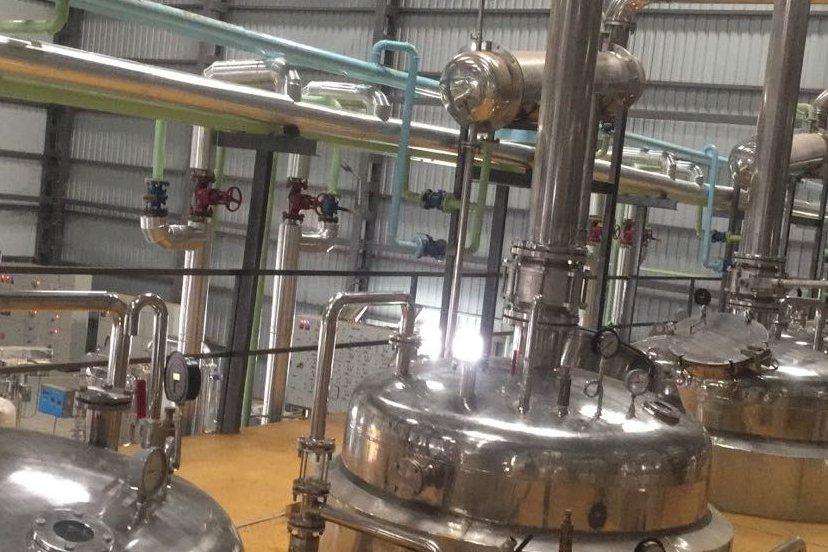
Tomato Paste Processing Plants
Paste is named by its soluble solids: a puree or pulp holds less, and paste more, so the evaporator target and the product name are tied together. The feed matters more than in most juice lines. Tomatoes grown for processing carry more solids and firmer flesh than watery fresh-market fruit, so a tonne of watery fruit gives less paste and leaves more water to boil off. The season is short and the peak intense, and rot cannot be seen after crushing, so decayed fruit is removed at sorting. A buyer has to settle the target solids, hot or cold break, the fruit supply across the season, the pack (drums, cans, pouches or sachets) and where skins and seeds will go. The evaporator is the main energy user and the main fouling point of the plant.
Tomatoes are washed, sorted to remove rot and crushed. Crushing releases enzymes that split pectin and thin the product, so the next step decides the paste's body. A hot break heats the crushed fruit quickly to a temperature that destroys those enzymes, and gives a thick, high-viscosity paste. A cold break holds the crush at a lower temperature, lets the enzymes act and gives a thinner product, which suits lower-viscosity uses. A pulper or finisher in two stages then strips skins and seeds from the pulp. The pulp is deaerated and sent to an evaporator, usually several effects in series, where falling-film stages take the thin pulp and forced-circulation stages handle the paste as it thickens and sticks. Evaporation under vacuum also helps keep the red colour and lycopene that buyers look for. The paste is then sterilised and filled hot into cans or pouches, or filled aseptically into bags in drums for industrial buyers. Evaporator tubes foul with tomato solids, so cleaning after each run is built into the plant. The pulping and filling stages can also be arranged to run puree or pulp at a lower target solids.
Indicative Capacity Range
- 500–10,000 kg fresh tomato/hour
Key Specification Inputs
Brix target, peel/seed handling, evaporator duty, packaging.
Technical Specifications
| Technology | Tomato crushing, pulping and multi-stage vacuum evaporation line for paste |
|---|---|
| Break Option | Hot break for thick paste or cold break for thinner product, set by the end use |
| Pulping | Pulper and finisher with changeable screens to remove skins and seeds |
| Evaporator | Several effects in series; falling-film for thin pulp, forced-circulation for thick paste |
| Solids Target | Set by the product named and the buyer's specification, and fixed before the evaporator is sized |
| Sterilisation | Heat treatment before hot fill or aseptic filling, set by the pack |
| Packing Options | Aseptic bags in drums, or hot-fill cans, pouches and sachets |
| Contact Material | Food-grade stainless steel, with grades chosen for the acid in tomato |
| Automation | Manual or PLC control, with break temperature and Brix records |
| Utilities | Wash water, steam, cooling water, vacuum pump power and compressed air |
| Residue Handling | Skins and seeds conveyed to a feed, fertiliser or disposal outlet |
Typical Process Route
Receiving and Washing
Fruit is weighed in, tipped into a flume and washed to remove soil and field debris. Fruit that waits too long at the gate softens and spoils.
Sorting Out Rot
Rotten, mouldy and unripe fruit are removed before crushing, since decay cannot be seen in the paste and shows up as mould in the product.
Crushing and Break
Fruit is crushed and the break type applied. A hot break heats the crush rapidly to stop pectin breakdown for thick paste, and a cold break lets it proceed for a thinner product.
Pulping and Finishing
Pulper and finisher screens separate skins and seeds from the pulp. Screen size sets texture and how much pulp is left in the waste.
Deaeration
Air is drawn off before the evaporator to reduce foaming and oxidation, which would dull the colour.
Multi-Stage Evaporation
The pulp is boiled down under vacuum to the target solids. Falling-film effects handle the thin pulp, and forced-circulation effects take the thick paste, which burns on hot tube walls.
Sterilisation and Filling
Paste is sterilised and hot-filled into cans or pouches, or filled aseptically into bulk bags in drums.
Cleaning and Residue Handling
Skins and seeds are collected for feed or fertiliser, and the plant is cleaned in place between runs.
Process & Equipment Modules
- Intake hopper and washing flume
- Sorting belt for rot removal
- Crusher
- Hot-break heater, or cold-break holding tank
- Pulper and finisher
- Deaerator
- Multi-effect evaporator with forced-circulation stages
- Condenser and vacuum system
- Sterilising heat exchanger
- Aseptic filler or hot-fill line
- Skin and seed conveyor
- CIP skid and PLC panel
Plant Output
Applications
- Industrial tomato paste in drums for sauce makers and repackers
- Tomato paste in tins and sachets for retail
- Base for ketchup, pasta sauce and stews
- Tomato puree or pulp at a lower solids target
- Tomato paste for canned fish and bean sauces
- Feedstock for tomato powder made by spray drying
- Skins and seeds as a feed or fertiliser by-product
Key Features
Break Temperature Control
The hot-break heater sets the thickness of the paste, so look for tight, repeatable temperature control and a quick-holding tube.
Two-Stage Pulping
A pulper and finisher with changeable screens take skins and seeds out without carrying too much pulp into the waste.
Evaporator Built for Thickening Paste
Falling-film effects for the thin pulp and forced-circulation effects for the paste handle both ends of the duty.
Sorting Before Crushing
Rot is removed before it is crushed, because it cannot be picked out afterwards.
Colour-Protecting Vacuum
Evaporating under vacuum preserves red colour and lycopene better than boiling at atmospheric pressure.
Cleaning Built In
Tomato solids foul hot surfaces, so CIP connections and access for tube cleaning are specified from the start.
Country Pages for Tomato Paste Processing Plants
This product is listed on the pages of the countries below, each with its own enquiry route. Where Kadali has no office in a country, enquiries are handled from the Accra office.
- Tomato Paste Processing Plants: Ghana
- Tomato Paste Processing Plants: Nigeria
- Tomato Paste Processing Plants: Senegal
- Tomato Paste Processing Plants: Mali
- Tomato Paste Processing Plants: Ethiopia
- Tomato Paste Processing Plants: Angola
- Tomato Paste Processing Plants: Egypt
- Tomato Paste Processing Plants: Morocco
- Tomato Paste Processing Plants: Libya
Related Products
Frequently Asked Questions
What information is needed to size Tomato Paste Processing Plants?
What capacity range does Tomato Paste Processing Plants cover?
Should I choose hot break or cold break?
Can I make paste from ordinary market tomatoes?
Why must rotten fruit be sorted out before crushing?
What drives the energy cost of a paste plant?
What happens to the skins and seeds?
Can the paste be dried into powder?
How do I request a proposal for Tomato Paste Processing Plants?
Enquire about Tomato Paste Processing Plants
Send your raw material, target product and capacity to Kadali Africa Ventures for a technical proposal.