Shea Butter Extraction & Refining Equipment
A shea butter plant crushes dried shea kernels, heats and works the meal, and separates the fat as unrefined butter, with an optional refining line for a neutral, light-coloured product.
Product Categories
- Herbal, Botanical & Nutraceutical Extraction(9)
- Essential Oils, Spices & Oleoresins(6)
- Fruit & Vegetable Processing(8)
- Starch, Flour, Edible Oil & Food Processing(7)
- Drying & Dehydration Systems(5)
- Evaporation, Concentration & Solvent Recovery(4)
- Pharmaceutical & Industrial Process Equipment(4)
- Cocoa, Shea, Palm Oil & Oilseed Processing(6)
- Cereals, Tubers & Sugar Processing(6)
- Specialty African Botanical & Natural Ingredients(11)
- Specialty Food, Beverage & By-Product Processing(7)
Talk to Kadali Africa Ventures
Send your raw material, product and capacity for a technical proposal.
Contact Kadali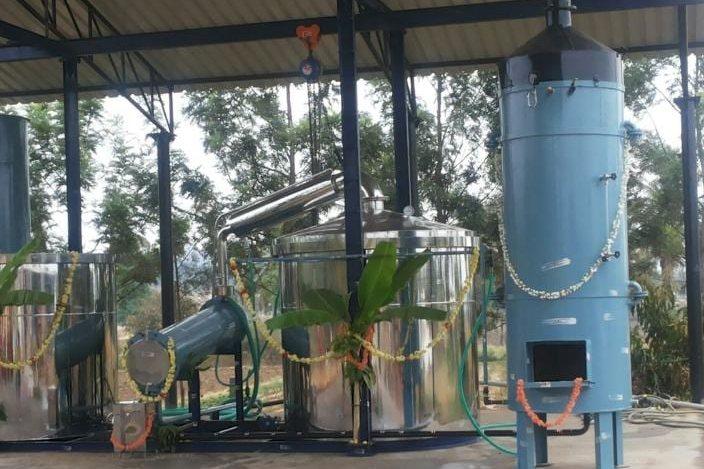
Shea Butter Extraction & Refining Equipment
In West Africa much shea butter is still made by hand, with village groups crushing, roasting, grinding and kneading the kernels with water. A mechanised plant takes over those steps with crushers, mills, presses or solvent extractors, so more kernels can be handled each day and the butter is more consistent. The questions to settle first are the grade wanted (unrefined or refined), how reliably kernels can be bought across the season, whether they arrive already boiled and dried or must be treated on site, and which extraction route will be used. The route changes the butter recovered from each tonne of kernels, but a solvent route also needs solvent recovery and hazardous-area design. Press cake, shell and effluent from water routes need a destination, and the free fatty acid of the butter decides how much is lost if it is refined later.
Shea kernels come from nuts that have been boiled, dried and shelled, and the quality of the butter depends largely on how well that was done. At the plant the kernels are cleaned and sorted, crushed, usually heated or roasted, and ground to a paste. The fat is then recovered by one of three routes. Hand-style kneading with water is the traditional route, and mechanised kneaders copy it with a lower butter recovery. A screw expeller presses the heated paste or kernels and gives a higher recovery, leaving a press cake. Solvent extraction recovers the most fat, but it needs a closed circuit, solvent recovery and hazardous-area design. The crude butter is settled and filtered to remove fine solids and moisture, then cooled, moulded or packed. If a neutral, odourless butter is needed for food or cosmetics, a refining line adds neutralising, bleaching and deodorising, and the loss in that line follows the free fatty acid of the incoming butter. Heating time and temperature also shape colour and the characteristic odour, so a roaster or heat conditioner needs accurate temperature control as well as a heat source.
Indicative Capacity Range
- 100–5,000 kg feed/day
Key Specification Inputs
Extraction solvent/water, extraction stages, batch time, filtration and recovery.
Technical Specifications
| Technology | Mechanical, water-based or solvent extraction of fat from shea kernels, with optional refining |
|---|---|
| Working Principle | Kernels are crushed, heated and ground, then the fat is separated by kneading, pressing or solvent washing |
| Feed | Dried, shelled shea kernels; moisture, mould and how the nuts were treated and dried decide the cleaning duty |
| Extraction Route | Mechanised kneading with water, screw expeller or solvent extraction, chosen by grade, scale and safety capability |
| Heating Method | Direct-fired, steam or thermal oil heating, chosen by local fuel cost and the temperature control needed |
| Solvent Handling | Closed extractor, desolventiser and condenser with hazardous-area design where a solvent route is used |
| Filtration | Plate or filter press, sized to the butter viscosity and solids load |
| Refining Option | Neutralising, bleaching and deodorising vessels, added only where a neutral butter is needed |
| Contact Material | Food-grade stainless steel on butter-contact surfaces |
| Residue Streams | Press cake or meal, shell fragments and, on water routes, wash water to be reused or treated |
Typical Process Route
Kernel Intake, Inspection and Cleaning
Kernels are checked for moisture, mould, insect damage and smoke contamination, and stones, sand and shell fragments are screened out. Sun-dried kernels give a cleaner butter than smoked ones, which can pick up hydrocarbons from the fire.
Crushing
Kernels are broken into small pieces by a crusher or a hammer-type mill. The size matters: pieces that are too coarse heat unevenly, and pieces that are too fine pack in the press and block the feed.
Roasting or Heat Conditioning
Kernel pieces are heated, roasted or steamed to soften the cell structure and release the fat. Temperature and time drive butter colour, odour and free fatty acid, so overheating and uneven heating are the faults to avoid.
Grinding to Paste
A mill reduces the heated pieces to a smooth paste or meal. A finer paste frees more fat, but too fine a paste can slow kneading and pressing.
Kneading, Pressing or Solvent Extraction
The paste is kneaded with water so the fat floats, or pressed in a screw expeller, or washed with solvent in an extractor. Each route leaves a different residue (wet cake, press cake or meal) and a different recovery and safety load.
Settling and Filtration
Crude butter is heated gently, settled and filtered through a plate or filter press to remove solids and water. Fine particles left in the butter darken it and shorten its storage life.
Optional Refining
Where a neutral, light butter is wanted, the crude butter goes through neutralising, bleaching and deodorising stages. The loss in this stage follows the free fatty acid of the incoming butter, so raw butter quality decides its cost.
Cooling, Moulding and Packing
Butter is cooled in a controlled way, moulded or filled, and packed in clean, closed containers. Rapid cooling and clean packing room keep the texture even and slow rancidity.
Process & Equipment Modules
- Kernel intake hopper and screening cleaner
- Kernel crusher or hammer mill
- Roaster or heat conditioner
- Paste grinding mill
- Kneader or mixer for water routes
- Screw expeller press
- Solvent extractor and desolventiser where used
- Settling tank and filter press
- Refining vessels for neutralising, bleaching and deodorising
- Butter cooling and moulding unit
- Packing and filling station
- Control panel with temperature indication
Plant Output
Applications
- Unrefined shea butter for cosmetic and skin-care products
- Refined shea butter for food and confectionery fats
- Shea butter for soap and balm making
- Shea butter for cooking and local food use
- Shea butter as a base for ointments and lip balms
- Shea press cake as a fuel or compost input
- Packed retail shea butter for domestic and export markets
Key Features
Route Chosen to the Grade
Kneading, pressing and solvent extraction suit different grades and scales, and the plant is defined by the route picked, not by a single machine.
Temperature-Controlled Heating
A roaster or conditioner that holds an even temperature protects colour and odour, and avoids burnt flavours that stay in the butter.
Kernel Cleaning Up Front
Stones, sand and shell fragments damage mills and presses, so a cleaning and sorting section protects the machinery and the butter.
Filtration for a Clear Butter
A plate or filter press takes out fine solids and moisture, which improves appearance and storage life.
Optional Refining Line
Neutralising, bleaching and deodorising stages can be added for a neutral product, and can be left out for an unrefined butter.
Free Fatty Acid as the Test
Free fatty acid acts as a simple quality and acceptance check, and it indicates the loss that refining would bring.
Country Pages for Shea Butter Extraction & Refining Equipment
This product is listed on the pages of the countries below, each with its own enquiry route. Where Kadali has no office in a country, enquiries are handled from the Accra office.
Related Products
Frequently Asked Questions
What information is needed to size Shea Butter Extraction & Refining Equipment?
What capacity range does Shea Butter Extraction & Refining Equipment cover?
Which extraction route suits a shea project?
Do kernels need treating before they reach the plant?
What does free fatty acid tell me about shea butter?
Why does some shea butter smell strong?
Is a refining line always needed?
Does higher-quality shea butter keep longer in storage?
How do I request a proposal for Shea Butter Extraction & Refining Equipment?
Enquire about Shea Butter Extraction & Refining Equipment
Send your raw material, target product and capacity to Kadali Africa Ventures for a technical proposal.