Moringa Extraction Plant
Part of the Kadali Africa Ventures catalogue. Send your raw material, target product and capacity for a technical proposal. Request a quote →
Product Categories
- Herbal, Botanical & Nutraceutical Extraction(9)
- Essential Oils, Spices & Oleoresins(6)
- Fruit & Vegetable Processing(8)
- Starch, Flour, Edible Oil & Food Processing(7)
- Drying & Dehydration Systems(5)
- Evaporation, Concentration & Solvent Recovery(4)
- Pharmaceutical & Industrial Process Equipment(4)
- Cocoa, Shea, Palm Oil & Oilseed Processing(6)
- Cereals, Tubers & Sugar Processing(6)
- Specialty African Botanical & Natural Ingredients(11)
- Specialty Food, Beverage & By-Product Processing(7)
Talk to Kadali Africa Ventures
Send your raw material, product and capacity for a technical proposal.
Contact Kadali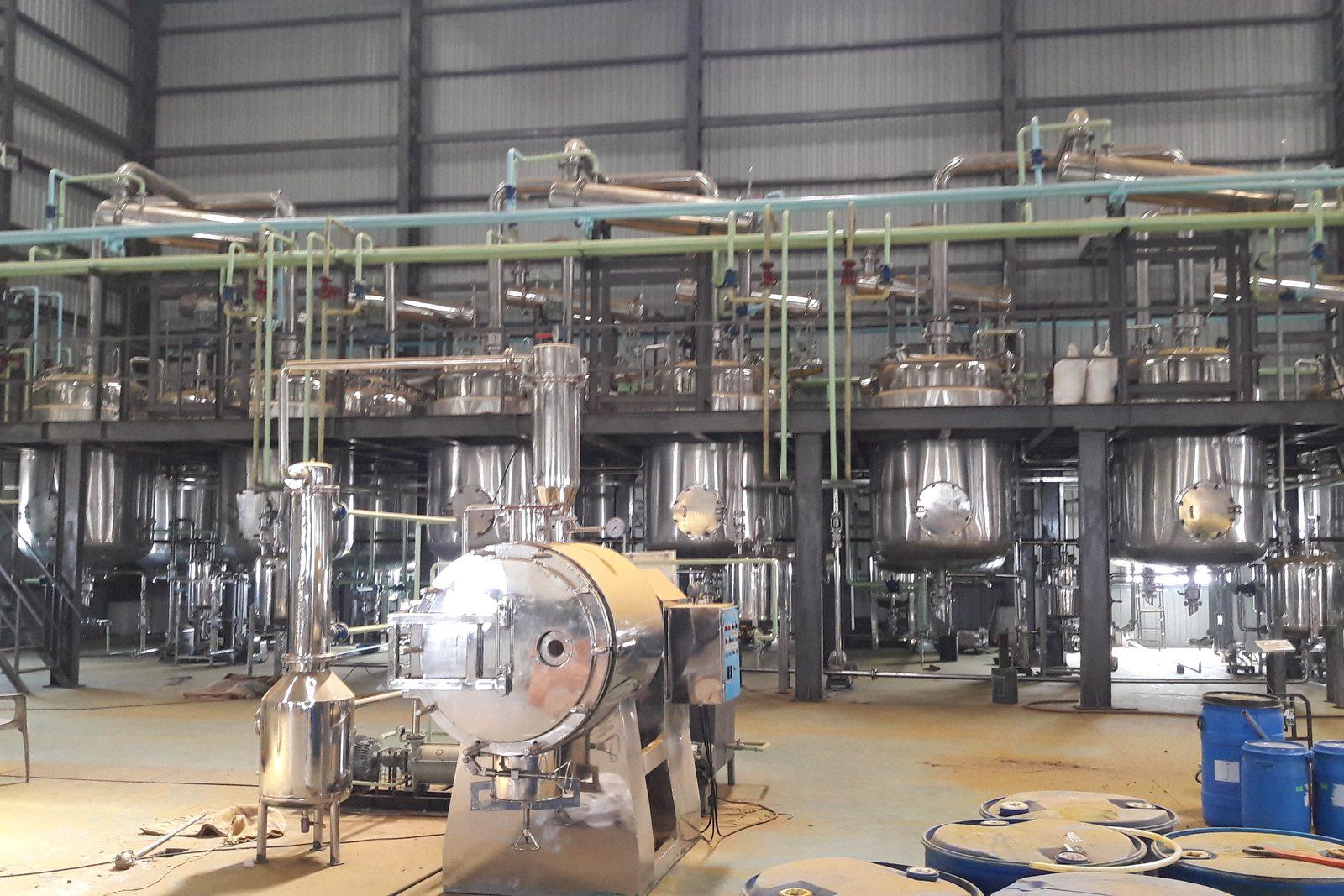
Moringa Extraction Plant
This plant is for ingredient manufacturers who grow, aggregate or buy moringa (Moringa oleifera), a tree distributed across Africa and Asia, and want a standardised leaf extract rather than plain leaf powder. Leaf is the main route: a hydro-alcoholic extraction that gives a glycoside-standardised extract rich in polyphenols and flavonoids. Moringa seed has separate routes, ben oil by supercritical CO2 and coagulant protein by enzyme-assisted extraction. Before a plant can be sized, settle whether you will process leaf or seed, whether leaf arrives fresh or dried, its moisture and origin, and the glycoside or polyphenol specification your customer sets. Leaf drying, powder-milling lines and oil pressing are separate plants, not part of this extract route.
The leaf line is a closed-loop hydro-alcoholic sequence. Leaf is washed and inspected, then reduced in a hammer mill or pulveriser and extracted in jacketed SS 316L vessels. Pressure leaf filters and a cross-flow membrane stage clarify the extract, a low-temperature vacuum evaporator concentrates it with solvent recovery, and a spray dryer, chosen to help protect chlorophyll and colour, produces the powder. The phenolic and flavonoid content of moringa leaf changes with drying and heat, so extraction and concentration are run under controlled conditions that limit oxidation. Final configuration follows the leaf supply, the target extract and the capacity.
Indicative Capacity Range
- 100–5,000 kg feed/day
Key Specification Inputs
Extraction solvent/water, extraction stages, batch time, filtration and recovery.
Technical Specifications
| Plant type | Hydro-alcoholic moringa leaf extract plant, standardised on glycosides; seed routes are described separately |
|---|---|
| Leaf feedstock | Moringa oleifera leaves, fresh or dried; dried leaf at 6-10% moisture is the planning basis |
| Standardisation | Configurable from 5% to 40% glycosides by gravimetry |
| Target fractions | Quercetin and polyphenols, leaf wax, and water-soluble polysaccharides |
| Extraction | Closed-loop hydro-alcoholic extraction in jacketed SS 316L extractors; the extraction technology is chosen in process development |
| Clarification and concentration | Pressure leaf filters followed by cross-flow membrane clarification, then a low-temperature vacuum evaporator with solvent recovery |
| Drying | Spray dryer set up to retain chlorophyll and colour |
| Seed routes | Seeds: ben oil by supercritical CO2, and coagulant protein by enzyme-assisted extraction |
| Contact surfaces | SS 316L, electropolished and cleaned in place |
| Controls | PLC-based batch control, from manual up to fully automatic |
| Plant capacity | Set per project from leaf supply and the target extract |
| Outside scope | Moringa leaf drying and powder-milling lines, and moringa oil pressing plants |
Typical Process Route
Leaf Intake and Milling
Leaf is washed, inspected and milled under controlled conditions to an even particle size suited to extraction. Conditions are chosen to help protect heat-sensitive nutrients and chlorophyll.
Hydro-alcoholic Extraction
Milled leaf is extracted over several cycles in sealed jacketed SS 316L vessels at controlled temperature, recovering flavonoids and glycosides while holding oxidation down.
Pressure Filtration and Membrane Clarification
The miscella passes through pressure leaf filters, then a cross-flow membrane unit that improves clarity and removes fine particles. The step is intended to be gentle on sensitive bioactives.
Low-Temperature Concentration
A vacuum evaporator operating at low temperature concentrates the clear extract, and solvent is condensed and returned for reuse.
Standardisation
The concentrate is assayed and adjusted to the declared figure, for example glycosides by gravimetry, ahead of drying.
Spray Drying
Standardised extract is spray-dried at controlled inlet and outlet temperatures chosen to help protect chlorophyll and antioxidant activity. How much is retained is confirmed in pilot trials.
Testing and Packing
Each batch is released after assay, residual-solvent, heavy-metal, microbial and moisture tests, then packed with batch traceability and documentation.
Major Plant Equipment
- Leaf washing and inspection conveyor
- Hammer mill or pulveriser
- Jacketed SS 316L extraction vessels
- Transfer pumps
- Pressure leaf filters
- Cross-flow membrane filtration unit
- Low-temperature vacuum evaporator
- Closed-loop solvent recovery unit
- Purification section
- Spray dryer
- Ribbon blender
- Product storage tanks
- Clean-in-place (CIP) skid
- PLC panel, electrical MCC and instruments
Plant Output
Applications
- Functional food and green health drinks
- Natural chlorophyll and green colour ingredient
- Capsules, tablets and dietary supplements for nutraceutical brands
- Standardised ingredient for pharmaceutical manufacturers
- Active ingredient for cosmetic and personal care formulators
- Seed ben oil and coagulant protein extracts (seed routes)
Key Features
Leaf Extraction, Plainly Scoped
The route is a hydro-alcoholic extract plant. Leaf drying, powder-milling lines and oil pressing sit outside it.
Colour and Antioxidant Care
Membrane clarification, low-temperature vacuum concentration and controlled spray drying are aimed at keeping chlorophyll, flavonoids and antioxidant activity into the powder.
Cross-Flow Membrane Stage
A membrane step after the pressure leaf filters removes fine particles in a way that is intended to be gentle on bioactives.
Separate Seed Routes
Ben oil by supercritical CO2 and coagulant protein by enzyme-assisted extraction are screened as their own seed route.
Stainless Build and Solvent Loop
Electropolished SS 316L contact surfaces with CIP, plus a solvent recovery loop whose performance is established during process development.
Country Pages for Moringa Extraction Plant
This product is listed on the pages of the countries below, each with its own enquiry route. Where Kadali has no office in a country, enquiries are handled from the Accra office.
Related Products
Frequently Asked Questions
Should I process moringa leaf or seed?
How should moringa leaf be handled between harvest and the plant?
Are leaf drying and powder-milling lines included?
Is moringa oil pressing part of the scope?
Why is leaf extracted with a hydro-alcoholic solvent, and what range can be targeted?
How are chlorophyll and colour protected through the process?
What drives solvent and energy use on the leaf route?
What test work should I prepare for moringa leaf?
What should I send to request a moringa plant proposal?
Ready to discuss your project?
Call or email Kadali Africa Ventures with your raw material, target product and capacity.