Integrated Spice Processing Plants
An integrated spice processing plant runs several spices through one shared line of cleaning, grinding, sieving, optional pathogen-reduction treatment, blending and packing, in place of a separate plant for each spice.
Product Categories
- Herbal, Botanical & Nutraceutical Extraction(9)
- Essential Oils, Spices & Oleoresins(6)
- Fruit & Vegetable Processing(8)
- Starch, Flour, Edible Oil & Food Processing(7)
- Drying & Dehydration Systems(5)
- Evaporation, Concentration & Solvent Recovery(4)
- Pharmaceutical & Industrial Process Equipment(4)
- Cocoa, Shea, Palm Oil & Oilseed Processing(6)
- Cereals, Tubers & Sugar Processing(6)
- Specialty African Botanical & Natural Ingredients(11)
- Specialty Food, Beverage & By-Product Processing(7)
Talk to Kadali Africa Ventures
Send your raw material, product and capacity for a technical proposal.
Contact Kadali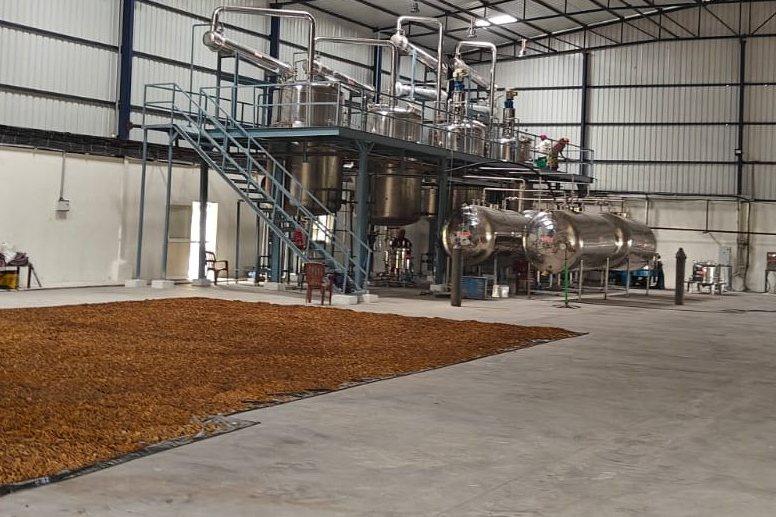
Integrated Spice Processing Plants
The feed is dry whole, cracked or leaf spice such as pepper, chilli, cumin, turmeric and ginger, and these differ widely in oil content, hardness and dust, so the list of spices drives the design. A buyer should settle which spices and forms arrive and in which months, what leaves the plant (cleaned whole, ground or blended), whether the market asks for a pathogen-reduction step and where it sits, and how strictly one spice must be kept out of the next. A mass balance for each spice, with cleaning losses and screenings, shows what the line must really handle. Oleoresin and oil recovery are separate plants and are not part of this shared line.
The shared front end is receiving, sampling and cleaning: sieves, a destoner and magnets take out stones, metal and foreign matter, and an aspirator removes chaff and dust. Dry does not mean pathogen-free, because low water activity limits growth but does not kill the organisms that arrive with the material from soil, transport and storage. The plant therefore needs a decision on whether a pathogen-reduction step is applied, where it sits and how it is tested on each spice. Steam, fumigation and irradiation act differently on each spice, changing colour, odour or volatile content, so one setting cannot be assumed to fit the whole range. After a steam step the spice must be dried again and cooled. Grinding follows, and the mill type follows the spice: oily or heat-sensitive spices lose aroma when the mill runs hot, so cooling air or chilled grinding may be specified. Sifters grade the powder and a blender combines spices to a recipe. Fine organic dust can burn or explode, so dust collection and explosion protection are part of the layout. Changeover between spices needs access for cleaning, because flavour and strong irritants such as chilli carry over, and a separate chilli grinding area is a common answer.
Indicative Capacity Range
- pilot: 100–500 kg feed/day
- commercial: 0.5–5 tonnes/day
Key Specification Inputs
Define feedstock, desired products, mass balance, utility loads and scope.
Technical Specifications
| Technology | Shared line for cleaning, size reduction, grading, blending and packing of several dry spices |
|---|---|
| Feed Forms | Whole, cracked, leaf, root or seed spice, stated for each spice with its moisture |
| Cleaning | Sieves, destoner, magnetic separator and air aspirator, chosen by what the incoming lots contain |
| Size Reduction | Hammer, pin or plate mill, with cooling air or chilled grinding for oily or heat-sensitive spices |
| Grading | Vibrating sifters with a screen set for each product size |
| Pathogen Reduction | Optional steam or other treatment with re-drying and cooling, selected spice by spice |
| Blending | Ribbon or paddle blender, sized to the recipe batch |
| Dust Protection | Dust collection with explosion venting or suppression around mills, sifters and blenders |
| Contact Material | Stainless steel on product-contact surfaces |
| Automation | PLC control of treatment and blending, with batch and lot records |
| Utilities | Electric power for mills and air handling; steam or heat where treatment or drying is included; compressed air |
Typical Process Route
Receiving, sampling and lot records
Each lot is weighed, sampled for moisture and foreign matter, and tagged to its supplier, because contamination often arrives with the raw material. Wet or mouldy lots are rejected or held apart.
Cleaning and destoning
Sieves, a destoner, magnets and an aspirator remove stones, metal, stems and dust. Dust control matters at this stage, because loose spice dust escapes easily.
Pathogen-reduction treatment (where specified)
Whole spice may pass through a steam or other treatment chosen and tested for that spice. The same setting can change colour, odour or volatile content differently from one spice to the next.
Re-drying and cooling
Steam treatment adds moisture, so the spice is dried again and cooled to a safe storage moisture before grinding or packing. Warm, damp spice grows mould in the bag.
Cracking and grinding
Mills reduce the spice to the size the customer wants. Oily or aromatic spices heat up in the mill and lose volatile aroma, so cooling air or chilled grinding is considered, and chilli is ground apart from other spices.
Sieving and grading
Sifters separate the powder by particle size and return oversize to the mill. Particle size affects flow, colour and how a blend sits in a food product, so it is specified.
Blending
Measured quantities of ground spice are mixed in a blender to a recipe until the mix is even. Cleaning between recipes is written down, because a trace of one spice shows up in the next.
Packing and dry storage
Spice is packed in moisture-barrier bags or tubs and stored dry and free of pests. Spice that takes up moisture can still support mould, even though dry spice is a low water activity product.
Process & Equipment Modules
- Receiving hopper with sample point
- Vibrating cleaner and destoner
- Magnetic separator
- Air aspirator
- Steam treatment unit, where specified
- Dryer and cooler for treated spice
- Hammer or pin mill with cooling air
- Vibrating sifter
- Ribbon blender
- Cyclone and bag-filter dust collector
- Packing machine for bags or tubs
- PLC and control panel
Plant Output
Applications
- Ground single spices for retail packs and food service
- Cleaned whole spices for domestic and export trade
- Blended seasonings such as curry powders and suya-style spice mixes
- Spice supply for meat, snack and noodle producers
- Seasoning bases for stock cubes and soup mixes
- Pre-cleaned, sized spice as feed for oleoresin or oil extraction
Key Features
Shared Front End
One receiving, cleaning and sieving section serves every spice, so that equipment is not duplicated for each product.
Mill Matched to the Spice
Mill type, speed and cooling are chosen for the oil content and hardness of each spice, which protects aroma and avoids clogging.
Treatment Tested Spice by Spice
A pathogen-reduction step is placed in the flow and checked on each spice and form, because its effect on colour and aroma differs.
Quick Changeover
Smooth internal surfaces, access doors and drain points let operators clean between spices and cut flavour carry-over.
Dust and Explosion Protection
Collection hoods, cyclones, bag filters and explosion venting are laid out around the mills, sifters and blender.
Country Pages for Integrated Spice Processing Plants
This product is listed on the pages of the countries below, each with its own enquiry route. Where Kadali has no office in a country, enquiries are handled from the Accra office.
Related Products
Frequently Asked Questions
What information is needed to size Integrated Spice Processing Plants?
What capacity range does Integrated Spice Processing Plants cover?
Can all spices share one line?
Does dry spice need a pathogen-reduction step?
Does one treatment suit every spice?
How should finished spice be stored?
What dust precautions does a spice mill need?
Where do oleoresin and spice oil fit in?
How do I request a proposal for Integrated Spice Processing Plants?
Enquire about Integrated Spice Processing Plants
Send your raw material, target product and capacity to Kadali Africa Ventures for a technical proposal.