Natural Colour Extraction Plants
Part of the Kadali Africa Ventures catalogue. Send your raw material, target product and capacity for a technical proposal. Request a quote →
Product Categories
- Herbal, Botanical & Nutraceutical Extraction(9)
- Essential Oils, Spices & Oleoresins(6)
- Fruit & Vegetable Processing(8)
- Starch, Flour, Edible Oil & Food Processing(7)
- Drying & Dehydration Systems(5)
- Evaporation, Concentration & Solvent Recovery(4)
- Pharmaceutical & Industrial Process Equipment(4)
- Cocoa, Shea, Palm Oil & Oilseed Processing(6)
- Cereals, Tubers & Sugar Processing(6)
- Specialty African Botanical & Natural Ingredients(11)
- Specialty Food, Beverage & By-Product Processing(7)
Talk to Kadali Africa Ventures
Send your raw material, product and capacity for a technical proposal.
Contact Kadali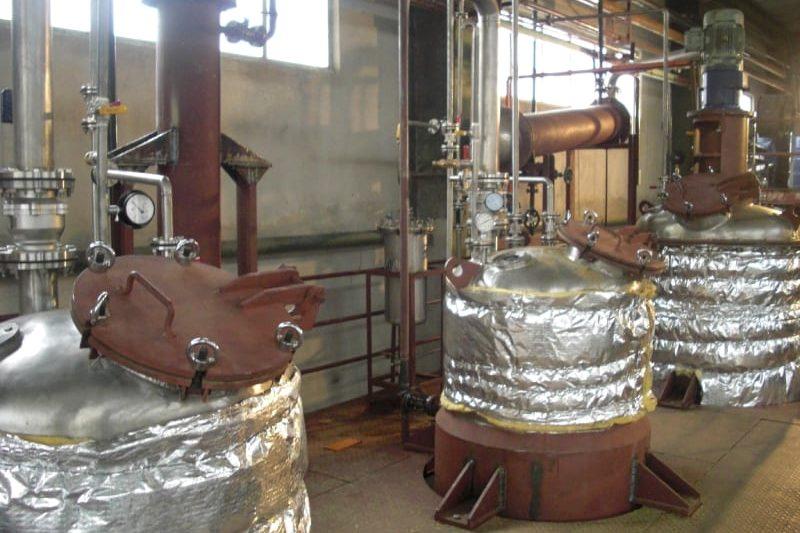
Natural Colour Extraction Plants
Natural colours are made from plant material such as roots, flowers, fruits, skins, seeds, leaves and bark, and each source behaves differently. A processor planning a colour plant therefore starts with the source and the colour wanted: beetroot and hibiscus for reds, turmeric and annatto for yellows and oranges, leafy material for greens, or other plant material for browns and greys. Next come the form to be sold (liquid concentrate, paste or powder) and the colour strength the customer will measure. A colour plant is a complete train from extractor to dryer, with SS 316L on every product-contact surface.
This page covers the shared route for natural colour and pigment extraction. The pages below are grouped by colour family and list the individual plant sources. A plant is engineered for the source or sources chosen, because the extraction medium, temperature and handling vary from pigment to pigment. Product-contact surfaces are SS 316L and controls are PLC-based, so extraction and concentration conditions repeat from batch to batch.
Indicative Capacity Range
- 100–5,000 kg feed/day
Key Specification Inputs
Extraction solvent/water, extraction stages, batch time, filtration and recovery.
Typical Process Route
Inspection of the raw material
Roots, flowers, fruits, skins, seeds or leaves are checked for identity, moisture and visible quality. Material that is spoiled or mixed with other plants is removed, since it affects both colour and clarity.
Cleaning and size reduction
The source is washed or dry-cleaned and then sliced, pulped or milled according to its form. Fine, even particles expose the pigment, while the size must still allow the later separation to work.
Controlled extraction
Pigment is taken into water, alcohol or a mixture of the two in a closed, jacketed extractor at a controlled temperature. Many natural colours are sensitive to heat, pH, light or oxygen, so conditions are set gently.
Separating solids and liquid
Spent plant material is removed by filtration so that a clear, coloured liquid is obtained.
Concentration
A vacuum evaporator removes solvent or water at a reduced temperature to give a concentrated colour. Where a solvent is used, it is recovered through the condenser and reused.
Purification where needed
If the specification requires it, the concentrate is purified to remove co-extracted material that dilutes the colour or affects taste.
Drying and packing
The colour is sold as a concentrate or dried to a powder, then packed in containers that protect it from light, air and moisture.
Major Plant Equipment
- Raw material cleaning and washing line
- Cutter, pulper or mill
- Jacketed SS 316L extractors
- Filter press or decanter for solid-liquid separation
- Vacuum evaporator
- Condenser and solvent recovery unit (solvent routes)
- Purification unit, where the specification needs it
- Spray dryer or vacuum dryer (powder route)
- Packing station for light- and air-barrier containers
- PLC panel, electrical MCC and instruments
Plant Output
Applications
- Food and beverage colouring for drinks, confectionery, dairy and bakery products
- Cosmetic and personal-care colours
- Colour for nutraceutical tablets, capsules and syrups
- Pharmaceutical product colouring
- Concentrates and powders sold to ingredient blenders
Key Features
Stainless-steel contact parts
Product-contact surfaces are SS 316L, which copes with the acidic extracts that anthocyanin sources produce.
Automated controls
PLC-based automation holds extraction and concentration conditions steady from batch to batch.
Gentle concentration
Vacuum evaporation at reduced temperature helps protect heat-sensitive pigments, and solvent is recovered where one is used.
Drying and packing for the product form
A concentrate, paste or powder route is chosen for the colour and the customer's application.
Safe solvent route
Where alcohol is used, closed vessels, solvent recovery and ventilated, explosion-protected areas belong in the design.
Frequently Asked Questions
How are the colour plants on this page organised?
What should I settle before sizing a natural colour plant?
Why does each colour source need different handling?
Should the extraction use water or alcohol?
Can any natural colour be sold in any market?
Can the same plant make a concentrate and a powder?
How do turmeric colour and curcumin differ?
What test work should I prepare for a technical proposal?
Can one plant handle several colour sources?
Ready to discuss your project?
Call or email Kadali Africa Ventures with your raw material, target product and capacity.