Olive Leaf Extract Plant
Part of the Kadali Africa Ventures catalogue. Send your raw material, target product and capacity for a technical proposal. Request a quote →
Product Categories
- Herbal, Botanical & Nutraceutical Extraction(9)
- Essential Oils, Spices & Oleoresins(6)
- Fruit & Vegetable Processing(8)
- Starch, Flour, Edible Oil & Food Processing(7)
- Drying & Dehydration Systems(5)
- Evaporation, Concentration & Solvent Recovery(4)
- Pharmaceutical & Industrial Process Equipment(4)
- Cocoa, Shea, Palm Oil & Oilseed Processing(6)
- Cereals, Tubers & Sugar Processing(6)
- Specialty African Botanical & Natural Ingredients(11)
- Specialty Food, Beverage & By-Product Processing(7)
Talk to Kadali Africa Ventures
Send your raw material, product and capacity for a technical proposal.
Contact Kadali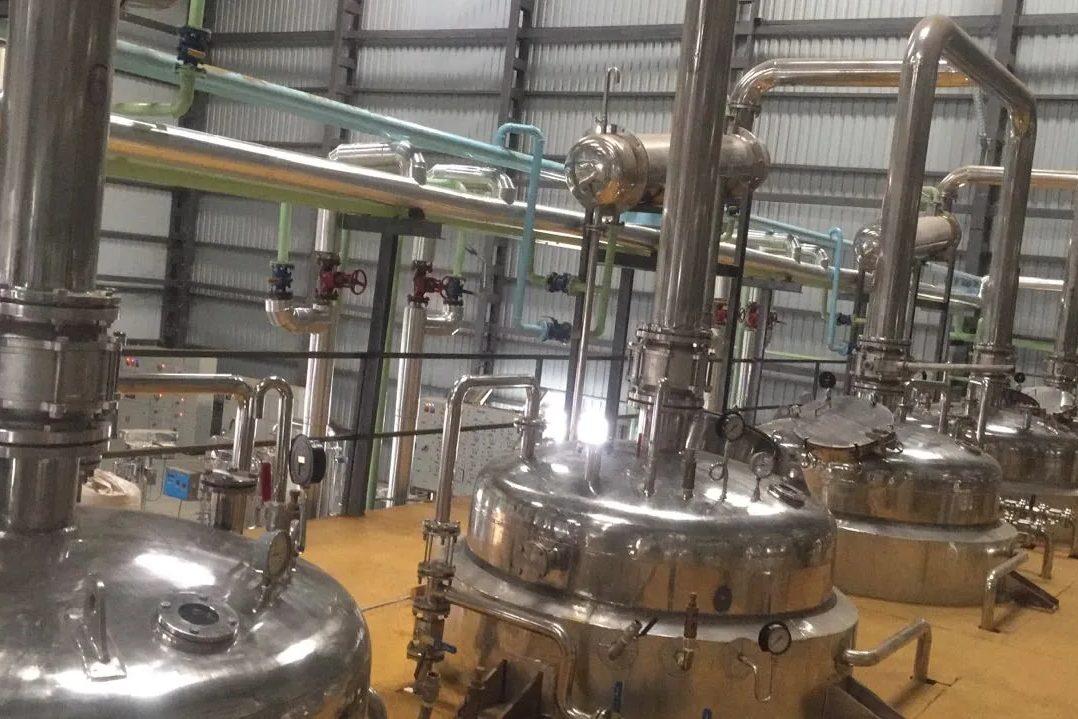
Olive Leaf Extract Plant
Extraction Technologies
This page is for processors who want to turn dried olive leaf (Olea europaea) into a standardised oleuropein powder, typically offered in grades from 10%-40% oleuropein by HPLC. Leaf is a by-product in olive-growing regions and is treated as a waste material at oil mills, so supply is seasonal and its quality depends on how it is collected, dried and kept. The product is the leaf extract, not olive oil or pomace, and it is sold mainly to nutraceutical, functional-food and pharmaceutical ingredient buyers. Before a plant can be sized, a buyer should decide the oleuropein grade (a higher grade needs a purification stage), the leaf volume and how it will be dried and stored, the solvent route (water or aqueous ethanol), the drying carrier if any, and the assay and residue limits the customer will ask for. Four extraction technologies are options for oleuropein: Counter-Current Extraction (CCE), Ultrasound-Assisted Extraction (UAE), Hybrid Extraction and Microwave-Assisted Extraction (MAE). Related reading: [herbal extraction plants](/products/herbal-extraction-plant), [nutraceutical and botanical extraction plants](/products/nutraceutical-botanical-extraction-plant) and the [herbal, botanical and nutraceutical extraction](/products/category/herbal-botanical-nutraceutical-extraction) category.
Oleuropein is a secoiridoid glycoside with relatively low thermal stability, and its hydrolysis depends on factors such as pH and time in solution. Long contact with hot liquid can therefore lower the marker before standardisation, so the plant is arranged to keep time and temperature down: a moderated aqueous-ethanol extraction with controlled residence time, quick clarification to shorten hold-up in the extract, and vacuum concentration at low temperature ahead of spray drying. Product-contact parts are electropolished SS 316L, and PLC-SCADA control keeps recipes and batch records. The extraction route, grade and capacity are fixed after trials on the buyer's own leaf.
Key Specification Inputs
Extraction solvent/water, extraction stages, batch time, filtration and recovery.
Technical Specifications
| Plant type | Olive leaf extract powder extraction line |
|---|---|
| Species | Olea europaea |
| Feed | Olive leaves |
| Part used | Leaf |
| Target compound | Oleuropein |
| Product type | Standardised dry extract (powder) |
| Standardisation | Oleuropein by HPLC, in grades from 10% to 40% |
| Extraction route options | Counter-current, UAE, Hybrid and MAE |
| Extraction medium | Water or aqueous ethanol, in closed, jacketed SS 316L extractors |
| Wetted materials | Electropolished SS 316L, suited to clean-in-place cleaning |
| Clarification | Plate-and-frame filter press followed by cartridge polishing |
| Concentration | Low-temperature falling-film or vacuum evaporator with closed-loop solvent recovery |
| Drying | Spray dryer with controlled inlet and outlet temperature |
| Control level | PLC-SCADA with recipes, batch traceability and production reports |
| Utilities to confirm | Steam, chilled and cooling water, compressed air, soft water and power; all project-specific |
| Finished form | Free-flowing standardised extract powder |
Plant Capacities
| Plant Scale | Leaf Throughput | Typical Use |
|---|---|---|
| Pilot | Matched to your leaf and trial plan | Checking extraction settings and assay on your own leaf |
| Semi-Commercial | Sized to leaf supply and buyer volume | Toll extraction and scale-up runs |
| Commercial | Sized to leaf supply and committed buyer volume | Routine production once buyer volume is confirmed |
Throughput follows the dried leaf that can be sourced and the volume a buyer has committed to. No fixed throughput is quoted for this product, and a pilot plant is advised so that settings are proven before scaling.
Typical Process Route
Each extraction method follows a different process — pick a method to see its steps.
Leaf preparation
Leaves are cleaned and cut down so the solvent can reach the oleuropein. Particle size and moisture are settled in process development.
Feeding the counter-current unit
Prepared leaf enters a multi-stage solid-liquid extractor in which fresh ethanol-water, or another suitable food-grade solvent, meets the most depleted solids.
Counter-current contact
Solvent travels against the solids from stage to stage, drawing out oleuropein. Bed flow and the handling of fines are checked in pilot work.
Collecting the miscella
Oleuropein-rich liquid leaves at the fresh-leaf end while spent solids are discharged at the solvent-entry end.
Solvent removal and recovery
Solvent is taken off the clarified extract under vacuum and returned through a recovery loop, with recovery performance confirmed in pilot work.
Assay and drying
The extract is assayed against the declared specification and then dried, or supplied as a concentrate, depending on what the buyer needs.
Leaf preparation
Leaves are cleaned and size-reduced so the solvent can reach the oleuropein. Particle size and moisture are settled in process development.
Slurry make-up
Prepared leaf is mixed with ethanol-water, or water, in the extraction vessel.
Ultrasonic treatment
Ultrasound produces cavitation, which breaks up the plant matrix and speeds the release of oleuropein. Probe intensity, temperature and filterability are tested at pilot scale.
Solids removal
Spent leaf is taken out by filter or centrifuge and the extract is clarified before concentration.
Solvent removal and recovery
Solvent is taken off the clarified extract under vacuum and returned through a recovery loop, with recovery performance confirmed in pilot work.
Assay and drying
The extract is assayed against the declared specification and then dried, or supplied as a concentrate, depending on what the buyer needs.
Leaf preparation
Leaves are cleaned and size-reduced so the solvent can reach the oleuropein. Particle size and moisture are settled in process development.
Choosing the stage order
A deliberately combined train is used. The sequence of stages is picked for oleuropein in pilot screening, and each stage is designed on its own.
First assisted stage
The first stage releases oleuropein from the prepared leaf under conditions set for that stage.
Second or combined stage
The second stage completes recovery from the partly extracted leaf, with its conditions tuned separately.
Separation and concentration
Spent solids are removed, and the combined extract is clarified and concentrated. Solvent is recovered wherever one is used.
Assay and drying
The extract is assayed against the declared specification and then dried, or supplied as a concentrate, depending on what the buyer needs.
Leaf preparation
Leaves are cleaned and size-reduced so the solvent can reach the oleuropein. Particle size and moisture are settled in process development.
Mixing with solvent
Prepared leaf is blended with ethanol-water, or water, in the microwave extraction vessel.
Microwave heating and extraction
Controlled microwave heating drives oleuropein out of the leaf in a short cycle. Heating, moisture, solvent safety and temperature-sensitive targets are controlled, with limits set in process development and pilot work.
Solids removal
Spent leaf is taken out by filter or centrifuge and the extract is clarified before concentration.
Solvent removal and recovery
Solvent is taken off the clarified extract under vacuum and returned through a recovery loop, with recovery performance confirmed in pilot work.
Assay and drying
The extract is assayed against the declared specification and then dried, or supplied as a concentrate, depending on what the buyer needs.
Major Plant Equipment
- Leaf cleaning and de-stemming unit
- Hammer mill or leaf mill
- Jacketed SS 316L extraction vessels
- Solvent storage tanks
- Solvent transfer pumps
- Plate heat exchangers
- Plate-and-frame filter press
- Cartridge polishing filters
- Macroporous resin or membrane purification column
- Falling-film vacuum evaporator
- Closed-loop solvent recovery unit
- Condensers and vacuum pumps
- Spray dryer with inlet and outlet temperature control
- Clean-in-place (CIP) skid
- Concentrate and finished-product tanks
- PLC-SCADA panel, motor control centre and instruments
Plant Output
Applications
- Nutraceutical capsules and tablets
- Functional foods and dietary supplements
- Standardised botanical ingredient for pharmaceutical makers
- Traditional Mediterranean-style wellness preparations
- Antioxidant actives for cosmetics and personal care
- Ingredient supply to nutraceutical buyers against their own oleuropein and residue limits
Key Features
Hygienic electropolished SS 316L
All product-contact surfaces are electropolished SS 316L and are cleaned in place between batches.
Processing that protects the glycoside
Extraction cycles, prompt clarification and low-temperature vacuum concentration are chosen to limit hydrolysis and thermal loss of oleuropein.
HPLC-based grading
In-process and release assays by HPLC compare the finished powder with its declared grade within 10%-40% oleuropein.
Optional resin or membrane purification
An in-line purification stage lets the same plant reach grades at the upper end of the 10%-40% range without separate equipment.
Closed-loop solvent recovery
A condenser and distillation loop returns ethanol to the process, which lowers solvent purchases.
Expandable batch capacity
Plants are sized to leaf supply and committed buyer volume, with room for later expansion.
Country Pages for Olive Leaf Extract Plant
This product is listed on the pages of the countries below, each with its own enquiry route. Where Kadali has no office in a country, enquiries are handled from the Accra office.
Frequently Asked Questions
What should be settled first when planning an olive leaf extraction plant?
Why is olive leaf extracted and standardised?
How should leaf be collected and stored before extraction?
Which of the four extraction technologies should be chosen?
Why is temperature control important for oleuropein?
How do I choose between a lower and a higher oleuropein grade?
What drives solvent and energy use?
What testing confirms the powder specification?
What should be prepared before requesting a technical proposal?
Ready to discuss your project?
Call or email Kadali Africa Ventures with your raw material, target product and capacity.