Nutraceutical & Botanical Extraction Plants
Part of the Kadali Africa Ventures catalogue. Send your raw material, target product and capacity for a technical proposal. Request a quote →
Product Categories
- Herbal, Botanical & Nutraceutical Extraction(9)
- Essential Oils, Spices & Oleoresins(6)
- Fruit & Vegetable Processing(8)
- Starch, Flour, Edible Oil & Food Processing(7)
- Drying & Dehydration Systems(5)
- Evaporation, Concentration & Solvent Recovery(4)
- Pharmaceutical & Industrial Process Equipment(4)
- Cocoa, Shea, Palm Oil & Oilseed Processing(6)
- Cereals, Tubers & Sugar Processing(6)
- Specialty African Botanical & Natural Ingredients(11)
- Specialty Food, Beverage & By-Product Processing(7)
Talk to Kadali Africa Ventures
Send your raw material, product and capacity for a technical proposal.
Contact Kadali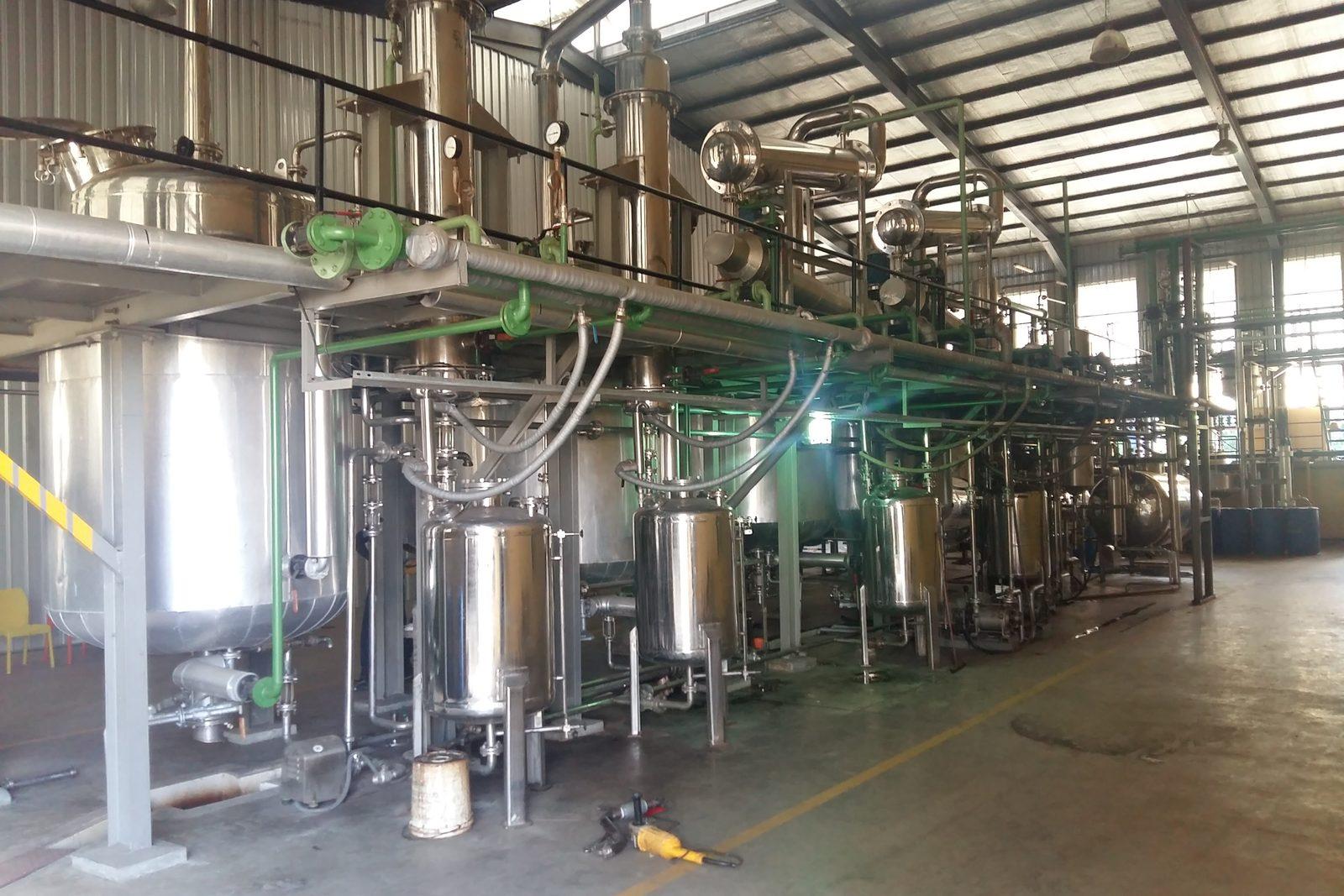
Nutraceutical & Botanical Extraction Plants
This plant is for a processor who sells a plant extract against a number, such as a declared level of a marker compound, rather than as a general herbal product. The decisions that shape the plant are therefore specific: which botanical and plant part, which compound is being measured and at what level, which method the laboratory will use to check it, how much residual solvent the customer will tolerate, and what paperwork the supplement or pharmaceutical buyer expects to see. The plant is listed as a full train in SS 316L, with the planning capacity range shown elsewhere on this page.
The machinery matches the herbal extraction train: preparation, extraction, filtration, concentration with solvent recovery and drying. The difference lies in the last third of the line, where purification and standardisation are given more weight. Samples are assayed against the marker-compound target and the batch is adjusted before it is dried. Wetted parts are SS 316L and controls are PLC-based. Supplement and pharmaceutical customers audit their suppliers, so hygienic design, material records for product-contact parts and batch records are part of the design brief from the start.
Indicative Capacity Range
- 100–3,000 kg dry feed/day
Key Specification Inputs
Target active compounds, GMP expectations, solvent residuals, assay and drying.
Technical Specifications
| Plant type | Nutraceutical and botanical extraction plant |
|---|---|
| Feedstock | Botanical material; the plant and plant part are fixed for each project |
| Extract produced | Plant extract standardised to a declared marker-compound level |
| Extraction route | Alcohol or water, food or pharma grade, in closed jacketed SS 316L extractors; several cycles at controlled temperature |
| Wetted material | SS 316L, electropolished and suitable for clean-in-place washing |
| Clarification | Plate-and-frame filter press followed by cartridge polish filters |
| Concentration | Falling-film or vacuum concentrator (evaporator); solvent returned via the condenser |
| Standardisation | Assay against the declared marker-compound target, with adjustment before drying |
| Drying | Spray dryer or vacuum dryer |
| Controls | PLC-based automation |
| Capacity | Sized to the project requirement |
| Hygiene and documents | Hygienic design, with material records and batch documentation set to what the customer's audit requires |
| Output form | Standardised extract; a free-flowing, low-moisture powder when a dryer is included |
Typical Process Route
Identity and moisture check
The botanical, plant part and moisture of each lot are confirmed before use. Lot-to-lot variation in a natural material is normal, so records of origin and harvest are worth keeping from the start.
Milling
Material is ground to an even particle size so the solvent contacts it uniformly and later filtration stays workable.
Extraction
Water or alcohol (food or pharma grade) is used in closed, jacketed SS 316L extractors. Temperature is controlled, and repeated cycles are run to take out the target compounds as completely as the specification needs.
Clarification
The extract (miscella) passes through a plate-and-frame filter press, then cartridge filters, to remove fine solids before concentration.
Concentration with solvent recovery
A falling-film or vacuum concentrator removes solvent at reduced temperature. Condensed solvent is returned for reuse through the condenser system.
Purification, isolation and standardisation
Where the specification demands it, the concentrate is purified and the target compounds are isolated. It is then assayed against the marker-compound target and adjusted.
Drying and release testing
The standardised extract is spray dried or vacuum dried. Some concentrates are dried with a carrier or diluent that improves flowability and mixability, and the specification should state it. Release tests follow the agreed specification and typically cover assay, residual solvent, heavy metals, microbial load and moisture.
Major Plant Equipment
- Cleaning and milling section for the botanical
- Jacketed SS 316L extraction vessels
- Solvent storage tanks and transfer pumps
- Plate-and-frame filter press and cartridge polish filters
- Falling-film / vacuum concentrator
- Condensers and solvent recovery unit
- Purification section, where the specification needs it
- Standardisation and blending vessel
- Spray dryer or vacuum dryer
- Clean-in-place (CIP) skid
- PLC-based controls and instruments
Plant Output
Applications
- Dietary supplement and nutraceutical formulators
- Suppliers of standardised botanical ingredients
- Ingredient manufacturers working alongside the pharmaceutical sector
- Functional food and beverage makers
- Sales to buyers in regulated export markets
Key Features
Hygienic stainless-steel build
Electropolished SS 316L wetted surfaces and clean-in-place washing between batches.
Built around a declared target
In-process and batch-release assays check each extract against its marker-compound specification.
Solvent reused
Solvent condensed in the recovery circuit is returned to the process, batch after batch.
Matched drying
A spray or vacuum dryer produces a low-moisture, free-flowing powder that suits capsule filling and blending.
Country Pages for Nutraceutical & Botanical Extraction Plants
This product is listed on the pages of the countries below, each with its own enquiry route. Where Kadali has no office in a country, enquiries are handled from the Accra office.
Related Products
Frequently Asked Questions
What should be decided before sizing a nutraceutical extraction plant?
What does 'standardised' mean for a botanical extract?
How does this differ from a herbal extraction plant?
When is a dedicated curcumin plant the better choice?
How do I choose the solvent and handle residual-solvent limits?
What documentation will a supplement or pharmaceutical customer ask for?
Do I need the purification and isolation stage?
What does a nutraceutical extraction plant cost?
Ready to discuss your project?
Call or email Kadali Africa Ventures with your raw material, target product and capacity.