Industrial Hot-Air Drying Systems
An industrial hot-air drying system, which buyers also call an industrial dehydrator, removes moisture from fruit, vegetables, herbs, spices and similar wet solids by passing heated air over the product in a cabinet, tunnel or belt dryer.
Product Categories
- Herbal, Botanical & Nutraceutical Extraction(9)
- Essential Oils, Spices & Oleoresins(6)
- Fruit & Vegetable Processing(8)
- Starch, Flour, Edible Oil & Food Processing(7)
- Drying & Dehydration Systems(5)
- Evaporation, Concentration & Solvent Recovery(4)
- Pharmaceutical & Industrial Process Equipment(4)
- Cocoa, Shea, Palm Oil & Oilseed Processing(6)
- Cereals, Tubers & Sugar Processing(6)
- Specialty African Botanical & Natural Ingredients(11)
- Specialty Food, Beverage & By-Product Processing(7)
Talk to Kadali Africa Ventures
Send your raw material, product and capacity for a technical proposal.
Contact Kadali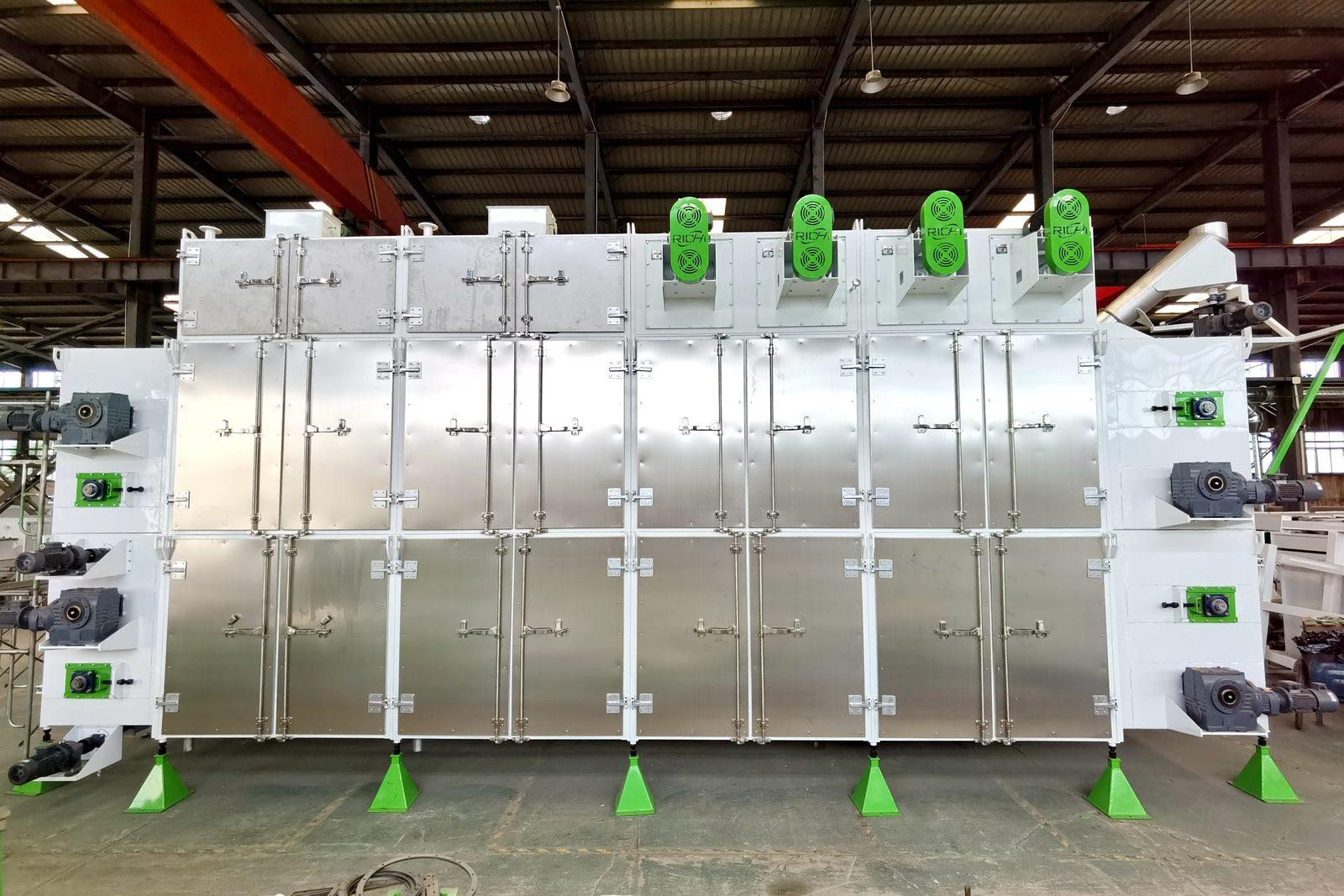
Industrial Hot-Air Drying Systems
The air is heated by a burner, a steam or thermal-oil coil, an electric heater or a biomass hot-air generator, so the dryer runs day and night in any weather and batch times follow the drying curve of the product, not the sun. The first decisions are the product and its form, because sliced pieces, granules, leaves and stems each dry differently and need different air flow and loading. A buyer should settle the moisture the product starts at and must reach, the highest temperature it tolerates, whether production is batch or continuous, which fuel the site can supply steadily, and whether the exhaust air needs dust control. Hot-air drying suits solid pieces. Pumpable liquids belong in a spray dryer, and delicate or high-value goods may call for vacuum or freeze drying instead.
In a hot-air dryer, air is heated, blown over or through the product and leaves carrying the water it has picked up. Two things must be right: the heat to evaporate the water and the air flow to carry it away. Fast-moving air sweeps the moisture off the surface, while slow or already humid air leaves the surface damp and holds drying back. Most plants therefore recirculate part of the air to save heat and bleed off a share to keep humidity down. The dryer body is a major choice. A batch cabinet loads trays or trolleys by hand and suits small runs and changing products. A tunnel moves trolleys through the air stream. A belt dryer carries product on a conveyor through zones at different temperatures and suits a steady, single product. A fluidised bed suits granular material. The weak point of multi-tray designs is uneven drying, because air saturates before it reaches the upper trays, so air distribution and tray spacing deserve attention. Direct firing is cheaper but puts combustion gases in the drying air, while an indirect heat exchanger keeps it clean. Surface water leaves freely at first, and later moisture must travel out from within, so drying too hard too early forms a hard skin that traps water inside.
Indicative Capacity Range
- 100–5,000 kg wet feed/hour
Key Specification Inputs
Drying curve, moisture targets, temperature limits, emissions.
Technical Specifications
| Plant Type | Convective dryer in which heated air passes over or through the product; batch or continuous |
|---|---|
| Feed Form | Sliced pieces, granules, leaves or stems of a wet solid; not suitable for pumpable liquids |
| Dryer Body Options | Cabinet with trays or trolleys; tunnel; single or multi-pass belt; fluidised bed for granular material |
| Heat Source | Gas burner, steam or thermal-oil coil, electric heater or biomass hot-air generator, chosen by local fuel cost |
| Heating Method | Direct firing, or indirect heat exchanger where combustion gases must stay out of the drying air |
| Air Flow | Cross-flow or through-flow fans with baffles; reversal available to even out the batch |
| Humidity Control | Recirculation and exhaust dampers set from humidity and temperature sensors |
| Heat Recovery | Optional exhaust heat exchanger, or use of clean waste heat from the site |
| Contact Material | Food-grade stainless steel trays and surfaces, with insulated panels around the chamber |
| Exhaust Treatment | Dust filter or cyclone, depending on how much fine material the product releases |
| Controls | PLC with temperature and humidity logging and recipe settings for each product |
Typical Process Route
Feed Preparation
Raw material is washed, cut to an even size and, where the crop needs it, blanched or treated. Pieces of mixed thickness dry at different rates, so over-dried edges and damp centres start here.
Loading
Product is spread on trays or trolleys, or fed onto a belt, in a thin, even layer. Load depth and spacing decide how well air reaches every piece and are among the first things to adjust.
Heating the Air
Ambient air is filtered and heated by the chosen source to the set temperature. The setting must stay below the point where the product darkens, loses aroma or cooks on the surface.
Air Circulation and Humidity Control
Fans push the air through the load, while dampers recirculate part of it and exhaust the rest. Airflow that is uneven or too humid is the usual cause of slow batches and wet trays.
Controlled Drying
Temperature is often stepped down as the product dries, since late in the cycle it is more heat-sensitive and has less water to lose. Trays may be turned or air reversed to even out the batch.
Moisture Measurement
Samples are checked against the moisture target before the load is released. A target set too high shortens shelf life, and one set too low wastes fuel and leaves product brittle.
Cooling and Collection
Dried product is cooled and collected, since warm product packed in a sealed bag sweats and can mould. Fines and broken pieces are screened off for milling or blending.
Hygienic Packing
Cooled product goes into moisture-barrier packs in a clean, dry area. Dried product takes water up from humid air, so packing is not left to wait.
Process & Equipment Modules
- Washing, cutting and blanching section
- Trays, trolleys or belt for carrying product
- Drying cabinet, tunnel or belt chamber
- Air heater: burner, steam or thermal-oil coil, or electric
- Recirculation and exhaust fans with dampers
- Air ducts and distribution baffles
- Exhaust heat-recovery unit
- Dust filter or cyclone on the exhaust
- Temperature and humidity sensors
- Cooling and collection section
- PLC panel
- Packing interface
Plant Output
Applications
- Dried fruit slices such as mango, banana and pineapple
- Dried vegetable pieces, flakes and granules such as okra, pepper and onion
- Leaf and herb products such as moringa and tea-type leaves
- Sliced spices and roots such as ginger and turmeric before grinding
- Cassava chips dried ahead of milling into flour
- Grain legumes, nuts and seeds dried for safe storage
- Feed ingredients and by-products dried for storage or pelleting
Key Features
Heat Source Chosen for the Site
Gas, steam, thermal oil, electricity or biomass can each heat the air. Local fuel cost and supply security decide the choice, and the design should be settled before the dryer body is fixed.
Air That Reaches Every Tray
Fan sizing, ducting, baffles and air reversal spread the flow across the load. Uniform final moisture depends on this at least as much as on the temperature set point.
Dryer Body to Suit the Product
Cabinet, tunnel, belt and fluidised-bed dryers suit different feed forms and volumes. Batch bodies tolerate variety, while continuous bodies reward a steady, single product.
Humidity and Exhaust Control
Dampers and humidity sensors keep the air able to take up water without wasting heat, and exhaust filters keep dust out of the neighbourhood.
Heat Recovery and Waste Heat
Exhaust heat exchangers or a nearby source of waste heat can pre-warm the incoming air, provided the heat is clean enough for the product.
Country Pages for Industrial Hot-Air Drying Systems
This product is listed on the pages of the countries below, each with its own enquiry route. Where Kadali has no office in a country, enquiries are handled from the Accra office.
- Ghana
- Nigeria
- Côte d’Ivoire
- Senegal
- Benin
- Togo
- Burkina Faso
- Mali
- Guinea
- Sierra Leone
- Liberia
- Gambia
- Mauritania
- Guinea-Bissau
- Niger
- Cabo Verde
- Kenya
- Tanzania
- Uganda
- Ethiopia
- Rwanda
- Burundi
- South Sudan
- Djibouti
- Eritrea
- Seychelles
- Cameroon
- Democratic Republic of Congo
- Republic of Congo
- Gabon
- Angola
- Equatorial Guinea
- Central African Republic
- Chad
- São Tomé and Príncipe
- South Africa
- Zambia
- Mozambique
- Zimbabwe
- Malawi
- Botswana
- Namibia
- Eswatini
- Comoros
- Lesotho
- Algeria
- Libya
Related Products
Frequently Asked Questions
What information is needed to size Industrial Hot-Air Drying Systems?
What capacity range does Industrial Hot-Air Drying Systems cover?
When does hot-air drying suit better than solar-assisted drying?
Should a hot-air line be batch or continuous?
Why do dried pieces sometimes shrink or harden on the outside?
Why is drying uneven between trays?
Can waste heat be used to heat the drying air?
Which feeds does hot-air drying not suit?
How do I request a proposal for Industrial Hot-Air Drying Systems?
Enquire about Industrial Hot-Air Drying Systems
Send your raw material, target product and capacity to Kadali Africa Ventures for a technical proposal.