Fruit & Vegetable Dehydration Plant
Part of the Kadali Africa Ventures catalogue. Send your raw material, target product and capacity for a technical proposal. Request a quote →
Product Categories
- Herbal, Botanical & Nutraceutical Extraction(9)
- Essential Oils, Spices & Oleoresins(6)
- Fruit & Vegetable Processing(8)
- Starch, Flour, Edible Oil & Food Processing(7)
- Drying & Dehydration Systems(5)
- Evaporation, Concentration & Solvent Recovery(4)
- Pharmaceutical & Industrial Process Equipment(4)
- Cocoa, Shea, Palm Oil & Oilseed Processing(6)
- Cereals, Tubers & Sugar Processing(6)
- Specialty African Botanical & Natural Ingredients(11)
- Specialty Food, Beverage & By-Product Processing(7)
Talk to Kadali Africa Ventures
Send your raw material, product and capacity for a technical proposal.
Contact Kadali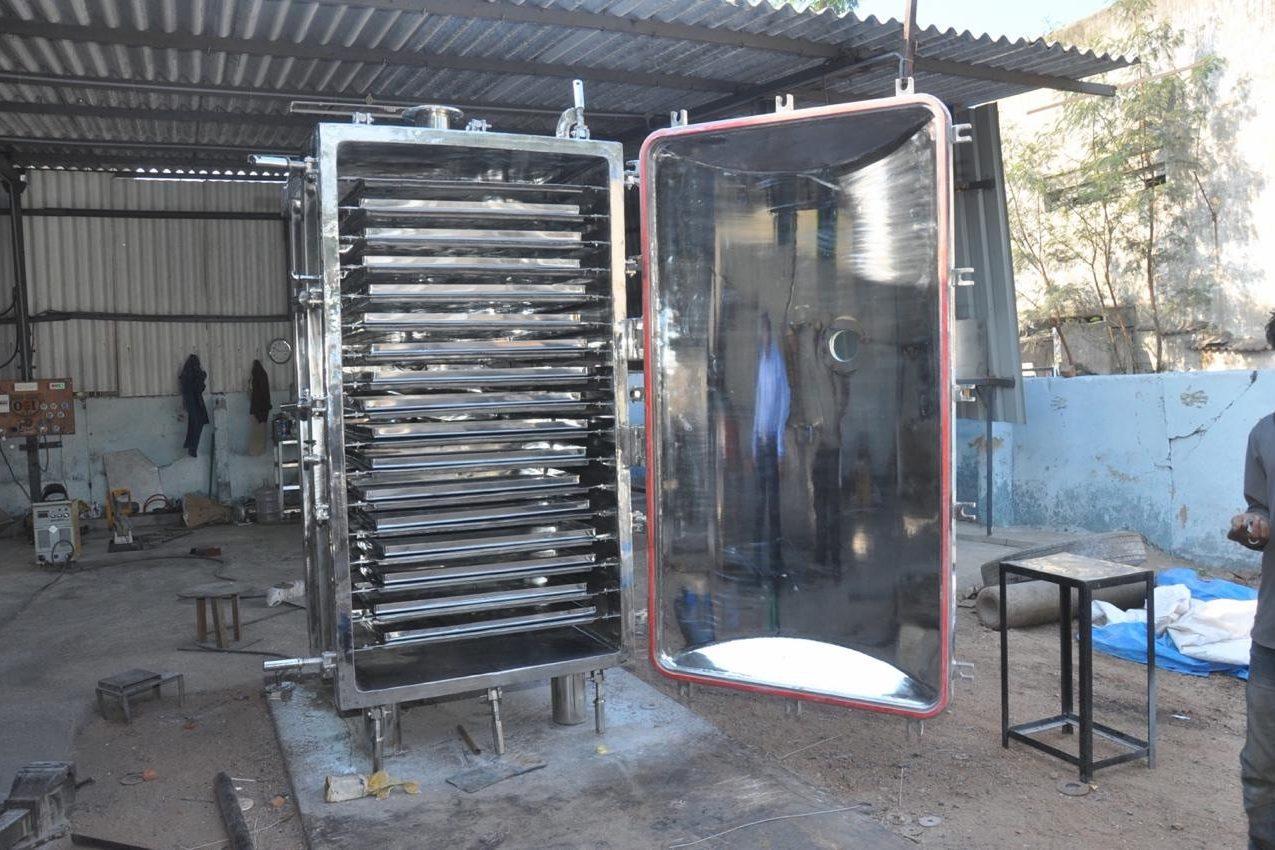
Fruit & Vegetable Dehydration Plant
Fresh produce can hold up to 95 percent water, enough to support enzyme activity and microbial growth, so fruit and vegetables spoil quickly after harvest in warm climates. Dehydration takes out a controlled share of that water so the crop keeps, weighs far less to ship and can be sold as flakes, slices, granules or powder. This page is for fruit aggregators, juice makers, food processors and farmer cooperatives deciding whether to dry, and how. Four points need settling before a line can be sized: which crops and for how many months of the year, how much fresh produce arrives per hour, the form and moisture the buyer wants, and which heat source the site can rely on. A standalone raw-produce dehydration line is scoped project by project after engineering review, not offered as a fixed catalogue item.
Plant sizing begins with a mass balance. A fresh-input rate is converted, after trimming, peeling and water removal, into a much smaller finished output, so the dryer is sized on the water to be removed, not on the fresh or the dried tonnage alone. The line itself runs from receiving and washing through peeling and cutting, optional pretreatment such as blanching, drying, and then cooling, grading and packing. Drying is where the choice of dryer is made, and the range includes vacuum tray, fluidised-bed, vacuum paddle, freeze and spray dryers, each suited to a particular feed: pieces, granules, pastes or liquids.
Indicative Capacity Range
- 100–5,000 kg wet feed/hour
Key Specification Inputs
Slice size, moisture target, heat source, food hygiene.
Technical Specifications
| Project type | Fruit and vegetable dehydration, engineered to each project |
|---|---|
| Range status | Drying equipment is available as listed items; a complete raw-produce dehydration line is scoped per project and is not a standard product |
| Dryers in the range | Vacuum tray, fluidised-bed, vacuum paddle, freeze and spray dryers |
| Crops considered | Mango, banana, pineapple, apple, papaya, amla, berries, coconut, onion, garlic, tomato, carrot, beetroot, potato, chilli, ginger and leafy vegetables; each crop is confirmed per project |
| Finished forms | Flakes, slices, granules or powders, according to the crop and the buyer's specification |
| Sizing method | Mass balance running from fresh input, through preparation losses and water removal, to finished yield |
| Inputs to settle first | Slice size, target moisture and the heat source the site can rely on |
| Wetted material | SS 316L or another grade suited to the process, electropolished, with CIP capability on the listed dryers |
| Capacity basis | Set to the requirement |
Typical Process Route
Receive, Sort and Wash
Produce is checked on arrival, damaged or rotten pieces are taken out, and the batch is washed to remove soil, dust and other contamination before it goes further.
Peel and Cut
Where the crop needs it, skin is removed, and pieces are cut, sliced, shredded or diced to an even size, since slices of the same thickness need the same drying time. For hot-air drying most produce is cut into strips not more than 5 mm thick; the size for your crop is settled in the trial.
Pretreat
Blanching stops enzyme action that drying alone may not. It is chosen crop by crop and is not a universal step: most vegetables are blanched before drying, but not onions or garlic.
Dry
Water is removed under controlled temperature, airflow, humidity, load depth and time in the dryer. For hot-air drying the air is usually kept at about 50-70 degrees Celsius because higher temperatures cause discolouration, and the critical moisture level is about 10-15 percent depending on the commodity; garlic, for example, is dried to about 5 percent. Overdrying makes some products brittle, while too little drying leaves the product unstable.
Mill and Sieve for Powders
If a powder is required, the dried material is milled once it reaches a suitable moisture, then sieved to the target particle size.
Cool, Grade and Pack
Dried product is cooled, graded and packed in a way that protects it from moisture for the shelf life the buyer expects.
Major Plant Equipment
- Receiving, sorting and washing section
- Peeling, cutting and size-reduction machines
- Vacuum tray dryer
- Fluidised-bed dryer
- Vacuum paddle dryer
- Freeze dryer (lyophiliser)
- Spray dryer for liquid and puree feeds
- Milling and sieving section for powder routes
- Clean-in-place (CIP) skid
- PLC panel and instrumentation
Plant Output
Applications
- Dried fruit and vegetable ingredients for food manufacturers
- Onion and garlic dehydration for seasonings and processed foods
- Dried flakes, slices and granules
- Fruit and vegetable powders
- Plants that handle several seasonal crops in turn
- Dehydrated ingredients prepared for export buyers
Key Features
Sized on Water Removed
A mass balance links fresh input to finished yield, so the dryer is sized on the water to be removed and not on fresh tonnage or dried output alone.
Dryer Follows the Product
Pieces, granules, pastes and liquids need different dryers, and heat-sensitive crops call for gentler conditions. The choice is made from the product, not the other way round.
Hygiene Built into the Layout
Food-contact materials, cleanable surfaces, drainage and a separation between raw and finished zones are planned from the start, with CIP on the listed dryers.
Planning for Seasonal Crops
A line serving several crops through the year is feasible where cleaning, product compatibility and scheduling are managed.
Country Pages for Fruit & Vegetable Dehydration Plant
This product is listed on the pages of the countries below, each with its own enquiry route. Where Kadali has no office in a country, enquiries are handled from the Accra office.
- Fruit & Vegetable Dehydration Plant: Ghana
- Fruit & Vegetable Dehydration Plant: Nigeria
- Fruit & Vegetable Dehydration Plant: Tanzania
- Fruit & Vegetable Dehydration Plant: Kenya
- Fruit & Vegetable Dehydration Plant: Uganda
- Fruit & Vegetable Dehydration Plant: Côte d’Ivoire
- Fruit & Vegetable Dehydration Plant: Democratic Republic of Congo
- Fruit & Vegetable Dehydration Plant: Cameroon
- Fruit & Vegetable Dehydration Plant: Zambia
- Fruit & Vegetable Dehydration Plant: Mozambique
Related Products
Frequently Asked Questions
What should I decide before asking for a dehydration plant?
Which dryers are in the range, and how do I choose?
How does the heat source affect the plant?
Why is finished output so much smaller than fresh input?
What preparation do tropical crops need before drying?
Can one line dry different crops?
Can I make powder as well as dried pieces?
Should I run a trial before buying a dryer?
What do export buyers check on dried produce?
What should a quotation request contain?
Ready to discuss your project?
Call or email Kadali Africa Ventures with your raw material, target product and capacity.