
Onion & Garlic Dehydration Plants
An onion and garlic dehydration plant peels, slices and dries bulbs into slices, flakes, granules or powder, and the slice size, dryer and moisture target decide the design.
Product Categories
- Herbal, Botanical & Nutraceutical Extraction(9)
- Essential Oils, Spices & Oleoresins(6)
- Fruit & Vegetable Processing(8)
- Starch, Flour, Edible Oil & Food Processing(7)
- Drying & Dehydration Systems(5)
- Evaporation, Concentration & Solvent Recovery(4)
- Pharmaceutical & Industrial Process Equipment(4)
- Cocoa, Shea, Palm Oil & Oilseed Processing(6)
- Cereals, Tubers & Sugar Processing(6)
- Specialty African Botanical & Natural Ingredients(11)
- Specialty Food, Beverage & By-Product Processing(7)
Talk to Kadali Africa Ventures
Send your raw material, product and capacity for a technical proposal.
Contact Kadali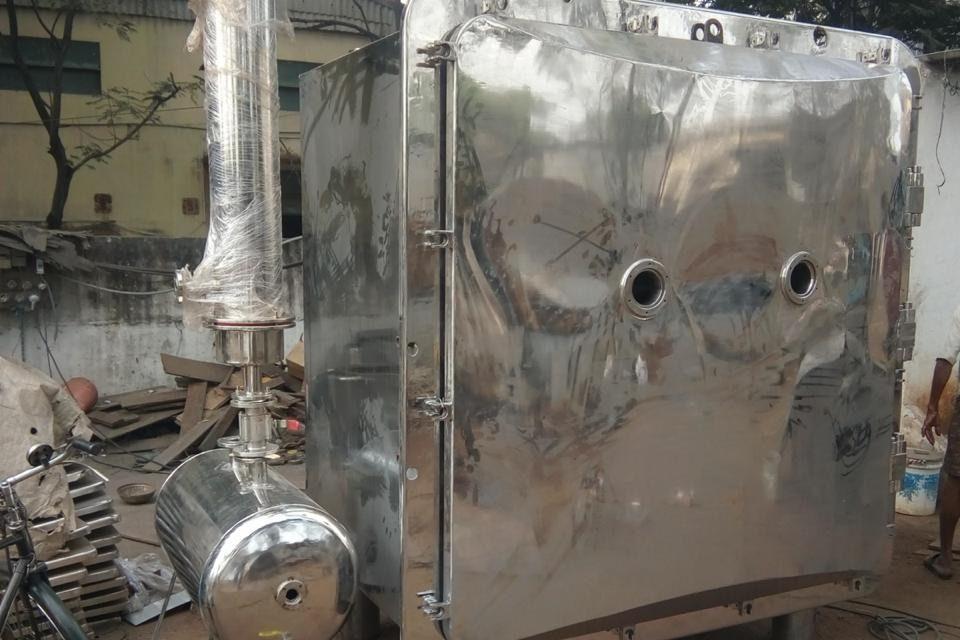
Onion & Garlic Dehydration Plants
The feed is cured, undamaged bulbs, so harvest, curing and storage are part of the raw material specification. A buyer should settle the product form first, since flakes, granules and powder need different downstream mills and packing. Next come the moisture target, for powder expressed as water activity, the variety and season of supply, and the heat source. Onion and garlic dry differently: onions are normally dried without blanching, while garlic needs gentle heat to protect its flavour. Both give off a strong sulphur smell, and garlic dust is a workplace hazard, so air handling and dust control are part of the plant, not extras. Capacity is stated in kilograms of wet feed per hour, with the weight lost in peeling and trimming counted in the feed.
Bulbs are topped, peeled and trimmed, washed, and cut into slices of even thickness. Even thickness matters because slices of mixed size dry at different rates, leaving some over-dried and some damp in the same lot. Slices are dried in hot air on a belt or tray dryer, usually in several zones with falling temperature, and then cooled and collected. Garlic is dried at a low temperature because the enzyme that gives its flavour is easily inactivated by heat, so the dryer's temperature limit is a quality parameter, not only a speed setting. Dried slices can be sold whole, flaked, or milled and sieved to granules and powder. Powder is the sensitive product: below a water activity of about 0.4 it does not cake at ambient temperature, above 0.45 caking sets in faster as moisture rises, and anti-caking agents stop working. Hot air can be raised from a steam or hot-water coil, a thermal-oil exchanger or a clean-burning furnace, chosen by local fuel cost. Exhaust must be ducted away and treated for odour.
Indicative Capacity Range
- 100–5,000 kg wet feed/hour
Key Specification Inputs
Slice size, moisture target, heat source, food hygiene.
Technical Specifications
| Technology | Hot-air dehydration of sliced onion and garlic, with optional milling to granules and powder |
|---|---|
| Feed | Cured, undamaged bulbs; variety, size and moisture affect dryer loading and smell |
| Slice Thickness | Set by product form and dryer type, and held constant within one drying lot |
| Dryer Type | Belt dryer or tray dryer with several temperature zones, chosen by scale and automation level |
| Garlic Temperature Limit | Low drying temperature to protect flavour, set separately from the onion setting |
| Heat Source | Steam or hot-water coil, thermal oil, or clean-burning furnace, chosen by local fuel cost |
| Product Forms | Slices, flakes, granules or powder, with grades set by sieving |
| Moisture Target | Set by product form; for powder it is expressed as water activity |
| Contact Material | Food-grade stainless steel on belts, trays, chutes and mills that touch product |
| Air and Dust Handling | Exhaust ducting with odour treatment, plus dust extraction and bag filters on the mill and pack-off |
| Utilities | Wash water, a heat source, electric power and a route for peels, trimmings and effluent |
Typical Process Route
Receiving and checking bulbs
Bulbs are sorted for curing, damage and size on arrival. Well-cured bulbs with sound outer scales dry and store better, so poor material should be rejected before it enters the plant.
Topping, peeling and trimming
Tops and roots are cut, and the dry skin is removed by abrasive or air peeling. For garlic, cloves are first separated from the head. Excess trimming wastes feed, and too little leaves skin in the product.
Washing and draining
Peeled bulbs or cloves are washed to remove grit and drained so that surface water does not load the dryer.
Slicing to even thickness
A slicer cuts to a set thickness, and a screen or grader removes ends and fines. Slices of one thickness dry together, so slicer sharpness and setting are checked often.
Hot-air drying
Slices are spread on a belt or trays and dried in hot air, with temperature falling as moisture drops. Garlic must stay within a low temperature limit, and onion is dried without a blanching step.
Moisture measurement
Moisture is measured on the dried product, with water activity checked for anything to be milled to powder. Over-dried slices waste energy, and damp ones cake or spoil in the pack.
Cooling and collection
Dried slices are cooled before handling, because warm product packed in a sealed bag releases moisture and clumps. They are collected from the dryer by conveyor.
Milling, sieving and grading
For granules and powder, dried slices go through a mill and sieves into sized grades. This area makes dust and needs extraction, particularly for garlic.
Hygienic packing
Product is packed in moisture-proof liners and sealed in a dry, clean room. Onion and garlic powders take up moisture quickly, so the pack barrier is part of the product specification.
Process & Equipment Modules
- Bulb cleaner and topping station
- Abrasive or air peeler
- Washer and draining conveyor
- Slicer with adjustable thickness
- Slice grading screen
- Belt or tray dryer
- Hot-air generator or heating coil
- Cooling section and product conveyor
- Mill and sieve set for granules and powder
- Dust extraction and bag filter
- Moisture and water-activity meters
- Packing station with moisture-proof liners
Plant Output
Applications
- Dehydrated onion flakes for soups, sauces and instant noodles
- Onion powder for seasoning blends and snack coatings
- Garlic flakes and granules for sauces and ready meals
- Garlic powder for spice mixes and meat seasonings
- Onion and garlic pieces for bouillon and dry soup bases
- Bulk dried ingredient for food manufacturers and export
- Onion and garlic powder as a base for seasoning sachets
Key Features
Even Slice Thickness
A slicer that holds its setting, followed by sorting of cut pieces, makes dryer performance uniform from the first belt to the last.
Low Temperature for Garlic
A dryer with a controlled temperature ceiling protects the flavour enzyme in garlic, so the control range matters more than the top speed.
Water-Activity Control for Powder
Onion powder keeps without lumping only if its final moisture is held below a set water activity, which is measured, not guessed.
Odour and Exhaust Handling
Strong sulphur compounds leave with the exhaust air, so ducting and treatment are laid out so that smell does not reach neighbours or other products.
Dust Extraction in Milling
Garlic powder and dust can cause allergic reactions, including asthma, in workers, so the mill and packing area need extraction and operator protection.
Country Pages for Onion & Garlic Dehydration Plants
This product is listed on the pages of the countries below, each with its own enquiry route. Where Kadali has no office in a country, enquiries are handled from the Accra office.
Related Products
Frequently Asked Questions
What information is needed to size Onion & Garlic Dehydration Plants?
What capacity range does Onion & Garlic Dehydration Plants cover?
Do onions need blanching before they go into the dryer?
Why is garlic dried at a lower temperature than onion?
Are preservatives such as sulphite normally added when drying onion and garlic?
Can an anti-caking agent fix lumpy onion powder?
How should dust and smell be handled?
Which dryer suits an onion and garlic line?
How do I request a proposal for Onion & Garlic Dehydration Plants?
Enquire about Onion & Garlic Dehydration Plants
Send your raw material, target product and capacity to Kadali Africa Ventures for a technical proposal.